
Finding accurate answers about how long cannabis effects last can be confusing, especially with myths still shaping many expectations. This matters for health-conscious adults who want to make informed choices and avoid surprises from potent or unfamiliar products. Learn how factors like consumption method, personal metabolism, and THC concentration determine the true duration and intensity of cannabis, guiding you toward a safer and more personalized experience.
Table of Contents
- Defining Cannabis Duration And Common Myths
- Duration Variations By Consumption Method
- Factors Influencing Duration Of Effects
- Risks Of Overconsumption And Safe Use Tips
- Planning Cannabis Use For Desired Results
Key Takeaways
| Point | Details |
|---|---|
| Cannabis Consumption Methods | Different methods (smoking, edibles, topicals) significantly affect the onset, duration, and intensity of effects. Users should choose methods based on their desired experience. |
| Individual Variability | Factors such as metabolism, body weight, and tolerance impact how cannabis affects each person. Documenting experiences can help individuals understand their unique responses. |
| Risks of Overconsumption | Overconsumption may lead to anxiety, impaired coordination, and cognitive disruption. Starting with low doses and being mindful of personal limits is essential for safe use. |
| Intentional Usage Planning | Strategic planning, including purpose identification and dosage adjustment, is crucial for achieving desired results. Keeping a consumption journal enhances understanding and effectiveness. |
Defining Cannabis Duration and Common Myths
Cannabis effects are complex and often misunderstood, with duration varying significantly across different consumption methods and individual physiological responses. Scientific understanding of cannabis potency has evolved dramatically in recent years, challenging many long-held beliefs about its impact.
Prevailing myths about cannabis create substantial confusion for users seeking to understand its effects. Cannabis duration depends on multiple interconnected factors, including:
- Method of consumption (smoking, edibles, vaping)
- Individual metabolic rate
- THC concentration in the product
- Frequency of prior cannabis use
- Body composition and metabolism
Historically, cannabis was perceived as a relatively uniform substance with predictable effects. However, modern research reveals significant variations in potency and potential impact. Contemporary cannabis research demonstrates that today’s cannabis products contain substantially higher THC concentrations compared to previous decades, dramatically altering potential duration and intensity of effects.
Contrary to popular belief, cannabis is not a universally harmless substance. The duration and intensity of effects can vary dramatically, influenced by physiological, environmental, and product-specific variables. Users must understand that individual experiences will differ based on numerous personal and product-related factors.
Pro tip: Always start with low doses and carefully track your personal response to different cannabis products to understand your unique duration and effect profile.
Duration Variations by Consumption Method
Cannabis consumption methods dramatically influence the duration and intensity of effects, with each approach offering unique physiological interactions. Cannabis consumption techniques reveal significant variations in how THC enters and impacts the human body.
Different consumption methods produce distinct experience profiles:
-
Inhalation (Smoking/Vaping)
- Rapid onset of effects (within minutes)
- Shorter duration (1-3 hours)
- More immediate psychoactive response
-
Edibles
- Delayed onset (30-120 minutes)
- Longer-lasting effects (6-12 hours)
- More intense metabolic processing
-
Topical Applications
- Localized effects
- Minimal systemic absorption
- No significant psychoactive impact
Edible cannabis duration represents the most prolonged and potentially unpredictable consumption method. The digestive system metabolizes THC differently compared to inhalation, creating a slower but more sustained experience that can last significantly longer than other methods.

Here’s how cannabis consumption methods differ in key ways:
| Method | Onset Time | Duration Range | Psychoactive Intensity |
|---|---|---|---|
| Inhalation | 1-5 minutes | 1-3 hours | Immediate and strong |
| Edibles | 30-120 minutes | 6-12 hours | Slow, more pronounced |
| Topical Products | Minimal or none | Localized only | No significant effect |
Physiological factors like metabolism, body weight, tolerance, and individual biochemistry further complicate duration predictions. Users should approach each consumption method with careful consideration, understanding that personal experiences can vary dramatically.
Pro tip: Always start with the lowest possible dose and wait the recommended time before consuming more, particularly with edibles where onset can be significantly delayed.
Factors Influencing Duration of Effects
Cannabis effect duration is a complex interplay of multiple physiological and product-specific variables. Cannabis health effects demonstrate that no two experiences are precisely identical, with individual characteristics playing a crucial role in determining the length and intensity of psychoactive responses.
Key factors that significantly impact cannabis duration include:
-
Dosage and Potency
- Higher THC concentration increases duration
- Precise product measurements matter
- Concentration directly correlates with effect length
-
Individual Physiological Factors
- Metabolism rate
- Body weight and composition
- Age and overall health
- Hydration levels
- Tolerance development
-
Consumption Frequency
- First-time users experience longer, more intense effects
- Regular consumers develop faster metabolic processing
- Tolerance reduces duration and intensity over time
Long-term cannabis interactions reveal that repeated use fundamentally alters how an individual’s body processes and responds to THC. Metabolic adaptations occur, potentially shortening the perceived duration of effects and reducing overall intensity.
The unpredictability of cannabis duration underscores the importance of personalized understanding. Factors like genetics, concurrent medications, and overall health status create a unique biochemical landscape that influences individual experiences.
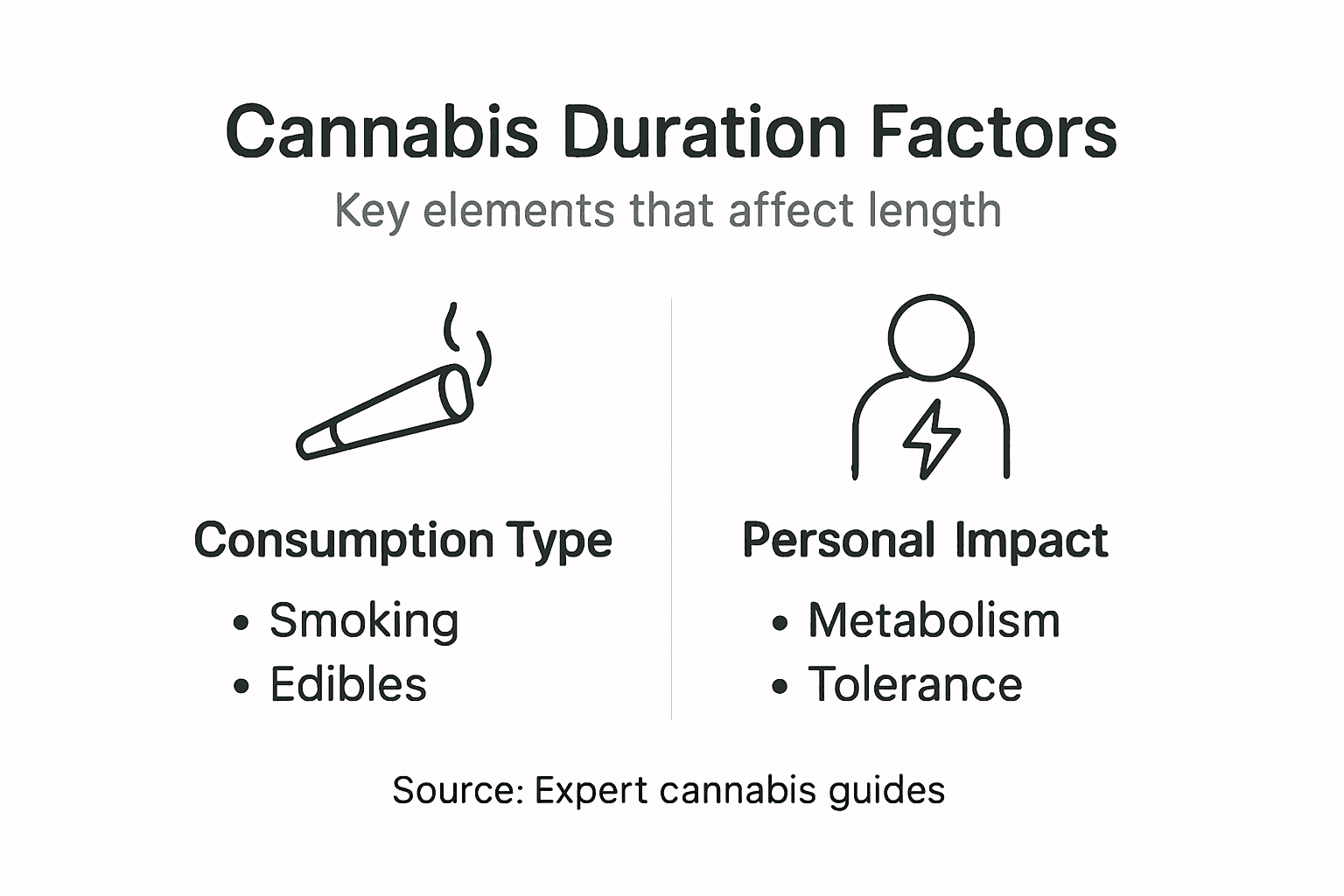
Summary of major factors that impact cannabis effect duration:
| Factor | Effect on Duration | Notable Consideration |
|---|---|---|
| THC Concentration | Higher means longer | Check product labeling carefully |
| Personal Metabolism | Faster means shorter | Heavily influenced by genetics |
| Usage Frequency | More use means shorter | Tolerance builds with frequent use |
| Body Composition | Higher fat lengthens | THC is stored in body fat |
Pro tip: Document your personal cannabis experiences, tracking dosage, consumption method, and effect duration to develop a more nuanced understanding of your individual response.
Risks of Overconsumption and Safe Use Tips
Cannabis consumption requires careful approach and understanding of potential risks. Cannabis health effects highlight the critical importance of responsible use and awareness of potential adverse reactions.
Potential risks associated with overconsumption include:
-
Psychological Impacts
- Intense anxiety
- Temporary paranoia
- Heightened stress response
- Potential panic attacks
-
Physical Complications
- Impaired motor coordination
- Reduced reaction times
- Potential cardiovascular strain
- Temporary cognitive disruption
-
Behavioral Risks
- Compromised decision-making
- Increased accident probability
- Potential workplace performance issues
- Reduced situational awareness
Users can mitigate risks by implementing strategic consumption practices. Safe cannabis practices emphasize starting with minimal doses, understanding personal tolerance, and creating a controlled consumption environment.
Special populations, including youth and individuals with pre-existing mental health conditions, require additional caution. Personal biochemistry significantly influences cannabis interaction, making individualized approaches essential for safe consumption.
Pro tip: Create a personal consumption journal to track dosage, method, and individual response, helping you develop a more nuanced understanding of your unique cannabis interaction.
Planning Cannabis Use for Desired Results
Cannabis intentional use requires strategic planning and comprehensive understanding of individual physiological responses. Cannabis consumption methods demonstrate that personalized approaches are critical for achieving consistent and predictable experiences.
Effective planning involves multiple strategic considerations:
-
Purpose Identification
- Recreational enjoyment
- Stress relief
- Sleep enhancement
- Pain management
- Creativity stimulation
-
Consumption Strategy
- Select appropriate consumption method
- Determine precise dosage
- Consider timing and environment
- Understand personal tolerance
- Plan for potential side effects
-
Response Tracking
- Document individual reactions
- Monitor physiological responses
- Adjust future consumption based on experiences
- Recognize personal limits
- Maintain consumption journal
Cannabis research developments continue expanding our understanding of individual variability, emphasizing the importance of personalized approaches to cannabis consumption. Modern scientific insights highlight that no universal consumption strategy exists, making self-awareness and careful documentation crucial.
Successful cannabis planning transcends simple product selection, requiring deep personal insight and systematic approach. Understanding one’s unique biochemical interaction with cannabis involves ongoing observation, documentation, and thoughtful adjustment.
Pro tip: Create a detailed cannabis consumption log tracking strain, dosage, method, time of day, and subsequent physical and mental responses to develop a comprehensive understanding of your individual cannabis experience.
Take Control of Your Cannabis Experience with Confidence
Understanding how long cannabis effects last can be confusing because it varies by consumption method, potency, and individual body chemistry. If you want to master your personal cannabis duration and avoid unpleasant surprises, focusing on transparent, quality products is key. Avondale Apothecary offers a curated selection of premium strains, edibles, and concentrates backed by detailed Certificates of Analysis so you know exactly what you are consuming.
Explore a variety of cannabis options tailored to your unique needs and start tracking your effects with confidence today. Visit Avondale Apothecary to find products that match your desired onset and duration. Take control of your cannabis journey by choosing trusted products that align with your goals and enjoy a safer, more predictable experience.
Frequently Asked Questions
How long do the effects of cannabis typically last?
The duration of cannabis effects varies by consumption method: smoking or vaping generally lasts 1-3 hours, while edibles can last 6-12 hours due to slower metabolic processing.
What factors influence how long cannabis effects last?
Several factors affect duration, including method of consumption, THC concentration, individual metabolic rate, body composition, frequency of use, and overall health.
Why do edibles take longer to affect me compared to smoking?
Edibles are metabolized through the digestive system, resulting in a delayed onset (30-120 minutes) but longer-lasting effects compared to the rapid onset and shorter duration of inhalation methods.
How can I manage my cannabis dosage for better control over effect duration?
Start with low doses and gradually increase as needed. Keeping a consumption journal to document your experiences can help you track your response and understand how different factors affect duration.