
Finding premium cannabis products can feel overwhelming, especially with so many myths surrounding cannabis resin and its effects. Health-conscious consumers across North America want trustworthy information about potency, extraction methods, and the wide variety of resin options. This guide cuts through misconceptions, highlights what sets concentrated products apart, and shares essential details for safer, more informed purchasing decisions.
Table of Contents
- Defining Cannabis Resin And Common Myths
- Major Types Of Cannabis Resin Products
- Key Characteristics And Extraction Methods
- Legal Status And Regulatory Considerations
- Usage Risks And Safe Handling Practices
Key Takeaways
| Point | Details |
|---|---|
| Cannabis Resin Definition | Cannabis resin is a concentrated form of plant material with higher potency than traditional cannabis flower, offering stronger effects and varying compositions. |
| Varying Potency and Composition | Cannabis resin products differ significantly based on production methods and conditions, affecting both potency and user experience. |
| Risks and Usage Safety | Concentrated cannabis products may lead to increased risks of anxiety and dependence; practicing dosage control and responsible use is crucial. |
| Legal and Regulatory Awareness | The legal status of cannabis resin varies widely by location, emphasizing the importance of understanding local laws and regulations before purchasing. |
Defining Cannabis Resin and Common Myths
Cannabis resin is concentrated plant material that looks and feels nothing like the dried flower you might be familiar with. It’s a sticky, potent substance extracted from the cannabis plant’s natural secretions. Think of it as the plant’s way of protecting itself, captured and concentrated into a product that delivers more cannabinoids per dose than traditional flower.
The key difference lies in potency and composition. While regular cannabis flower contains a mix of THC, CBD, and other compounds, resin concentrates these into a more powerful form. Cannabis resin often contains higher THC levels than the plant material alone, which means users experience stronger effects from smaller amounts. This concentration process creates products like hashish, rosin, and hash oil, each with distinct characteristics depending on how they’re made.
One major myth suggests all cannabis resin products are identical. Reality tells a different story. Cannabis resin varies widely in composition and potency across different production methods, growing conditions, and regions. A rosin product from one producer might test at 65% THC, while another hits 85%. The physical appearance changes too—some resins are crystalline and crumbly, others are waxy or butter-like, and some look almost liquid. Production method is everything here.
Another widespread misconception claims that all cannabis products carry equal addiction risk. The research shows this oversimplifies the issue. While concentrated products do carry a higher risk of dependence due to their potency, this doesn’t mean everyone who uses resin will develop problems. Individual factors like frequency of use, personal genetics, and underlying mental health conditions matter significantly.
People often assume that “natural” automatically means “safe.” Cannabis resin is natural, yes. That doesn’t mean it’s without risks. Higher potency means stronger psychoactive effects, increased risk of anxiety or paranoia in sensitive individuals, and potentially faster tolerance buildup. Transparency through testing becomes critical here, which is why checking third-party lab results matters before purchasing.
Pro tip: Always request or review the Certificate of Analysis (COA) for any cannabis resin product before buying—it reveals actual THC/CBD percentages and screens for contaminants, cutting through marketing claims and giving you the real picture of what you’re consuming.
Major Types of Cannabis Resin Products
Cannabis resin comes in several distinct forms, each produced through different methods and carrying unique characteristics. The main types you’ll encounter include hashish, live resin, rosin, and hash oil. Understanding the differences between them helps you choose the right product for your preferences and consumption method.
Hashish (also called charas) is the oldest form of cannabis resin, traditionally made by hand-rubbing the cannabis plant or collecting dried resin glands and pressing them together. It appears as a solid block, often dark brown or black, with a texture ranging from crumbly to almost putty-like. Cannabis resin varies widely depending on extraction and production methods, which explains why hashish from different regions looks and feels completely different. Moroccan hash might be brittle and golden, while Afghan charas appears almost black and sticky.

Live resin takes a different approach by freezing fresh cannabis immediately after harvest, then extracting while frozen. This preservation captures the plant’s full terpene profile, resulting in a product that smells and tastes noticeably more flavorful than other resins. The texture tends to be wet and saucy, almost like wet sugar or caviar. Live resin commands higher prices because the process is more complex and the aromatic compounds are largely preserved.
Rosin is a solventless extract made by applying heat and pressure to cannabis flower or hash. Understanding rosin extraction reveals why it appeals to consumers concerned about chemical residues, since no solvents touch the plant material. The result is a waxy, amber-colored product with a consistency similar to budder or badder. Home enthusiasts can make rosin with a hair straightener and parchment paper, though commercial production yields far superior results.
Hash oil refers to cannabis extract made using solvents like butane, propane, or CO2. It ranges from thin and runny to thick and syrupy, depending on how it’s processed post-extraction. Shatter, wax, and budder all fall under the hash oil category. These products typically contain higher THC levels than flower, making them potent choices for experienced users.
Pro tip: Start with smaller amounts when trying any new resin product type—different extraction methods produce different effects even with identical starting material, so your tolerance may surprise you.
Here’s a comparison of major cannabis resin types to help identify which best suits your preferences:
| Product Type | Extraction Method | Typical Texture | Unique Advantage |
|---|---|---|---|
| Hashish | Mechanical (hand-rubbed/sieved) | Solid, crumbly, or pliable | Traditional craft, full-spectrum cannabinoids |
| Live Resin | Solvent (frozen extraction) | Wet, saucy, caviar-like | Preserves full terpene profile, intense flavor |
| Rosin | Solventless (heat & pressure) | Waxy, budder-like | No solvents used, pure and clean product |
| Hash Oil | Solvent (butane/CO2/propane) | Syrupy, shatter, or wax | Highest potency, broad product variety |
Key Characteristics and Extraction Methods
Cannabis resin’s final quality depends almost entirely on how it’s extracted. Different methods produce dramatically different results, affecting everything from potency to flavor to safety. Understanding what happens during extraction helps you make informed choices about which products align with your priorities.
Mechanical extraction represents the oldest approach. Hand-rubbing fresh cannabis plants or sieving dried material separates resin glands without any chemicals involved. The result is pure plant compounds with zero solvent residue. This method produces hashish and requires skill and patience, but many consumers prefer it precisely because nothing foreign touches the plant material.
Solvent-based extraction uses chemicals like butane or propane to strip cannabinoids and terpenes from plant material. Solvent extraction methods directly impact cannabinoid yield and terpene preservation, meaning the choice of solvent matters significantly. Butane extraction tends to produce shatter or wax, while the solvent must be completely purged from the final product to ensure safety. This method is efficient but requires serious technical expertise and proper safety equipment.
Supercritical CO2 extraction uses pressurized carbon dioxide as a solvent, offering a middle ground between mechanical and chemical methods. Supercritical CO2 extraction ensures product safety while capturing both cannabinoids and flavorful compounds. CO2 is food-grade and naturally evaporates, leaving no chemical residue. Many premium producers favor this method because it produces clean, potent extracts with excellent terpene profiles.
Temperature and pressure during extraction heavily influence final characteristics. Low-temperature extractions preserve delicate terpenes but may yield less cannabinoid concentration. High-temperature processing boosts yield but sacrifices some aromatic compounds. Heat and pressure parameters determine whether you get crumbly, waxy, or liquid results, affecting both appearance and consumption experience.
Pro tip: When purchasing cannabis resin, ask the retailer about extraction method—products from CO2 or solventless methods typically offer cleaner flavor and fewer processing concerns than butane-extracted alternatives.
Legal Status and Regulatory Considerations
The legal landscape for cannabis resin is complex and fragmented across North America. Your ability to purchase, possess, and use cannabis resin depends entirely on where you live. What’s perfectly legal in one jurisdiction may be prohibited just miles away, making it critical to understand your local laws before making any purchase.
In the United States, cannabis remains federally classified as a Schedule I controlled substance, meaning the federal government prohibits manufacture and distribution of cannabis products including resin. However, this federal prohibition coexists with state-level legalization in many jurisdictions. Canada has legalized both medical and recreational cannabis at the federal level, though provincial regulations vary significantly. Some provinces restrict resin sales to licensed retailers, while others allow broader distribution through online platforms.
The complexity deepens because legal frameworks vary widely across countries and regions, with many nations still prohibiting cannabis resin entirely while others have legalized medical or recreational use. International treaties also influence domestic policies, creating additional layers of regulation.
If you’re in a jurisdiction where cannabis resin is legal, regulatory compliance becomes your responsibility as a consumer. Licensed retailers must follow strict guidelines around product testing, labeling, and packaging. Look for products that display complete testing information showing cannabinoid profiles and contaminant screening. This transparency protects you from unlabeled or contaminated products.
The FDA recognizes that cannabis-derived products exist in a gray area, providing guidance for clinical research while maintaining that product quality and safety evaluation require regulatory compliance. This means quality standards matter more than ever when purchasing from legal sources.
Stay informed about your specific location’s regulations. Rules change frequently, and enforcement varies by jurisdiction. What’s legal today might shift tomorrow, so verify current laws before purchasing or consuming cannabis resin products.
Pro tip: Buy exclusively from licensed, regulated retailers in your jurisdiction, and always verify that products include third-party lab testing results and proper regulatory compliance documentation before purchase.
Usage Risks and Safe Handling Practices
Cannabis resin carries real risks that deserve serious consideration. The concentrated nature of these products means effects hit harder and faster than flower. Understanding these risks and implementing practical safety measures protects both your health and the people around you.
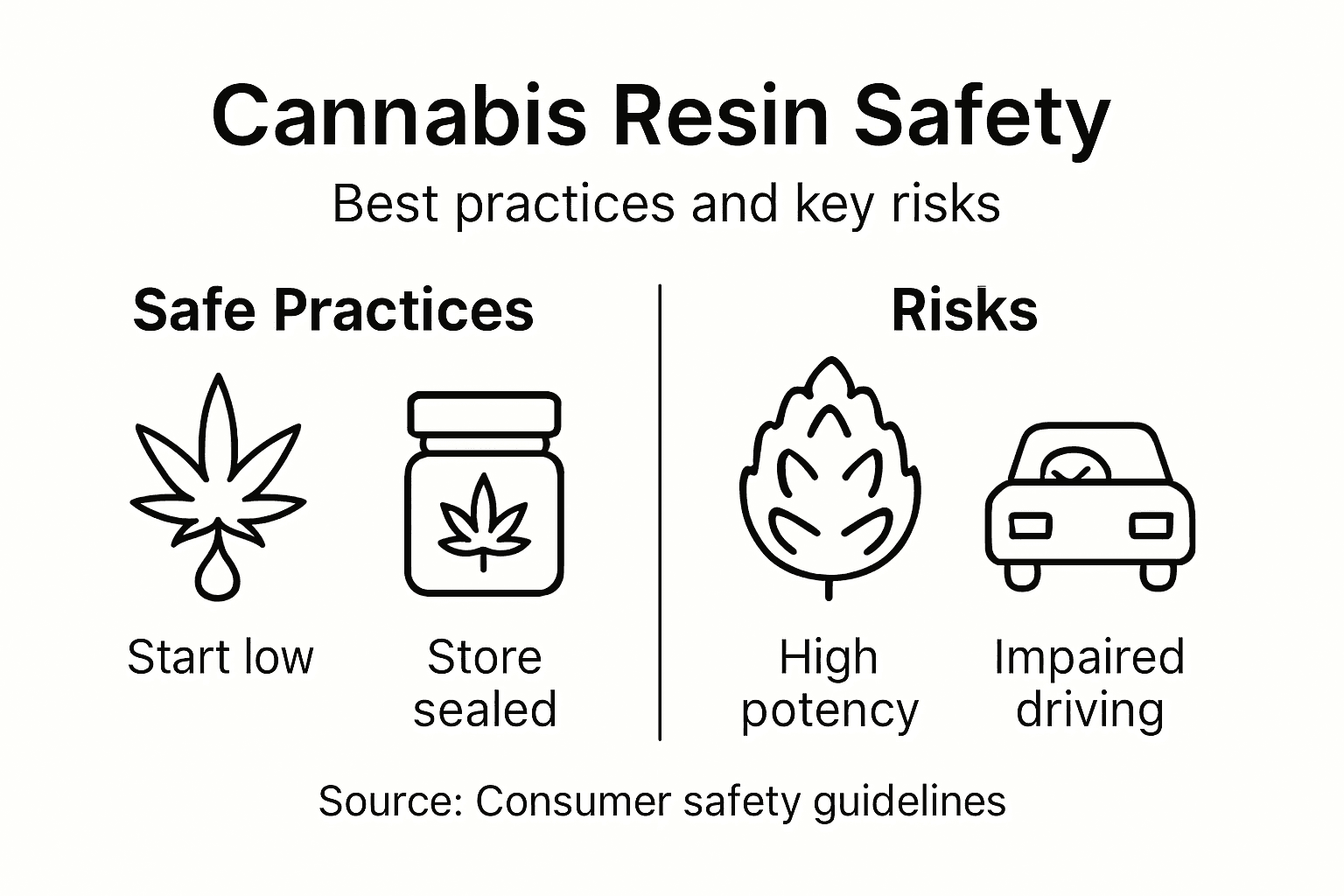
The primary concern with cannabis resin is potency. High-THC products increase the likelihood of anxiety, paranoia, or panic attacks, especially in people sensitive to cannabinoids or using resin for the first time. Cannabis use can have short and long term health effects, including risks to mental health and cognitive function, particularly with high-THC products like resin. Young adults and teenagers face greater risks since their brains are still developing.
Dosage control is non-negotiable with cannabis resin. Start small. A tiny dab or a few milligrams of THC is genuinely enough for most people. Overestimating your tolerance leads to uncomfortable experiences and potential anxiety spirals. Track what you consume and how it affects you, then adjust upward slowly if needed.
Storage matters more than you might think. Keep cannabis resin in airtight containers away from heat and light, which degrade cannabinoids over time. Critically, store all cannabis products where children and pets cannot access them. Accidental ingestion by someone not intending to consume can create serious medical situations.
Driving under the influence of cannabis resin is dangerous and illegal. THC impairs coordination, reaction time, and judgment. Never operate vehicles or machinery after consuming resin products. Wait at least several hours before driving, and recognize that your impairment lasts longer than you might think.
Consider your consumption method carefully. Vaping cannabis products offers temperature control benefits compared to smoking, reducing harmful byproducts while allowing precise dosing. Smoking any product creates respiratory irritation, so vaping or edibles present gentler alternatives.
Pro tip: Purchase only from licensed retailers that provide complete Certificates of Analysis showing THC potency and contaminant testing, then start with a single 2.5mg THC dose and wait at least two hours before consuming more.
Below is a summary table outlining important safe handling practices for cannabis resin:
| Practice | Why It Matters | Recommended Action |
|---|---|---|
| Dosage control | Prevents overconsumption | Start with lowest possible dose |
| Child-proof storage | Avoids accidental ingestion | Store in locked container |
| Product testing | Ensures safety & accuracy | Verify third-party lab results |
| Avoid driving | Reduces accident risk | Do not operate vehicles after use |
| Temperature control | Preserves quality | Store away from heat and light |
Discover Premium Cannabis Resin with Confidence at Avondale Apothecary
Navigating the complex world of cannabis resin can feel overwhelming with varying types, potent effects, and safety concerns. You want products that deliver exceptional quality without compromise. Avondale Apothecary answers these challenges by offering a carefully curated selection of cannabis resins including hashish, live resin, rosin, and hash oil. Each product comes with comprehensive Certificates of Analysis to ensure you understand exactly what you consume, from THC levels to contaminant screening.

Elevate your cannabis experience today by choosing from our collection designed to meet your preferences and safety priorities. Don’t settle for guesswork when you can shop at Avondale Apothecary and access detailed product information and transparent lab results. Take control of your resin journey now by visiting our online storefront and exploring products that prioritize purity, potency, and flavor. Start smart, start safe, and enhance your enjoyment by learning more about our offerings here at Avondale Apothecary.
Frequently Asked Questions
What is cannabis resin?
Cannabis resin is a concentrated substance extracted from the cannabis plant, containing a higher potency of cannabinoids compared to traditional cannabis flower. It has a sticky texture and can be found in forms such as hashish, rosin, and hash oil.
What are the main types of cannabis resin products?
The main types of cannabis resin products include hashish, live resin, rosin, and hash oil. Each type differs in its extraction method and characteristics, offering distinct flavor profiles and potency levels.
How should cannabis resin be stored to maintain its quality?
Cannabis resin should be stored in airtight containers away from heat and light. Proper storage prevents degradation of cannabinoids and increases product longevity. Ensure the storage location is also child-proof to avoid accidental ingestion.
What are the risks associated with using cannabis resin?
Cannabis resin is more potent than flower, which can lead to increased risks of anxiety, paranoia, or panic attacks, especially for inexperienced users. Dosage control is critical; beginners should start with low doses to gauge their tolerance and avoid overconsumption.