
Did you know that nearly 70 percent of cannabis products can contain inaccurate THC levels on their labels? Knowing exactly what you are buying has never been more important, especially when potency and safety are at stake. Understanding how to verify THC content helps you make smarter choices, match your needs, and avoid unwanted surprises with each purchase.
Table of Contents
- Step 1: Gather Product and COA Information
- Step 2: Identify Key THC Metrics and Units
- Step 3: Compare THC Levels Across Product Types
- Step 4: Assess Quality and Suitability for Your Needs
- Step 5: Verify Label Claims with COA Results
Quick Summary
| Key Point | Explanation |
|---|---|
| 1. Verify COA Information | Always check the Certificate of Analysis to confirm THC levels and ensure product transparency. |
| 2. Understand THC Metrics | THC content is typically represented as a percentage or milligram amount; know how to interpret these figures. |
| 3. Compare Product THC Levels | Different cannabis products vary in THC concentration; compare levels based on product type and your tolerance. |
| 4. Assess Product Quality | Evaluate THC accuracy and match products to your needs; check third-party lab tests for reliability. |
| 5. Check Label Claims Against COA | Always verify what’s on the label with the COA to avoid discrepancies and ensure accurate consumption. |
Step 1: Gather Product and COA Information
When interpreting THC levels, your first critical step is collecting accurate product and Certificate of Analysis (COA) documentation. According to cannabis.ny.gov, product labels provide essential details including THC content, usage instructions, and safety warnings.
To effectively gather this information, start by carefully examining the product packaging. Look for the official COA, which will detail precise cannabinoid concentrations. As
Pro Tip: Always verify the COA date matches the product batch number to ensure you are referencing the most current laboratory testing results.
Once you have gathered the necessary documentation, you will be prepared to move forward with analyzing the specific THC levels and understanding the product’s detailed chemical composition.
Step 2: Identify Key THC Metrics and Units
This step involves understanding the precise measurements and units used to express THC concentration across different cannabis products. According to cannabisevidence.org, THC content is typically expressed as a percentage of the product’s total weight. For instance, a product labeled with 25% THC means that 25% of its weight consists of THC molecules.
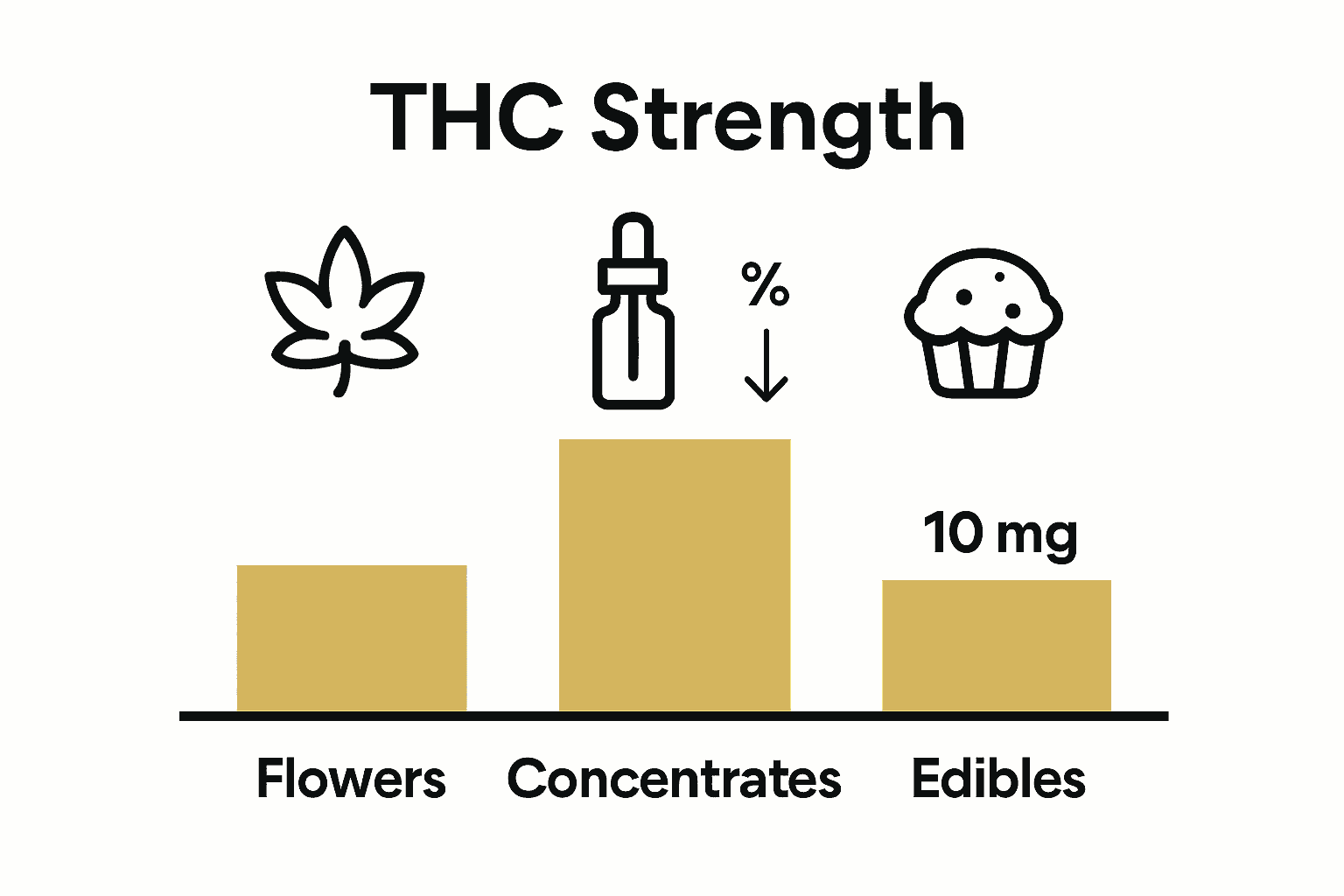
The metrics for THC can vary dramatically depending on the product type. As drugsandalcohol.ie reports, different cannabis products showcase distinct THC ranges: cannabis flowers usually contain 15 25% THC, while concentrates can reach intense levels of 60 95% THC. Edibles frequently use milligram measurements, specifying THC content per serving such as 5mg or 10mg. When examining a COA or product label, you’ll want to pay close attention to these specific metrics.
Pro Tip: Always compare the THC percentages across different product types to understand relative potency and make informed consumption decisions.
With these key metrics understood, you are now ready to move forward in accurately interpreting the THC levels of your chosen cannabis product. If you want more context about THC in specific product types, check out our guide to cannabis edibles for additional insights.
Step 3: Compare THC Levels Across Product Types
Comparing THC levels across different cannabis products requires understanding the unique potency ranges for each type. According to greensociety.cc, THC concentrations vary dramatically between product categories. Cannabis flowers typically contain 15 20% THC, while concentrates like wax or hash oil can reach impressive levels of 60 90% THC.
As stirlingprofessional.com highlights, the diversity of THC content is remarkable. Vape cartridges range from 65 95% THC, concentrates maintain 60 95% potency, and edibles offer more precise dosing with 1 50mg THC per serving. When comparing these products, consider not just the percentage but also your personal tolerance and desired experience.
Pro Tip: Always start with lower THC percentages and gradually increase to find your optimal comfort level.
To gain deeper insights into specific product variations, explore our guide to THC in edibles for more nuanced understanding of potency across different consumption methods.
Step 4: Assess Quality and Suitability for Your Needs
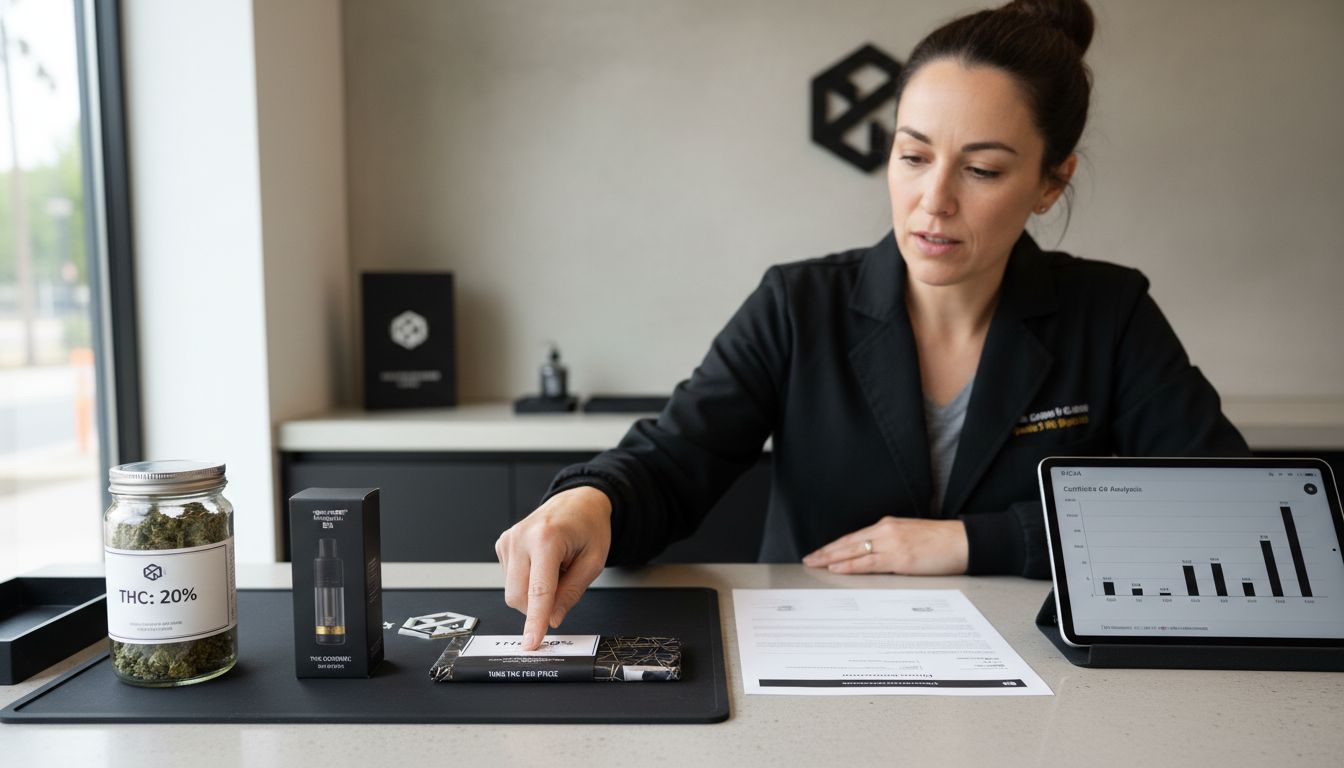
Assessing cannabis product quality involves carefully evaluating THC content accuracy and matching the product to your specific needs. According to Healthline, many cannabis products may have significantly different THC levels compared to their labeled concentrations. This discrepancy highlights the critical importance of thoroughly verifying product details through comprehensive Certificates of Analysis.
Axios reports that nearly half of cannabis flower products can overstate their THC content on labels. When assessing product suitability, consider multiple factors beyond just THC percentage: your personal tolerance, desired effects, consumption method, and intended use. Carefully compare the COA details against the product packaging to ensure you are getting the exact potency and quality you expect.
Pro Tip: Always cross reference multiple sources of information and prioritize products with recent third party lab testing.
By methodically evaluating these elements, you will be well prepared to select a cannabis product that precisely matches your individual requirements.
VIDEO:video_content] For additional insights into making informed selections, check out our [guide to THC in edibles for more detailed recommendations.
Step 5: Verify Label Claims with COA Results
Verifying label claims requires a meticulous comparison between product packaging and the accompanying Certificate of Analysis. According to Time, a critical study revealed that nearly 70% of cannabis products sold online contain inaccurate labeling regarding cannabinoid concentrations. This startling statistic underscores the absolute necessity of carefully reviewing COA documentation before making any purchasing decisions.
Axios reports that THC levels have dramatically increased since the 1990s, making accurate verification more important than ever. When comparing label claims with COA results, focus on matching specific cannabinoid percentages, checking the testing laboratory details, and confirming the document’s date of issue. Pay special attention to the total THC content, looking for any discrepancies between the printed label and the laboratory analysis.
Pro Tip: Always request the most recent COA directly from the manufacturer if one is not immediately available with your product.
By methodically cross referencing these documents, you protect yourself from potential mislabeling and ensure you understand exactly what you are consuming. For more detailed guidance on interpreting cannabis product information, explore our guide to THC in edibles.
Understand THC Levels Confidently with Trusted Products from Avondale Apothecary
Navigating the complex world of THC percentages and verifying Certificates of Analysis can be overwhelming. You want to be sure your cannabis product matches its label and suits your personal needs. Knowing exactly what you are consuming protects your experience and your well-being. At Avondale Apothecary, we address this challenge by offering a curated selection of premium cannabis items, each accompanied by transparent and up-to-date COA documentation. This means you can shop confidently knowing the potency and quality have been thoroughly verified.
Explore our diverse range of cannabis strains, edibles, concentrates, and vapes with full COA access at Avondale Apothecary. Don’t guess your THC levels or settle for uncertain products when you can rely on clear labeling and expert curation. Ready to make informed choices that match your tolerance and lifestyle? Visit our site now and take the first step towards a safer and more enjoyable cannabis experience.
Frequently Asked Questions
How do I collect accurate product and COA information for THC levels?
Start by examining the product packaging for its Certificate of Analysis (COA), which details precise cannabinoid concentrations. Check for the COA through the physical product label, a QR code, or the manufacturer’s website to ensure you have the most recent analysis.
What key THC metrics should I look for on product labels?
Look for the percentage of THC, which indicates how much of the product’s total weight is THC. For example, a product listed as 25% THC means that 25% of it is composed of THC molecules.
How can I compare THC levels across different cannabis products?
To compare THC levels, understand that different product types have distinct potency ranges. For instance, cannabis flowers have a typical THC of 15–25%, while concentrates may range from 60–95%. Compare these figures while considering personal tolerance.
How do I assess the quality of a cannabis product in terms of THC content?
Assess a product’s quality by verifying the THC levels stated on the label against the COA. Check for discrepancies; for example, many products may have inaccurate THC levels. Prioritize products with recent third-party lab testing results for more reliable information.
What steps should I take to verify label claims with COA results?
Carefully compare the product label against the COA, focusing on cannabinoid percentages and the testing laboratory details. Ensure that the COA is the most recent version, and contact the manufacturer for updated documents if necessary to confirm the accuracy of the claims.
Why is it important to understand THC levels when choosing cannabis products?
Understanding THC levels helps you make informed choices tailored to your personal tolerance and desired effects. With accurate THC information, you can select products that best match your preferences, reducing the risk of overconsumption and enhancing your experience.