

Finding premium cannabis products that balance safety, quality, and convenience can feel complicated in today’s fast-moving market. Consumers across Canada and the United States want more than just variety—they expect transparency in sourcing and a seamless shopping journey that supports both recreational enjoyment and medical relief. This guide demystifies the evolving world of cannabis retail, helping you identify trustworthy dispensaries and innovative online platforms designed for peace of mind and satisfaction.
Table of Contents
- Defining Cannabis Retail In Today’s Market
- Types Of Cannabis Retail Platforms And Models
- Key Features Of Premium Cannabis Retail Operations
- Legal Compliance And Consumer Protection Standards
- Challenges And Responsibilities For Retailers
Key Takeaways
| Point | Details |
|---|---|
| Evolving Cannabis Retail Landscape | Cannabis retail has shifted to a sophisticated industry focusing on consumer education, safety, and personalized experiences while navigating complex legal frameworks. |
| Diverse Retail Models | Modern cannabis retail encompasses physical dispensaries, online platforms, and hybrid delivery, catering to various consumer preferences and regulatory challenges. |
| Premium Operations | High-end cannabis retailers prioritize staff training, product transparency, and technological innovation to enhance consumer trust and improve purchasing experiences. |
| Regulatory Challenges | Retailers must continually manage compliance, financial constraints, and public health responsibilities while promoting responsible consumption and informed decision-making. |
Defining Cannabis Retail in Today’s Market
Cannabis retail has transformed dramatically, emerging as a sophisticated, regulated industry that goes far beyond traditional perceptions. Cannabis market growth reflects a complex ecosystem balancing consumer preferences, legal frameworks, and innovative distribution strategies. Modern cannabis retail represents a multifaceted landscape where medical science, consumer wellness, and commercial innovation intersect.
The contemporary cannabis retail environment encompasses diverse product categories including dried flowers, concentrates, edibles, and wellness-oriented formulations. Retailers are no longer simply selling a product but curating comprehensive experiences that prioritize education, safety, and personalized consumer journeys. These establishments must navigate intricate regulatory requirements while simultaneously meeting increasingly discerning customer expectations around product quality, transparency, and therapeutic potential.
Consumer-Focused Retail Models are defining the current marketplace. Online platforms and physical dispensaries now provide detailed product information, comprehensive lab testing results, and targeted recommendations. U.S. cannabis sales surpassed $31.4 billion in 2024, demonstrating both the market’s robust potential and the sophisticated retail strategies driving consumer engagement. These models emphasize not just transactions, but holistic consumer education and responsible access.
Pro tip: Always verify a cannabis retailer’s licensing, request detailed product Certificates of Analysis, and understand your local regulations before making a purchase.
Types of Cannabis Retail Platforms and Models
The cannabis retail landscape has evolved into a sophisticated ecosystem with multiple platform models designed to meet diverse consumer needs. Cannabis retail market analysis reveals a complex network of distribution channels that extend far beyond traditional brick-and-mortar dispensaries. These platforms range from physical storefronts to innovative digital marketplaces, each addressing unique consumer preferences and regulatory requirements.
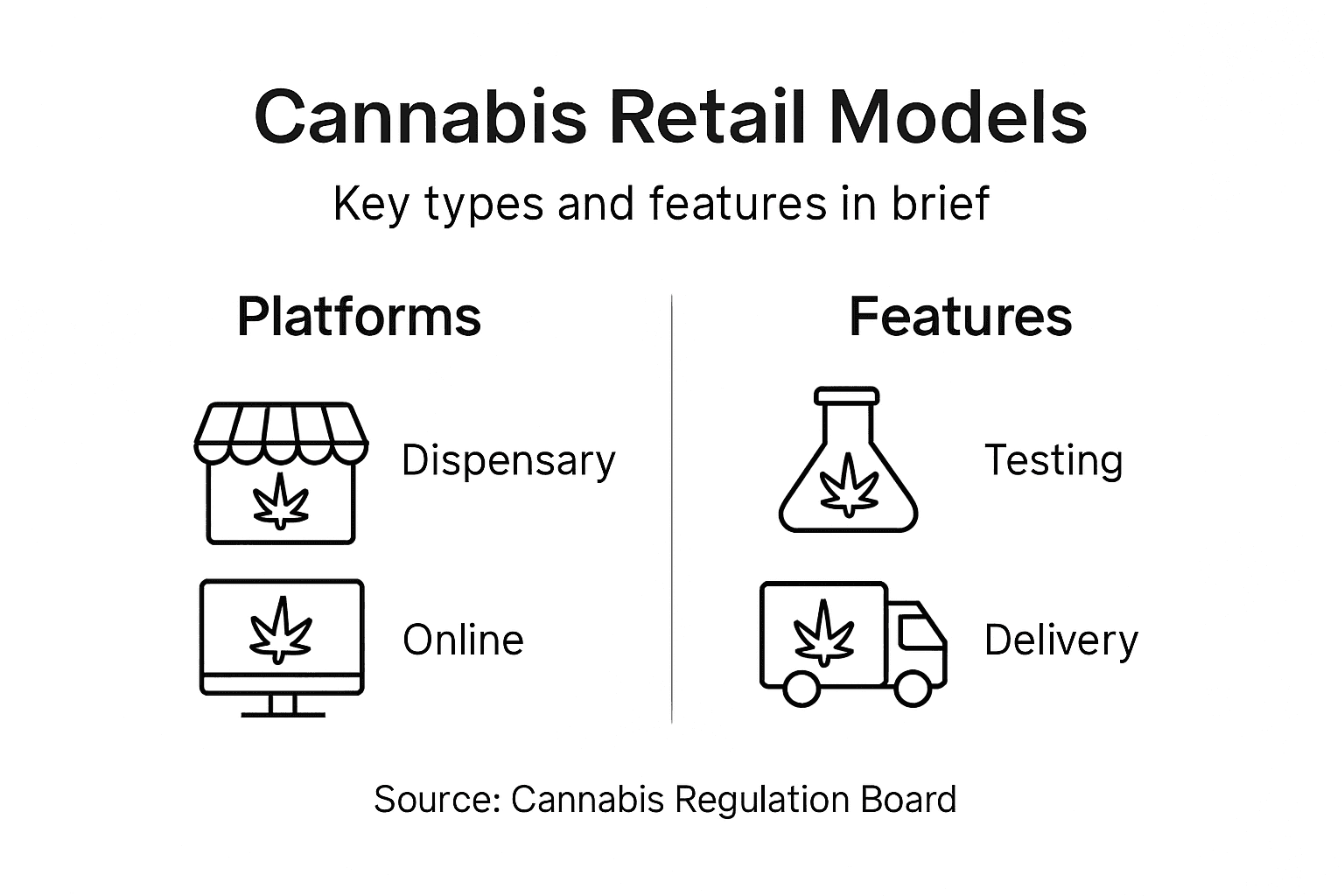
Primary cannabis retail platforms can be categorized into three main models: physical dispensaries, online platforms, and hybrid delivery services. Physical dispensaries remain the cornerstone of cannabis retail, offering in-person consultation, product verification, and immediate purchasing options. These locations provide personalized customer experiences, allowing consumers to interact directly with knowledgeable staff, examine products, and receive tailored recommendations based on individual wellness goals.
Online Cannabis Platforms represent the cutting edge of retail innovation. Emerging retail strategies demonstrate how digital platforms are transforming consumer engagement through comprehensive product information, virtual consultations, and streamlined ordering processes. These platforms leverage technology to provide detailed product descriptions, lab testing results, dosage guidance, and educational resources that empower consumers to make informed purchasing decisions.
Hybrid Delivery Models are gaining significant traction, combining the convenience of digital platforms with the reliability of traditional dispensary networks. These services enable consumers to browse products online, receive expert guidance, and have their selections delivered directly to their home or available for secure pickup. Such models address privacy concerns, accessibility challenges, and the growing demand for discreet, convenient cannabis purchasing experiences.
Here is a comparison of the main cannabis retail platform models:
| Retail Model | Consumer Experience | Regulatory Complexity |
|---|---|---|
| Physical Dispensaries | In-person consultation and purchase | High, extensive controls |
| Online Platforms | Digital education and ordering | Moderate, state-varying |
| Hybrid Delivery Models | Online ordering with flexible pickup | High, logistics focused |
Pro tip: Always verify a retailer’s compliance with local regulations and prioritize platforms offering transparent product information and verified lab testing results.
Key Features of Premium Cannabis Retail Operations
Premium cannabis retail operations represent the pinnacle of consumer-focused service, distinguished by their commitment to excellence and innovative approach. Premium retail market strategies highlight a comprehensive approach that goes beyond simple product transactions, transforming the purchasing experience into a sophisticated, educational journey. These advanced retailers create immersive environments that prioritize customer education, product transparency, and personalized engagement.

Key operational features of top-tier cannabis retailers include extensive staff training, rigorous product testing, and cutting-edge technology integration. Knowledgeable staff serve as product experts, providing nuanced guidance about strain characteristics, potential therapeutic benefits, and consumption methods. Advanced retailers invest significantly in staff development, ensuring team members can offer scientifically informed recommendations tailored to individual customer wellness goals and preferences.
Technological Innovation plays a critical role in distinguishing premium cannabis retail operations. Cannabis retail compliance strategies demonstrate how leading retailers leverage sophisticated digital tools to enhance consumer trust and experience. These technologies include AI-powered recommendation systems, comprehensive digital product catalogs with detailed lab testing results, age verification platforms, and secure transaction management systems that prioritize both consumer convenience and regulatory compliance.
Safety and Transparency emerge as fundamental pillars of premium cannabis retail. Successful operations implement comprehensive quality control processes, providing detailed product traceability, transparent sourcing information, and extensive laboratory testing documentation. By openly sharing information about product origin, cannabinoid profiles, and potential effects, these retailers build consumer confidence and distinguish themselves in an increasingly competitive marketplace.
Pro tip: Request and carefully review a dispensary’s most recent Certificate of Analysis before making any product purchases to ensure maximum safety and quality.
Legal Compliance and Consumer Protection Standards
Cannabis retail operates within an intricate legal framework designed to protect consumer safety and ensure responsible market practices. Regulatory compliance standards form the cornerstone of legal cannabis operations, encompassing comprehensive requirements for licensing, product testing, packaging, and marketing. These regulations create a structured environment that balances consumer access with stringent safety protocols, ensuring that every transaction meets rigorous legal and health standards.
Licensing represents the first critical layer of consumer protection in cannabis retail. Retailers must navigate complex state-specific regulations that mandate thorough background checks, financial transparency, and ongoing operational audits. These requirements ensure that only qualified, responsible businesses can enter the cannabis marketplace. Key compliance elements include detailed record-keeping, strict inventory tracking, secure product storage, and comprehensive reporting to state regulatory agencies that monitor market activities and potential risks.
Consumer Safety Protocols are meticulously designed to mitigate potential public health risks. Cannabis market control measures include strict age verification processes, limitations on retailer locations, and mandatory product safety testing. Retailers must implement robust systems to verify customer age, restrict sales to authorized individuals, and provide clear, comprehensive product information. This includes detailed labeling about potency, potential effects, recommended dosages, and any potential interactions or contraindications, empowering consumers to make informed purchasing decisions.
Packaging and Marketing Restrictions play a crucial role in protecting vulnerable populations and ensuring responsible cannabis consumption. Regulations typically mandate child-resistant packaging, clear warning labels, and restrictions on marketing that might appeal to younger audiences. These requirements help prevent accidental exposure, provide critical safety information, and maintain the integrity of the legal cannabis market by promoting responsible use and preventing inappropriate product promotion.
Below is a summary of critical compliance and safety measures in legal cannabis retail:
| Compliance Focus | Purpose | Typical Requirement |
|---|---|---|
| Licensing | Ensure business eligibility | Background checks and audits |
| Product Testing | Protect consumer safety | Third-party lab analysis |
| Packaging | Prevent youth access/accidents | Child-resistant and clear labeling |
| Marketing Restrictions | Reduce underage appeal | Limitations on advertising content |
Pro tip: Always request and review a dispensary’s current state license and most recent compliance documentation to verify their legal standing and commitment to consumer protection.
Challenges and Responsibilities for Retailers
Cannabis retailers operate in an increasingly complex business landscape that demands exceptional adaptability and strategic planning. Cannabis industry challenges reveal a multifaceted environment where operational excellence requires navigating intricate regulatory, financial, and market dynamics. Successful retailers must simultaneously manage compliance requirements, market competition, consumer education, and technological innovation while maintaining economic sustainability.
Regulatory Compliance represents a primary challenge for cannabis retailers, demanding continuous vigilance and proactive management. Retailers must maintain meticulous documentation, implement robust age verification systems, and ensure strict adherence to state-specific regulations that can vary dramatically across jurisdictions. This involves comprehensive staff training, sophisticated tracking systems, and ongoing education about evolving legal frameworks that govern cannabis sales and distribution.
Financial Management emerges as another critical challenge, particularly given the unique banking restrictions in the cannabis industry. Retail industry responsibilities highlight the complex financial ecosystem where traditional banking services remain limited. Retailers must develop innovative financial strategies, including cash management systems, alternative payment processing, and sophisticated accounting practices that ensure transparency and regulatory compliance while managing operational costs.
Beyond regulatory and financial challenges, cannabis retailers bear significant public health responsibilities. They must actively promote responsible consumption, provide accurate product information, and implement strategies that prevent misuse. This includes developing comprehensive consumer education programs, offering clear dosage guidance, and creating supportive environments that destigmatize cannabis use while emphasizing safety and informed decision-making.
Pro tip: Invest in comprehensive staff training programs that cover regulatory compliance, product knowledge, and responsible sales practices to mitigate operational risks and enhance consumer trust.
Experience Access, Quality, and Safety with Avondale Apothecary
The article highlights the critical challenges cannabis consumers face when navigating retail environments that prioritize access, quality, and safety. Many customers struggle with finding trustworthy retailers who offer transparent product information and verified quality assurances such as detailed Certificates of Analysis. At Avondale Apothecary, we understand these concerns and go beyond simple transactions by providing a curated selection of premium cannabis products along with the educational resources you need to make informed choices.
Discover an ecommerce platform designed with your wellness and safety in mind. Explore a wide variety of strains, edibles, concentrates, and accessories all clearly detailed with comprehensive lab testing results. Visit Avondale Apothecary today to experience a user-friendly, transparent shopping experience that aligns perfectly with the industry’s best practices for compliance and consumer protection. Take the next step toward confident cannabis purchasing from a trusted source committed to quality and regulatory adherence.
Frequently Asked Questions
What are the different types of cannabis products available in retail?
Cannabis retail offers a variety of products including dried flowers, concentrates, edibles, and wellness-oriented formulations, catering to diverse consumer preferences and therapeutic needs.
How can consumers ensure the safety and quality of cannabis products?
Consumers should verify a retailer’s licensing, request detailed product Certificates of Analysis, and review product labeling for information on potency, ingredients, and recommended dosages to ensure safety and quality.
What role does technology play in cannabis retail?
Technology is crucial in cannabis retail, enhancing consumer trust and experience through AI-powered recommendations, comprehensive digital product catalogs, and secure transaction management systems.
What are the key responsibilities of cannabis retailers regarding consumer safety?
Cannabis retailers are responsible for promoting responsible consumption, providing accurate product information, ensuring compliance with safety protocols, and implementing robust age verification systems.