

Over 90 percent of cannabis’s psychoactive effects come from a single compound known as Delta 9 THC. This molecule doesn’t just shape how people experience cannabis, it fundamentally changes how the brain communicates and processes information. As interest in both recreational and medical cannabis rises, understanding Delta 9’s unique role helps users make sense of its complex effects, its legal status, and how it differs from other cannabinoids.
Table of Contents
- Defining Delta 9 THC Cannabinoid
- Key Effects and How Delta 9 Works
- Legal Status and Regulatory Framework
- Health Risks, Safety, and Quality Concerns
- Comparing Delta 9 to Other Cannabinoids
Key Takeaways
| Point | Details |
|---|---|
| Psychoactive Nature | Delta 9 THC is the primary psychoactive compound in cannabis, responsible for altering consciousness and influencing cognitive functions. |
| Neurological Impact | It modifies neurotransmitter release and synaptic communication, potentially impairing memory and cognitive processes. |
| Legal Complexity | Federal regulations permit Delta 9 THC levels below 0.3%, but state laws vary significantly, leading to a complex legal landscape. |
| Health Concerns | Delta 9 THC presents safety risks including potential liver damage and cognitive impairment, necessitating responsible consumption practices. |
Defining Delta 9 THC Cannabinoid
Delta-9-tetrahydrocannabinol (Δ9-THC) represents the primary psychoactive compound found in cannabis that delivers the quintessential “high” experience. According to Cancer.gov, this cannabinoid is responsible for the mind-altering effects associated with cannabis consumption by binding directly to cannabinoid receptors in the central nervous system.
At its molecular core, Delta 9 THC acts as a sophisticated neurotransmitter modulator. PubMed research reveals that it functions as a full agonist at CB1 receptors located on GABA neuron axon terminals in the hippocampus, which significantly influences cognitive processes like learning and memory. This interaction explains why cannabis can produce profound psychological and physiological effects.
Key characteristics of Delta 9 THC include:
- Primary psychoactive component in cannabis
- Directly interacts with the body’s endocannabinoid system
- Capable of modifying neurotransmitter release
- Influences cognitive and motor functions
Understanding the nuanced interactions of Delta 9 THC requires recognizing its complex relationship with our neurological systems. For more detailed insights into THC’s role in cannabis products, explore our guide on understanding the role of THC in edibles.
Key Effects and How Delta 9 Works
Delta 9 THC produces complex neurological interactions that dramatically alter consciousness and physiological responses. PubMed research reveals that this cannabinoid specifically impairs learning and memory by activating CB1 receptors in the hippocampus, leading to significant changes in neurotransmitter release and synaptic transmission.
The neurological impact of Delta 9 THC extends far beyond simple intoxication. University of Chicago research indicates that it induces altered states of consciousness by acting on CB1 receptors, generating psychotomimetic effects similar to classical psychedelics. These interactions can profoundly influence perception, cognitive processing, and emotional experiences.
Key neurological effects of Delta 9 THC include:
- Modifies neurotransmitter release patterns
- Alters synaptic communication
- Impacts short-term memory formation
- Generates psychoactive consciousness changes
- Influences emotional processing
Understanding these complex interactions helps consumers make informed decisions about cannabis consumption. For more insights into how cannabis compounds interact with the body, check out our guide to understanding edibles effects and its nuanced timeline of experiences.
Legal Status and Regulatory Framework
Federal cannabis regulations have undergone significant transformations since the 2018 Farm Bill’s landmark legislation. Reuters reports that products containing Delta 9 THC levels below 0.3% became legally permissible at the federal level, creating a complex regulatory landscape that continues to evolve rapidly.
The current legal framework remains intricate and dynamic. Reuters highlights that states have adopted dramatically different approaches to hemp-derived products, with some permitting controlled sales while others have implemented complete bans. Federal agencies like the DEA and FDA are actively questioning the legality of synthetically derived cannabinoids, signaling potential future regulatory changes.
Key legal considerations for Delta 9 THC include:
Here’s a summary of key legal considerations for Delta 9 THC:
| Consideration | Federal Level | State Level |
|---|---|---|
| Legal THC Threshold | 0.3% or lower | Varies by state |
| Hemp Product Legality | Federally legal <0.3% | Mixed Some ban sales |
| Synthetic Cannabinoid Law | Under review | Often restricted/unclear |
| Oversight Agencies | DEA, FDA | State agencies |
| Potential Future Changes | Ongoing review | New laws emerging |
- Federal threshold of 0.3% THC for legal hemp products
- Varying state-level regulations
- Ongoing federal review of synthetic cannabinoid legality
- Potential legislative revisions in progress
- Complex jurisdiction between federal and state laws
Navigation of this legal landscape requires careful attention to current regulations.
For more detailed insights into cannabis product regulations, explore our guide to understanding cannabis edibles and stay informed about the latest legal developments.
Health Risks, Safety, and Quality Concerns
Delta 9 THC presents a complex health profile that demands careful consideration. AP News reports that while the FDA has approved certain medical applications, significant safety concerns remain, particularly regarding potential liver damage and adverse medication interactions.
WebMD highlights the varied potential side effects associated with Delta 9 THC consumption, which range from euphoric experiences to more concerning neurological impacts. The compound can generate significant cognitive and motor function impairments, making responsible consumption critically important for user safety.

Key health and safety considerations include:
- Potential liver damage risk
- Possible medication interaction complications
- Cognitive and motor function impairment
- Increased appetite and perception alterations
- Limited long-term research on comprehensive health effects
Understanding these potential risks is essential for informed consumption. For more comprehensive insights into cannabis product safety, explore our guide to understanding edible effects and stay informed about responsible usage practices.
Comparing Delta 9 to Other Cannabinoids
Delta 9 THC stands distinctly apart from other cannabinoids in its neurological impact. Congressional Research Service highlights a critical difference: while Delta 9 THC is the primary psychoactive compound in Cannabis sativa, other cannabinoids like CBD remain nonpsychoactive and are primarily studied for potential medicinal applications.
MDPI Research reveals even more nuanced distinctions, demonstrating that Delta 9 THC interacts with astrocytic markers uniquely compared to other cannabinoids. These distinctive interactions significantly influence neuroinflammatory responses and neurodegenerative processes, setting Delta 9 apart from its cannabinoid counterparts.
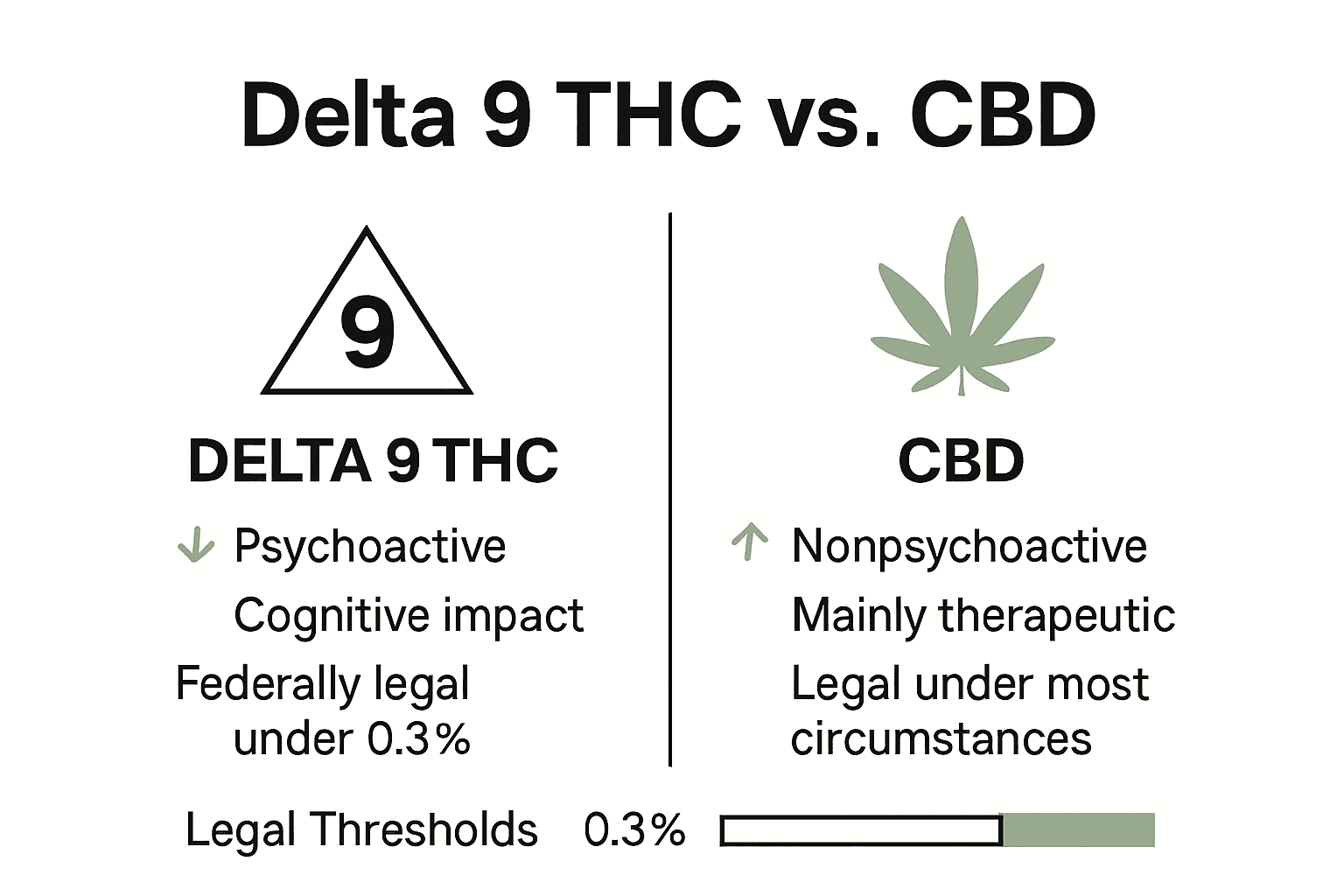
Key comparative characteristics include:
- Psychoactive vs. nonpsychoactive properties
- Unique neurological interaction mechanisms
- Distinct inflammatory response patterns
- Varying potential medical applications
- Different molecular interaction profiles
To dive deeper into understanding different cannabinoid varieties, explore our guide to understanding Delta-8 and expand your knowledge of cannabis compounds.
Explore Premium Delta 9 THC Products with Confidence at Avondale Apothecary
Navigating the complex world of Delta 9 THC can feel overwhelming. With so many questions about legality, effects, and safety, it is crucial to choose cannabis products you can trust. Avondale Apothecary offers a carefully curated selection of high-quality strains, edibles, and concentrates designed to deliver clear and consistent experiences. Our detailed Certificates of Analysis (COAs) ensure transparency and peace of mind with every purchase.

Take control of your cannabis journey today. Visit Avondale Apothecary to explore our premium offerings and learn more about responsible usage through guides like our understanding the role of THC in edibles. For a closer look at how different products affect you, check out our guide to understanding edible effects. Don’t wait — experience safe, informed cannabis shopping now at Avondale Apothecary.
Frequently Asked Questions
What is Delta 9 THC, and how does it affect the body?
Delta 9 THC is the primary psychoactive compound in cannabis. It interacts with the body’s endocannabinoid system by binding to CB1 receptors, resulting in altered consciousness, changes in cognitive processing, and various physiological effects.
What are some common effects of consuming Delta 9 THC?
Common effects of Delta 9 THC include euphoria, altered perception of time, changes in appetite, and impairment of short-term memory and motor functions. These effects can vary widely among individuals based on dosage and tolerance.
How is Delta 9 THC different from other cannabinoids like CBD?
Delta 9 THC is psychoactive, meaning it produces a ‘high’, while cannabinoids like CBD are nonpsychoactive and are primarily studied for their potential therapeutic benefits. They also interact differently with the body’s receptors, leading to distinct physiological effects.
What are the legal considerations regarding Delta 9 THC?
Delta 9 THC is federally legal in products that contain less than 0.3% THC, as established by the 2018 Farm Bill. However, state regulations vary significantly, with some states allowing sales and others imposing bans or restrictions on hemp-derived products.