
Michigan’s cannabis beverage sales surged 112% in Q1 2025, signaling a transformative year for the industry. As consumers seek innovative ways to enjoy cannabis beyond traditional methods, beverages offer precise dosing, discreet consumption, and wellness benefits. This guide explores market growth, formulation innovations, regulatory updates, and smart selection strategies to help you navigate the evolving landscape of premium cannabis beverages in 2025.
Table of Contents
- Market Growth And Size Forecasts For Cannabis Beverages In The Us
- Innovations In Product Formulation Enhancing Cannabis Beverages
- Regulatory Environment And Compliance Shaping Cannabis Beverage Sales
- Consumer Preferences And Dosing Trends In Cannabis Beverages
- Regional Market Variation And Brand Dynamics In 2025
- Common Misconceptions About Cannabis Beverages In 2025
- Choosing Premium Cannabis Beverages In The Evolving 2025 Landscape
- Discover Premium Cannabis Beverages At Avondale Apothecary
- Frequently Asked Questions About Cannabis Beverages In 2025
Key takeaways
| Point | Details |
|---|---|
| Market expansion | The US cannabis beverage market reached $1.45 billion in 2025 and is projected to hit $3.85 billion by 2032. |
| Formulation advances | Nano-emulsion technology boosts cannabinoid absorption by 85%, enabling faster onset and precise effects. |
| Regulatory limits | Most states cap THC per serving at 2 to 5 mg, with container limits between 10 and 25 mg. |
| Consumer dosing | 42% of edible users prefer 10 mg THC or less per session, favoring low to moderate doses. |
| Brand consolidation | The number of cannabis beverage brands dropped from 148 to 117 in 2025, with top 10 brands holding 64% market share. |
Market growth and size forecasts for cannabis beverages in the US
The cannabis beverage sector is experiencing rapid expansion across the United States. The market was valued at $1.45 billion in 2025 and analysts project it will reach $3.85 billion by 2032, reflecting a compound annual growth rate of 17.6%. This growth outpaces many traditional beverage categories and signals strong consumer interest in alternative consumption methods.
Despite this momentum, cannabis beverages still represent a small fraction of the overall cannabis market. Beverages accounted for 1% of all cannabis sales in Q1 2025, yet they posted a 15% year over year sales increase. Within the beverage category itself, drinks dominate with 78% of sales, while other subcategories like syrups and powders make up the remainder.
Legal THC beverage sales tell an even more compelling story. Sales ranged between $1.0 billion and $1.3 billion in 2025, a figure that pales compared to the estimated total potential market of $9.9 to $14.9 billion. This gap highlights the enormous untapped opportunity as legalization expands and consumer awareness grows.
Key market drivers include:
- Expanding state legalization creating new consumer access points
- Growing acceptance of cannabis as a wellness and lifestyle product
- Innovation in product formulations improving taste and effects
- Shift away from smoking toward discreet consumption methods
| Market Segment | 2025 Value | 2032 Projection | Growth Rate |
|---|---|---|---|
| Total US cannabis beverages | $1.45B | $3.85B | 17.6% CAGR |
| Legal THC beverages | $1.0-1.3B | TBD | Strong potential |
| Drinks subcategory share | 78% | Increasing | Leading segment |
Exploring cannabis trends 2025 market reveals broader industry shifts, while 7 ways to consume cannabis in 2025 shows how beverages fit within diverse consumption preferences. The cannabis ecommerce trends 2026 landscape further demonstrates how online retail is reshaping product discovery and purchasing behaviors.
Innovations in product formulation enhancing cannabis beverages
Technological breakthroughs are transforming how cannabis beverages deliver effects and meet consumer expectations. Nano-emulsion technology has improved cannabinoid absorption rates by up to 85%, making products more efficient and predictable. This process breaks cannabinoids into microscopic particles that dissolve easily in water, allowing faster entry into the bloodstream.

Traditional edibles can take 30 to 90 minutes to produce effects, creating uncertainty for users. Nano-emulsified beverages often work within 10 to 20 minutes, offering an experience closer to alcohol in terms of onset timing. This predictability helps consumers gauge their intake and avoid overconsumption, a common issue with delayed-onset products.
Precise dosing represents another significant advantage. Each serving contains a known amount of THC or CBD, eliminating guesswork and supporting consistent experiences across sessions. Manufacturers can now create products with specific cannabinoid ratios tailored to different needs, whether relaxation, energy, or focus.
Formulation trends shaping 2025 products:
- Clean-label ingredients with natural flavors and no artificial additives
- Functional wellness blends incorporating adaptogens, vitamins, and botanicals
- Low-calorie and sugar-free options appealing to health-conscious consumers
- Diverse flavor profiles moving beyond cannabis taste to gourmet experiences
- Session-style beverages with lower THC for extended social consumption
These innovations enable products that fit seamlessly into social settings without the stigma historically associated with cannabis use. Consumers can enjoy a beverage at gatherings, restaurants, or events with discretion and confidence in the outcome.
Pro Tip: Start with products featuring nano-emulsion if you’re new to cannabis beverages. The faster onset lets you gauge effects more accurately and adjust your intake before consuming more.
For deeper insights into product types, review top cannabis infused beverages and the infusion beverages breakdown guide, which explain formulation differences and their impact on user experience.
Regulatory environment and compliance shaping cannabis beverage sales
Navigating the regulatory landscape remains one of the biggest challenges for both manufacturers and consumers. Cannabis beverages exist in a complex legal framework where federal prohibition clashes with state-level legalization, creating a patchwork of rules that vary dramatically by location.
Most states cap THC per serving between 2 and 5 mg, with container limits typically ranging from 10 to 25 mg for ready-to-drink products. These restrictions aim to prevent overconsumption and ensure consumer safety, particularly for inexperienced users. Some jurisdictions impose even stricter limits, while others allow higher doses under specific conditions.
Age restrictions mirror alcohol regulations in most markets, requiring consumers to be 21 or older. Sales occur exclusively through licensed dispensaries in adult-use states, with strict tracking systems monitoring inventory from production to purchase. Medical markets may have different age thresholds and purchase limits based on patient status and physician recommendations.
Key regulatory considerations:
- State-specific THC limits per serving and per container
- Mandatory lab testing for potency, pesticides, and contaminants
- Child-resistant packaging and clear labeling requirements
- Restrictions on marketing claims and imagery
- Prohibition on interstate commerce due to federal status
These rules create compliance costs and operational complexities for producers, but they also protect consumers by ensuring product quality and consistency. Reputable brands invest heavily in testing and transparency, providing Certificates of Analysis that verify potency and purity.
The regulatory environment continues evolving as more states consider legalization and existing markets refine their rules. Staying informed about local laws is essential for legal consumption and accessing safe products. Resources like the 2025 cannabis beverage regulations scorecard help consumers track changes across jurisdictions.
Consumer preferences and dosing trends in cannabis beverages
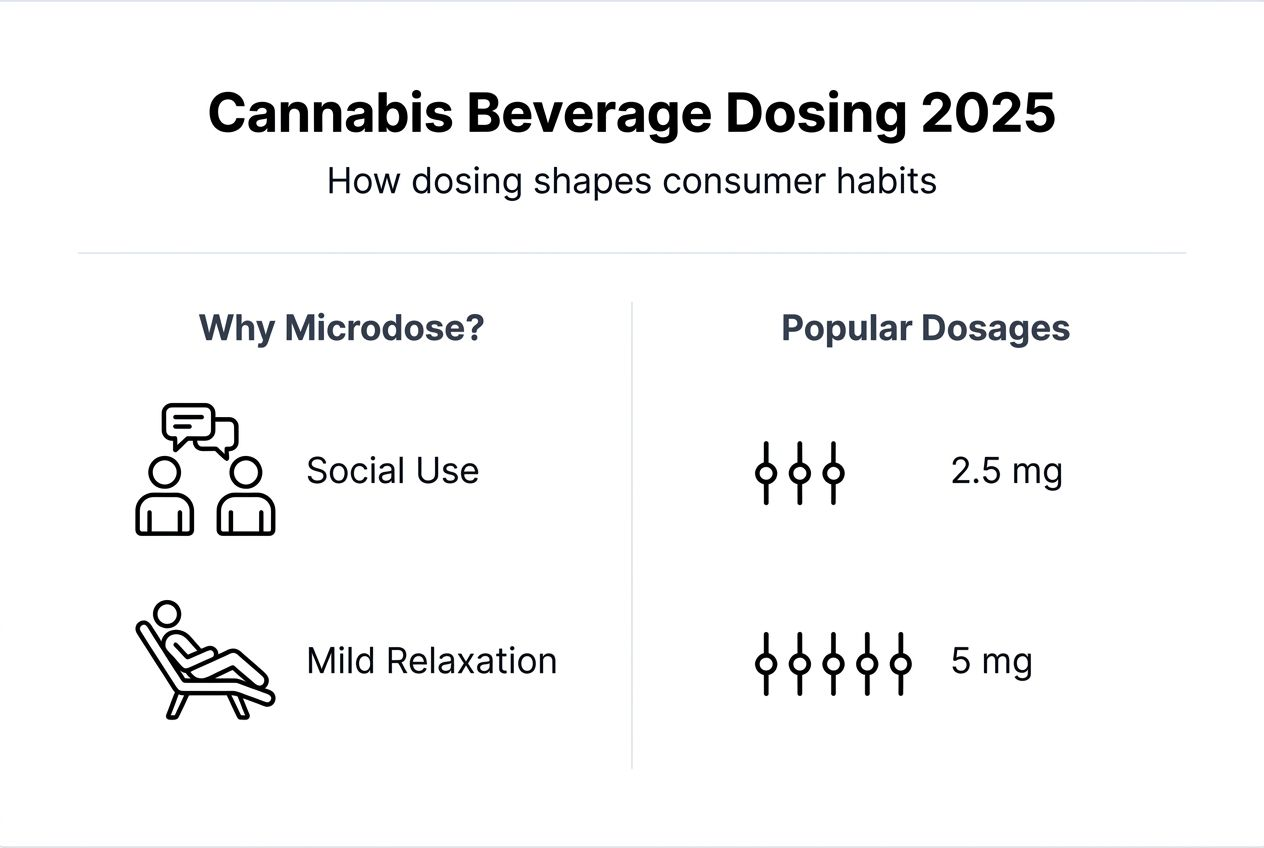
Understanding how consumers approach cannabis beverages reveals important patterns about dosing, motivations, and product selection. 42% of edible cannabis consumers in adult-use states prefer doses of 10 mg THC or less per occasion, with significant preference for 2.5 to 5 mg doses within the beverage segment. This trend toward microdosing reflects a desire for functional, manageable effects rather than intense intoxication.
Lower doses allow users to maintain productivity, social engagement, and cognitive clarity while experiencing mild relaxation or mood enhancement. This approach appeals particularly to wellness-focused consumers who view cannabis as a tool for stress management, sleep support, or creative thinking rather than recreation alone.
Discreet consumption drives much of the beverage category’s appeal. Unlike smoking or vaping, beverages produce no odor and resemble common drinks, allowing use in settings where other cannabis methods would draw unwanted attention. This social acceptability opens new occasions for consumption, from outdoor activities to dinner parties.
Factors influencing consumer dosing choices:
- Personal tolerance and prior cannabis experience
- Desired effects and consumption context
- Time available for effects to manifest and wear off
- Legal limits and product availability
- Concerns about workplace testing or impairment
Wellness-oriented formulations are gaining traction as consumers seek specific benefits beyond general intoxication. Products combining CBD with low-dose THC, or featuring cannabinoids like CBG and CBN, target particular needs like inflammation reduction, anxiety relief, or sleep improvement. Functional ingredients such as melatonin, L-theanine, or electrolytes enhance these targeted effects.
Pro Tip: If you’re switching from smoking to beverages, start with half the THC dose you’d normally consume. Edible and beverage metabolism produces different effects than inhalation, so your usual amount might feel too strong.
Balancing enjoyment with safety requires understanding how your body processes cannabinoids and respecting your limits. The advantages of cannabis beverages include precise control and predictable experiences when you choose appropriate doses. Using a cannabis product checklist 2026 helps ensure you select products matching your needs and experience level.
Regional market variation and brand dynamics in 2025
Cannabis beverage performance varies significantly across states, reflecting differences in market maturity, regulations, and consumer adoption. Michigan’s beverage sales surged 112% in Q1 2025 compared to the same period in 2024, demonstrating explosive growth in this emerging market. Ohio and Illinois also posted strong double-digit increases as legalization efforts expanded access and awareness.
Conversely, mature markets like Arizona and Colorado experienced beverage sales contraction during the same period. This pattern suggests early markets may be saturating or facing increased competition from new product categories and consumption methods. Price compression and regulatory changes also impact sales dynamics in established states.
Brand consolidation is reshaping the competitive landscape dramatically. The number of cannabis beverage brands declined from 148 to 117 in 2025, with the top 10 brands controlling 64% of sales. This concentration reflects the advantages of scale in distribution, marketing, and production efficiency. Multi-state operators are expanding beverage portfolios to capture market share across regions.
| Market Region | Growth Trend | Key Characteristics |
|---|---|---|
| Michigan | +112% YoY | Rapid expansion in new adult-use market |
| Ohio/Illinois | Strong double-digit growth | Emerging markets with increasing consumer adoption |
| Arizona/Colorado | Contraction | Mature markets facing saturation and competition |
| California | Moderate growth | Large but competitive with regulatory complexity |
Brand strategy trends:
- Multi-state expansion to diversify revenue and increase visibility
- Portfolio diversification across beverage types and dose levels
- Partnerships with licensed producers in new markets
- Investment in brand recognition through marketing and events
- Focus on product consistency and quality to build loyalty
Smaller brands face mounting pressure to differentiate through unique formulations, local appeal, or niche positioning. Some succeed by targeting specific consumer segments, such as athletes, wellness enthusiasts, or flavor connoisseurs. Others struggle with distribution challenges and capital constraints in an increasingly competitive environment.
Understanding these regional and competitive dynamics helps consumers identify which brands offer the best combination of quality, availability, and value in their local markets. Following cannabis trends 2025 market developments keeps you informed about new entrants and evolving product offerings.
Common misconceptions about cannabis beverages in 2025
Several myths persist about cannabis beverages despite growing consumer familiarity with the category. Clearing up these misunderstandings helps users make informed decisions and set appropriate expectations.
Misconception: Cannabis beverages are just non-alcoholic beer. While some products mimic beer or cocktails in format and social context, cannabis beverages deliver entirely different effects. They contain cannabinoids that interact with your endocannabinoid system, producing psychoactive or therapeutic outcomes unrelated to alcohol’s mechanisms. The experience, risks, and benefits differ fundamentally from alcoholic drinks.
Misconception: Higher THC doses always create better experiences. Many newcomers assume more THC equals more enjoyment, but excessive doses often cause anxiety, paranoia, or discomfort. The optimal dose varies by individual tolerance, desired effects, and consumption context. Starting low and increasing gradually produces more positive outcomes than jumping to high-potency products.
Misconception: Cannabis beverages are legal everywhere in the US. Federal prohibition continues despite state-level legalization in many jurisdictions. Cannabis beverages remain illegal under federal law and in numerous states. Even in legal states, regulations vary widely regarding purchase limits, possession amounts, and consumption locations. Always verify local laws before purchasing or consuming.
Misconception: All cannabis beverages work immediately like alcohol. While nano-emulsion technology enables faster onset than traditional edibles, effects still take time to manifest. Onset ranges from 10 to 45 minutes depending on formulation, metabolism, and stomach contents. Consuming multiple servings too quickly based on delayed onset creates risk of overconsumption.
Misconception: Cannabis beverage quality doesn’t vary between brands. Product quality spans a wide spectrum based on sourcing, manufacturing processes, and testing rigor. Reputable brands provide detailed lab results verifying potency and purity, while others cut corners or make unsupported claims. Choosing products with transparent testing and quality standards ensures safety and consistency.
Choosing premium cannabis beverages in the evolving 2025 landscape
Selecting high-quality cannabis beverages requires evaluating several key factors beyond marketing claims and packaging appeal. Smart consumers prioritize transparency, formulation quality, and alignment with their personal needs.
-
Verify lab testing and COAs. Legitimate brands provide Certificates of Analysis from independent labs showing exact cannabinoid content, terpene profiles, and screening for contaminants like pesticides, heavy metals, and residual solvents. This documentation confirms the product contains what the label claims and meets safety standards.
-
Match THC dose to your experience and goals. Beginners should start with 2.5 mg or less per serving, while experienced users might prefer 5 to 10 mg. Consider the context: social settings often call for lower doses that maintain clarity, while home relaxation might accommodate stronger effects.
-
Look for advanced formulation technologies. Products featuring nano-emulsion, liposomal delivery, or other bioavailability enhancers offer more predictable onset and effects. These technologies improve absorption efficiency and reduce the variability common with traditional edibles.
-
Consider flavor and functional ingredients. Premium beverages use natural flavors and high-quality ingredients that enhance taste without artificial additives. Functional additions like adaptogens, vitamins, or botanicals can provide complementary benefits supporting your wellness goals.
-
Purchase from licensed, reputable retailers. Buying through legal channels ensures regulatory compliance and access to tested products. Licensed dispensaries and authorized online platforms like Avondale Apothecary maintain inventory tracking and quality standards that protect consumers.
-
Evaluate brand reputation and transparency. Research brands through reviews, industry recognition, and their willingness to share detailed product information. Companies committed to quality invest in customer education and stand behind their formulations.
Pro Tip: Read the full ingredient list, not just the THC content. Quality beverages use recognizable, natural ingredients and avoid excessive sugars, artificial colors, or fillers that compromise health benefits.
Applying a cannabis product checklist 2026 ensures you evaluate all relevant quality factors systematically. Guides on how to pick infusion beverages and understanding cannabis beverages provide additional frameworks for confident selection.
Discover premium cannabis beverages at Avondale Apothecary
Navigating the expanding cannabis beverage market becomes easier when you work with trusted retailers committed to quality and transparency. Avondale Apothecary curates a premium selection of cannabis-infused beverages featuring advanced formulations designed for consistency and exceptional experiences.
Our infused beverages collection showcases products from leading brands utilizing nano-emulsion and other cutting-edge technologies that deliver fast onset and precise effects. Each product undergoes rigorous testing with full COAs available, ensuring you receive exactly what you expect with every purchase.
Beyond beverages, explore our cannabis concentrates collection and specialty items like AA live resin concentrate for diverse consumption options. We’re dedicated to helping you find products matching your preferences, experience level, and wellness goals. Shop with confidence knowing every item meets our strict quality standards and regulatory compliance requirements.
Frequently asked questions about cannabis beverages in 2025
What is the typical THC dose in cannabis beverages?
Most cannabis beverages contain 2.5 to 10 mg THC per serving, with many states legally capping individual servings at 5 mg or less. Products designed for microdosing may offer as little as 1 to 2 mg, while session beverages often split 10 mg across multiple servings. The optimal dose depends on your tolerance, desired effects, and experience level.
How do cannabis beverages differ from edibles or traditional cannabis?
Cannabis beverages typically feature faster onset than solid edibles due to liquid absorption and advanced formulations like nano-emulsion. Effects usually begin within 10 to 30 minutes versus 30 to 90 minutes for traditional edibles. Beverages also offer more precise dosing control and discreet consumption compared to smoking or vaping, which produce immediate effects but carry inhalation risks.
Are cannabis beverages legal in all US states?
No, cannabis beverages remain federally prohibited and illegal in many states. Legality varies by jurisdiction, with adult-use states allowing recreational sales to those 21 and older, medical states requiring patient registration, and prohibitionist states banning all cannabis products. Always verify local laws before purchasing or consuming cannabis beverages, and never transport them across state lines.
How to ensure safe consumption of cannabis beverages?
Start with low doses, wait at least 30 minutes before consuming more, and purchase only from licensed retailers offering lab-tested products with verified COAs. Read labels carefully to understand THC content per serving and follow dosing recommendations. Avoid mixing with alcohol or other substances, never drive after consuming, and store products securely away from children and pets.
What benefits do nano-emulsion formulations provide?
Nano-emulsion technology breaks cannabinoids into microscopic particles that improve water solubility and absorption rates by up to 85%. This advancement enables faster onset, more predictable effects, and better bioavailability, meaning your body uses more of the THC or CBD consumed. The result is consistent experiences with less product waste and improved dose control compared to traditional formulations.