

Finding your next premium cannabis product online can feel like sorting through a maze of new apps, regulations, and endless options. With digital shopping now built around mobile-first design and flexible payment solutions, cannabis ecommerce in 2026 offers a more secure, personalized experience than ever before. As technology, compliance, and consumer demands reshape the way you shop, understanding this dynamic digital environment helps you make smarter, more confident decisions.
Table of Contents
- Defining Cannabis Ecommerce in 2026
- Evolving Product Categories and Formats
- Technology and Retail Innovations Online
- Regulatory Changes and Compliance Needs
- Transparency, Trust, and Consumer Demands
- Risks, Errors, and How to Stay Competitive
Key Takeaways
| Point | Details |
|---|---|
| Technology is Essential for Compliance | Sophisticated payment solutions and adaptable technology platforms are critical for navigating regulatory challenges in cannabis ecommerce. |
| Consumer Preferences Drive Product Innovation | Products are increasingly categorized by consumer motivations, not just traditional classifications, reflecting desires for targeted experiences. |
| Transparency and Trust Are Imperative | Ecommerce platforms must prioritize detailed product information and educational content to build consumer trust and loyalty. |
| Proactive Risk Management is Key | Businesses should develop dynamic strategies to mitigate operational and compliance risks in a rapidly evolving cannabis market. |
Defining Cannabis Ecommerce in 2026
Cannabis ecommerce in 2026 represents a dynamic digital ecosystem where technology, regulatory complexity, and consumer experience converge. As the industry evolves, online platforms are transforming how cannabis products are discovered, selected, and purchased across medical and recreational markets. Cannabis ecommerce infrastructure now demands sophisticated technological solutions that bridge legal constraints with consumer expectations.
The landscape of digital cannabis commerce is characterized by several critical developments:
- Advanced payment technologies replacing traditional banking limitations
- Telemedicine-enabled purchasing platforms
- Enhanced age verification and compliance systems
- Real-time mobile payment integration
- Geographically adaptive regulatory compliance mechanisms
Technology serves as the primary catalyst driving these transformations. Payment solutions and mobile commerce platforms are no longer optional but essential infrastructure for cannabis retailers. The ability to provide secure, compliant transaction experiences determines market success in an increasingly competitive digital environment.
Technology and regulatory adaptability define the future of cannabis ecommerce, not just product availability.
Regulatory landscapes continue to shift, with international markets like Germany, Australia, and the United States presenting unique challenges and opportunities for online cannabis commerce. Global market dynamics increasingly influence how digital platforms develop their technological and compliance strategies.
Pro tip: Invest in robust, adaptable technology platforms that can quickly adjust to changing regulatory requirements and consumer preferences.
Evolving Product Categories and Formats
The cannabis product landscape in 2026 continues to transform, moving far beyond traditional flower and pre-roll offerings. Cannabis product diversity now reflects sophisticated consumer preferences that extend across wellness, recreational, and medical markets. Consumers are no longer satisfied with one-dimensional product selections but seek targeted experiences that address specific lifestyle and health needs.
Product categories are increasingly defined by consumer motivations rather than traditional classifications:
-
Wellness-Oriented Formats
- Sleep enhancement products
- Stress reduction formulations
- Pain management solutions
- Athletic recovery blends
-
Experience-Driven Categories
- Microdose options
- Social interaction enhancers
- Creative stimulation products
The most notable trend in 2026 is how product categorization strategies have evolved. Retailers are now organizing inventory based on desired outcomes rather than traditional product types. This approach helps consumers navigate complex product landscapes by focusing on intended results like relaxation, mental clarity, or physical recovery.
Consumer preferences are driving product innovation, not regulatory constraints.
Flower and pre-rolls remain dominant in dollar sales, but innovative formats continue to emerge. Edibles, vape cartridges, and new consumption methods are gaining significant market share by offering convenient, controlled, and discreet cannabis experiences. The lines between recreational and medicinal use are increasingly blurred, with consumers seeking holistic solutions that fit seamlessly into their lifestyle.

Pro tip: Focus on creating product collections that solve specific consumer needs rather than merely categorizing by traditional format types.
Technology and Retail Innovations Online
Cannabis ecommerce in 2026 is being revolutionized by sophisticated technological innovations that transform digital shopping experiences. Cannabis ecommerce platforms are now designed with unprecedented complexity, supporting scalable, compliance-ready solutions that address the industry’s unique challenges.
Key technological developments include:
-
Mobile-First Design
- Over 80% of traffic from mobile devices
- Responsive user interfaces
- Touchscreen-optimized navigation
-
Advanced Payment Solutions
- Multi-currency support
- Flexible transaction mechanisms
- Compliance-ready payment gateways
-
API-Driven Customization
- Headless commerce platforms
- Modular technological architecture
- Seamless integration capabilities
The digital retail landscape is shifting toward more transparent, pharmacy-like experiences. Retail innovation strategies now focus on building consumer trust through professional merchandising, clear product explanations, and data-driven inventory management that reflects evolving consumer preferences.
Digital platforms are creating pharmacy-level professionalism in cannabis retail.
Subscription billing, international market expansion, and sophisticated data analytics are driving the next wave of cannabis ecommerce. Online dispensaries are leveraging technological capabilities to provide personalized, informative shopping experiences that go far beyond traditional transactional models.
Pro tip: Invest in flexible, API-first technology platforms that can quickly adapt to changing regulatory and consumer expectations.
Regulatory Changes and Compliance Needs
Navigating the cannabis ecommerce landscape in 2026 demands unprecedented regulatory sophistication. Cannabis regulatory complexities are transforming how businesses approach compliance, with a patchwork of federal and state regulations creating significant operational challenges.
Key regulatory considerations include:
-
Federal Regulatory Dynamics
- Potential hemp and cannabis rescheduling
- Ongoing federal policy uncertainty
- Evolving interstate commerce restrictions
-
Compliance Requirements
- Enhanced recordkeeping standards
- Stringent anti-money laundering protocols
- Detailed transaction monitoring systems
-
Operational Risk Management
- Cross-jurisdictional regulatory navigation
- Adaptive compliance strategies
- Proactive legal risk mitigation
Global regulatory landscapes are increasingly complex, demanding robust risk management strategies that extend beyond traditional compliance frameworks. Businesses must develop sophisticated approaches that address product labeling, marketing restrictions, tax obligations, and intricate cross-border trade regulations.
Compliance is no longer a checkbox, but a dynamic strategic imperative.
The most successful cannabis ecommerce platforms will be those that can rapidly adapt to changing regulatory environments, leveraging technology and legal expertise to maintain operational flexibility. Payment processing remains a critical challenge, with businesses required to develop innovative solutions that meet both regulatory requirements and consumer expectations.
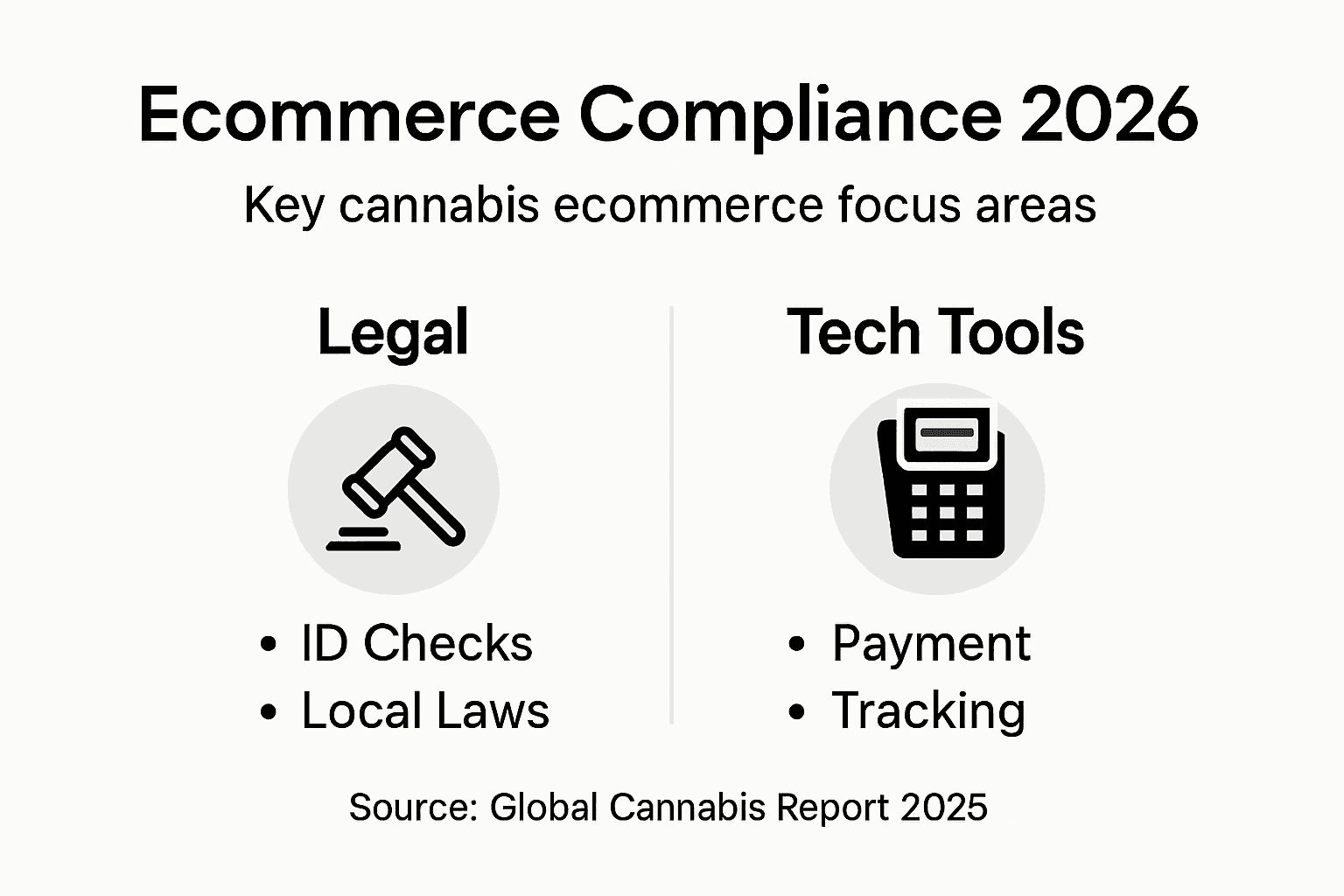
Here’s how regulatory strategies shape ecommerce success:
| Regulatory Focus Area | Strategic Action Required | Impact on Ecommerce Performance |
|---|---|---|
| Federal Uncertainty | Ongoing legal monitoring | Reduces risk of sudden disruptions |
| Cross-Border Trade | Adaptive technology platforms | Enables entry into new markets |
| Anti-Money Laundering | Advanced payment processing tools | Ensures compliance and consumer trust |
| Product Labeling | Automated compliance software | Speeds up new product launches |
Pro tip: Invest in comprehensive compliance infrastructure that combines legal expertise, technological adaptability, and real-time regulatory monitoring.
Transparency, Trust, and Consumer Demands
The cannabis ecommerce landscape in 2026 is fundamentally defined by consumer expectations of unprecedented transparency and trust. Consumer trust dynamics have transformed cannabis purchasing from a transactional experience to a relationship built on authenticity, safety, and comprehensive product understanding.
Key consumer demand characteristics include:
-
Transparency Requirements
- Detailed product ingredient lists
- Comprehensive potency information
- Clear effect profiles
- Third-party testing documentation
-
Trust-Building Mechanisms
- Professional service interactions
- Age verification systems
- Privacy protection protocols
- Authentic brand storytelling
-
Educational Engagement
- Comprehensive product explanations
- Wellness-focused content
- Expert-validated information
- Responsible consumption guidance
Digital platform transparency has become a critical competitive differentiator. Successful ecommerce platforms now prioritize detailed product data, compliance verification, and consumer education as fundamental components of their digital experience.
Consumer trust is built through radical transparency, not marketing rhetoric.
The normalization of cannabis has elevated consumer expectations, demanding that ecommerce platforms operate with the same professional standards as mainstream pharmaceutical and wellness retailers. Consumers seek nuanced, scientifically-backed information that empowers their purchasing decisions across recreational and medicinal segments.
Below is a summary of key cannabis consumer demands influencing ecommerce strategy:
| Consumer Expectation | Platform Feature | Competitive Advantage |
|---|---|---|
| Ingredient Transparency | Real-time, detailed product data | Builds loyalty and repeat purchases |
| Privacy Assurance | Secure, encrypted user accounts | Reduces transaction abandonment |
| Product Education | Interactive guides and FAQs | Increases basket size and confidence |
| Professional Service | Certified support staff and policies | Differentiates from unregulated sites |
Pro tip: Develop a comprehensive digital transparency strategy that provides unfiltered, scientifically validated product information to build genuine consumer trust.
Risks, Errors, and How to Stay Competitive
The cannabis ecommerce landscape in 2026 demands strategic risk management and proactive operational excellence. Competitive cannabis strategies are increasingly complex, requiring sophisticated approaches to navigate market volatility and regulatory challenges.
Critical risk management considerations include:
-
Operational Risks
- Inventory mismanagement
- Pricing pressure vulnerabilities
- Supply chain disruptions
- Market oversaturation
-
Compliance Challenges
- Regulatory non-compliance penalties
- Payment processing restrictions
- Cross-jurisdictional legal complexities
- Documentation and reporting gaps
-
Competitive Mitigation Strategies
- Data-driven decision making
- Adaptive technology platforms
- Continuous staff training
- Agile business model development
Retail competitive intelligence emphasizes the critical importance of leveraging advanced technologies and maintaining operational flexibility. Successful cannabis ecommerce platforms must develop comprehensive risk management frameworks that anticipate and quickly respond to market shifts.
Competitive advantage emerges from strategic adaptability, not rigid infrastructure.
Technology and data analytics play pivotal roles in mitigating risks and maintaining market relevance. By investing in secure payment infrastructures, transparent communication channels, and consumer behavior insights, businesses can effectively navigate the complex cannabis ecommerce ecosystem.
Pro tip: Develop a dynamic risk management strategy that combines technological innovation, regulatory intelligence, and continuous organizational learning.
Stay Ahead in Cannabis Ecommerce with Avondale Apothecary
The article highlights how technology, transparency, and compliance define cannabis ecommerce trends in 2026. Navigating shifting regulations and meeting consumer demands for clear product information can feel overwhelming. At Avondale Apothecary, we address these challenges by offering a curated selection of premium products backed by comprehensive Certificates of Analysis to ensure you get full transparency and quality assurance. From our diverse High-Resin Hemp Flower to innovative wellness options like Mushrooms, experience a user-friendly platform designed to simplify your purchasing journey.
Discover how a trusted, professional online dispensary can transform your cannabis shopping with clear product data, responsive mobile design, and reliable compliance you can count on. Explore our full catalog and get started today at Avondale Apothecary for unmatched quality, transparency, and convenience.
Frequently Asked Questions
What are the key technological advancements in cannabis ecommerce for 2026?
Key advancements include mobile-first design to accommodate increased mobile traffic, advanced payment solutions with multi-currency support, and API-driven customization that allows for seamless integration of various services.
How are cannabis product categories evolving in 2026?
Cannabis product categories are now defined by consumer motivations rather than traditional classifications. Wellness-oriented formats like sleep enhancement and pain management are gaining traction, along with experience-driven categories like microdose options and social interaction enhancers.
What role does regulatory compliance play in cannabis ecommerce?
Regulatory compliance is crucial as it involves adapting to a complex mix of federal and state regulations. Key areas include maintaining recordkeeping standards, anti-money laundering protocols, and developing adaptive compliance strategies that ensure businesses can navigate legal complexities effectively.
Why is consumer transparency important in cannabis ecommerce?
Consumer transparency is essential as it builds trust and loyalty. Consumers expect detailed product ingredient lists, potency information, and third-party testing documentation. Platforms prioritizing transparency can differentiate themselves and enhance consumer confidence in their products.