

Finding premium cannabis delivered with total transparency often feels complicated for American and Canadian enthusiasts who value both quality and security. The complexities in regulated workflows, from secure order fulfillment to robust compliance checks, shape every seamless shopping experience. Explore the essentials behind a truly efficient cannabis delivery process, where quality control and regulatory compliance guarantee product integrity and peace of mind with every order.
Table of Contents
- Defining Cannabis Delivery Workflow Essentials
- Types of Cannabis Delivery Models Explained
- Key Steps in Order Fulfillment Process
- Navigating Legal Compliance and Age Checks
- Critical Risks, Costs, and Mistakes to Avoid
Key Takeaways
| Point | Details |
|---|---|
| Effective Workflow is Crucial | A well-structured cannabis delivery workflow ensures product integrity and consumer safety, adhering to strict regulatory requirements. |
| Diverse Delivery Models | Different delivery models, such as direct retail and specialized home delivery, cater to varying consumer needs while balancing compliance and accessibility. |
| Importance of Legal Compliance | Adhering to age verification and regulatory standards is essential for preventing legal issues and building consumer trust in cannabis delivery operations. |
| Proactive Risk Management | Developing comprehensive strategies for risk assessment and compliance monitoring can mitigate potential operational and legal vulnerabilities in cannabis delivery. |
Defining Cannabis Delivery Workflow Essentials
A cannabis delivery workflow represents the systematic process of safely transporting regulated cannabis products from authorized production facilities to legal consumers. This intricate process requires comprehensive planning, strict regulatory compliance, and precise operational protocols that prioritize product integrity and consumer safety.
The fundamental stages of an effective cannabis delivery workflow involve multiple strategic components. These typically include quality controlled cultivation by licensed producers, comprehensive product tracking, secure transportation methods, age verification procedures, and documented transfer protocols. Each step must adhere to state and federal regulatory requirements, ensuring that cannabis products move through the supply chain with maximum transparency and minimal risk.
Specifically, a robust delivery workflow incorporates several critical checkpoints. Producers must first generate detailed product documentation, including batch numbers, THC/CBD concentrations, and origin tracking. Transportation teams require specialized vehicles with secure storage compartments, GPS tracking, and real-time monitoring capabilities. Delivery personnel must undergo background checks, maintain strict confidentiality protocols, and utilize advanced verification technologies to confirm consumer eligibility.
Effective cannabis delivery workflows also demand continuous quality assurance and compliance monitoring. This means implementing rigorous tracking systems that document every product movement, maintaining temperature-controlled transportation environments, and establishing clear chain-of-custody protocols that minimize potential diversion or unauthorized access.
Pro tip: Develop a comprehensive digital tracking system that logs each stage of product transportation, creating an audit trail that protects both consumers and businesses.
Types of Cannabis Delivery Models Explained
Cannabis delivery models represent diverse approaches to distributing regulated cannabis products, each designed to balance consumer accessibility with stringent regulatory requirements. These models have evolved significantly, reflecting changing legal landscapes and sophisticated market dynamics across different jurisdictions.
The primary cannabis delivery models include legal supply chain configurations ranging from government-regulated retail shops to more community-focused distribution systems. These models can be categorized into several key archetypes: direct retail delivery, medical dispensary distribution, online ordering with physical pickup, and specialized home delivery services. Each model incorporates unique verification processes, security protocols, and compliance mechanisms to ensure safe and legal product distribution.
Commercial delivery models typically involve licensed retailers who manage comprehensive supply chain operations. These systems require advanced tracking technologies, age verification protocols, and strict inventory management. Delivery personnel must undergo background checks, utilize secure transportation methods, and maintain real-time product tracking. Alternative models like cannabis social clubs offer more communal approaches, where members collectively manage smaller-scale production and distribution networks, emphasizing community oversight and shared responsibility.
The effectiveness of these delivery models depends on their ability to balance accessibility, safety, and regulatory compliance. Successful implementations integrate sophisticated tracking systems, robust age verification technologies, and transparent operational protocols that minimize potential product diversion or unauthorized access. Regional variations in legal frameworks continue to shape these delivery models, creating dynamic and evolving approaches to cannabis distribution.
Here’s a concise comparison of common cannabis delivery models and their core distinctions:
| Delivery Model | Consumer Access | Compliance Complexity | Security Emphasis |
|---|---|---|---|
| Direct Retail Delivery | In-person, broad reach | High | GPS tracking, secure vehicles |
| Medical Dispensary Distribution | Patients only | Medium | Medical record checks, confidentiality |
| Online Order with Pickup | Broad, tech-savvy users | Medium | ID checks at store, order tracking |
| Specialized Home Delivery | Homebound consumers | High | Real-time monitoring, age verification |
| Cannabis Social Club | Club members only | Low-Moderate | Community oversight, shared responsibility |
Pro tip: Develop a comprehensive digital compliance checklist that covers every stage of cannabis product transportation, ensuring complete regulatory adherence and operational transparency.
Key Steps in Order Fulfillment Process
The cannabis order fulfillment process represents a complex, meticulously regulated workflow that transforms raw plant material into consumer-ready products through a series of carefully orchestrated steps. This intricate journey demands precision, compliance, and advanced technological integration to ensure product quality and legal adherence.
The initial stages of order fulfillment begin with cannabis supply chain management, which encompasses several critical components. These include cultivation selection, genetic tracking, harvesting, processing, and comprehensive quality testing. Each product undergoes rigorous potency and contamination screenings, ensuring only verified, safe cannabis products progress through the distribution pipeline. Key steps involve detailed documentation, batch tracking, and maintaining strict chain-of-custody protocols that create transparent, auditable records for regulatory compliance.
Commercial order fulfillment typically involves advanced technological systems that integrate inventory management, order processing, and secure transportation logistics. Specialized software platforms enable real-time tracking of product movement, age verification, and compliance monitoring. Delivery personnel must meet stringent background check requirements, utilize secure transportation methods, and follow precise protocols for product handling and transfer. These systems often incorporate GPS tracking, temperature-controlled storage, and digital verification technologies to maintain product integrity throughout the fulfillment process.

Successful cannabis order fulfillment requires a holistic approach that balances operational efficiency with regulatory requirements. This means implementing comprehensive tracking systems, maintaining meticulous documentation, and developing robust verification processes that minimize potential product diversion. Advanced fulfillment models integrate seed-to-sale tracking, ensuring each product can be traced from initial cultivation through final consumer delivery, creating an unbroken chain of accountability and transparency.
Pro tip: Invest in integrated digital tracking systems that provide end-to-end visibility across every stage of cannabis product fulfillment, enabling real-time compliance monitoring and operational optimization.
Navigating Legal Compliance and Age Checks
Legal compliance represents the foundational framework that governs cannabis delivery operations, establishing critical guidelines for safe, responsible product distribution. These regulations create comprehensive protocols designed to protect public health, prevent unauthorized access, and maintain strict accountability throughout the cannabis supply chain.
The core of legal compliance centers on controlled cannabis supply chain regulations, which mandate rigorous age verification processes. Delivery services must implement multilayered verification systems that go beyond simple ID checks, incorporating advanced digital technologies to authenticate customer eligibility. These systems typically require government-issued identification, digital age verification platforms, and real-time cross-referencing against legal databases to ensure absolute compliance with age restrictions.
Comprehensive legal compliance extends far beyond age verification, encompassing a complex network of regulatory requirements. This includes maintaining detailed transaction records, implementing secure transportation protocols, tracking product inventory with precision, and ensuring that every stage of product movement adheres to state and federal guidelines. Delivery personnel must undergo extensive background checks, receive specialized training in regulatory compliance, and follow strict protocols for product handling, storage, and transfer.
Successful navigation of legal compliance demands a proactive, technology-driven approach that anticipates and addresses potential regulatory challenges. Advanced cannabis delivery services integrate sophisticated compliance management systems that provide real-time monitoring, automatic documentation, and comprehensive audit trails. These systems not only ensure immediate regulatory adherence but also create a transparent operational framework that builds consumer trust and demonstrates commitment to responsible cannabis distribution.
Pro tip: Develop a comprehensive digital compliance management system that automates age verification, documentation, and regulatory tracking to minimize human error and ensure consistent legal adherence.
Critical Risks, Costs, and Mistakes to Avoid
Cannabis delivery operations navigate an intricate landscape of potential risks that can significantly impact business sustainability and operational integrity. Understanding these challenges is crucial for developing proactive strategies that mitigate potential legal, financial, and reputational vulnerabilities.
The most pressing concerns revolve around cannabis supply chain risks, which encompass multiple critical domains. These risks include potential infiltration of illegal products, compromised quality assurance mechanisms, and inadequate security protocols. Delivery services must implement comprehensive screening processes that prevent unauthorized product introduction, verify supply chain integrity, and maintain rigorous documentation standards. Potential financial consequences can be substantial, with penalties ranging from significant regulatory fines to complete operational shutdown.
Operational mistakes in cannabis delivery can create cascading negative consequences that extend far beyond immediate financial losses. Common critical errors include insufficient product testing protocols, inadequate customer verification systems, poor inventory tracking, and incomplete record-keeping. These lapses can expose businesses to significant legal liabilities, compromise consumer safety, and potentially result in complete loss of operational licenses. Advanced delivery services must invest in sophisticated technological solutions that provide real-time monitoring, automated compliance checking, and comprehensive audit trail generation.
Successful risk management in cannabis delivery requires a multifaceted approach that combines technological innovation, stringent operational protocols, and continuous staff training. This means developing adaptive compliance frameworks, investing in advanced tracking technologies, maintaining transparent communication channels with regulatory bodies, and creating robust internal quality control mechanisms. Organizations must view risk management not as a static checklist but as a dynamic, evolving strategy that anticipates and addresses emerging challenges in the rapidly changing cannabis marketplace.
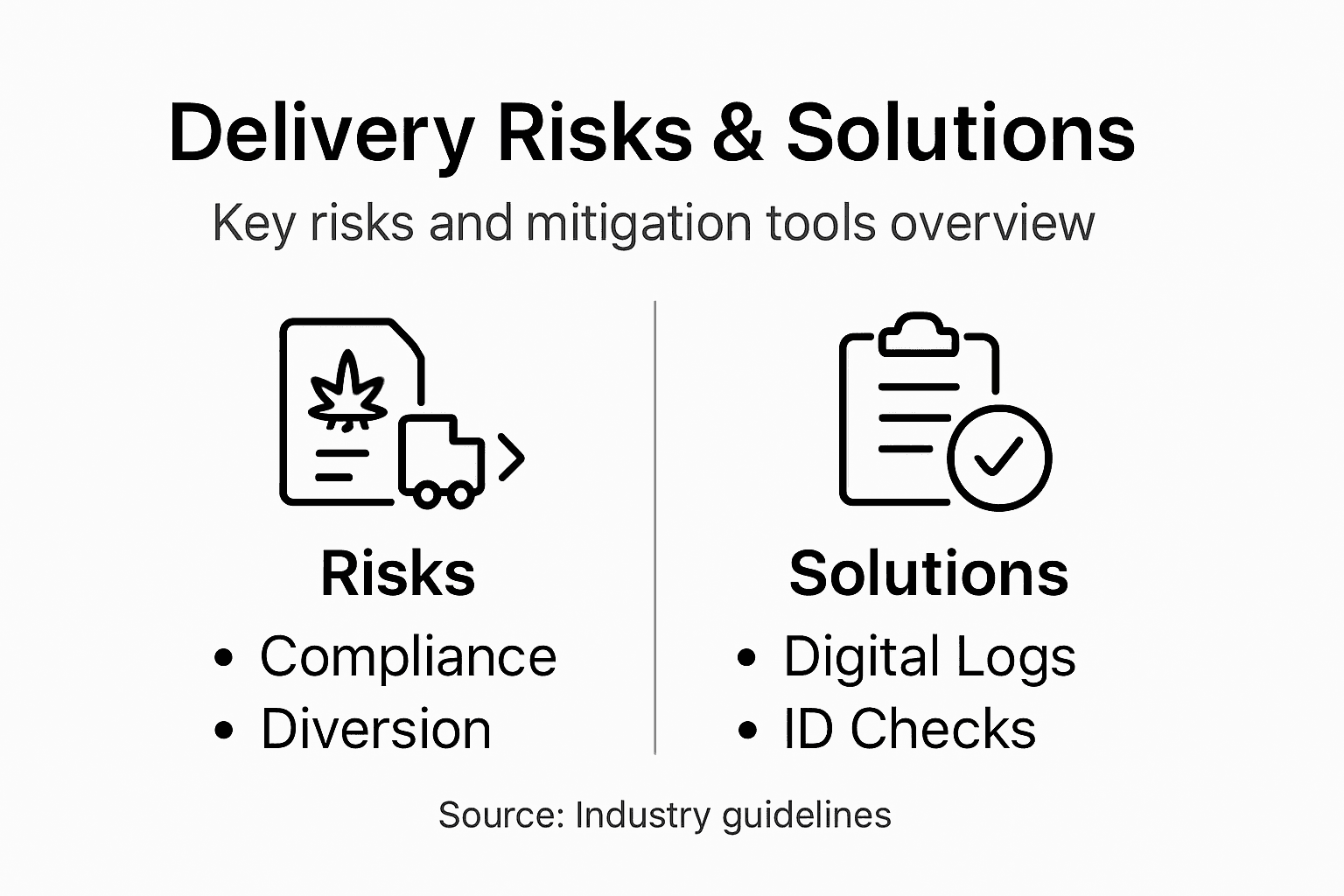
Below is a summary of major risks and effective mitigation strategies in cannabis delivery:
| Risk Area | Example Problem | Effective Mitigation Tool |
|---|---|---|
| Regulatory Noncompliance | Missing documentation | Automated compliance software |
| Product Diversion | Unchecked chain-of-custody | End-to-end digital audit trails |
| Age Verification Failure | Acceptance of fake IDs | Biometric/digital verification tech |
| Security Lapses | Unauthorized vehicle access | Locked, alarmed storage in transport |
| Incomplete Record-Keeping | Lost product shipment records | Centralized digital inventory system |
Pro tip: Develop a comprehensive risk assessment matrix that continuously monitors regulatory changes, technological advancements, and potential operational vulnerabilities to stay ahead of emerging challenges.
Streamline Your Cannabis Experience with Trusted Products and Seamless Delivery
Navigating the complexities of cannabis delivery workflows demands trust, transparency, and verified quality. This article highlights the importance of regulatory compliance, secure transportation, and digital tracking to ensure safe access to cannabis products. At Avondale Apothecary, we address these challenges head-on by offering a curated selection of premium cannabis options backed by comprehensive Certificates of Analysis. Whether you are exploring our expertly crafted Pre Rolls – AALLC or browsing supportive Apparel – AALLC, every product aligns with the highest standards for quality and safety.
Empower your cannabis journey today by choosing verified products from a trusted online platform. Experience the ease of a user-friendly shopping interface combined with transparent sourcing and compliance assurance. Don’t let complicated delivery workflows slow you down. Visit Avondale Apothecary now to explore product diversity designed with safety and accessibility in mind.
Frequently Asked Questions
What are the key components of a cannabis delivery workflow?
The essential components of a cannabis delivery workflow include quality-controlled cultivation by licensed producers, detailed product tracking, secure transportation methods, age verification procedures, and documented transfer protocols to ensure regulatory compliance and product integrity.
How does age verification work in cannabis delivery?
Age verification in cannabis delivery involves multilayered systems that go beyond basic ID checks. Delivery services typically require government-issued identification and may utilize digital age verification platforms that cross-reference legal databases in real-time for compliance.
What are the common risks associated with cannabis delivery operations?
Common risks include regulatory noncompliance due to missing documentation, product diversion resulting from unchecked chain-of-custody, and age verification failures where unauthorized IDs are accepted. Implementing automated compliance software and end-to-end digital audit trails can help mitigate these risks.
How can technology enhance cannabis order fulfillment?
Technology enhances cannabis order fulfillment by providing real-time tracking, age verification, and compliance monitoring. Advanced tracking systems can ensure product movement integrity, maintain secure transportation logistics, and support detailed record-keeping for regulatory adherence.