
Sorting through the world of hemp and cannabis often leads to confusion, especially when product labels and local regulations seem unclear. For those seeking pure supplements or wellness solutions, knowing what truly sets hemp apart from marijuana is crucial. Discover how key factors like THC content, legal status, and plant usage shape your options, helping you make smarter choices for your health and peace of mind.
Table of Contents
- Hemp And Cannabis Defined Clearly
- Key Differences In Plant Types And Uses
- Thc, Cbd, And Chemical Composition Explained
- Legal Status And Global Regulations
- How Differences Affect Product Choices
Key Takeaways
| Point | Details |
|---|---|
| Hemp vs. Marijuana | Hemp is non-intoxicating with 0.3% or less THC, while marijuana is psychoactive and federally regulated. |
| Legal Differences | Hemp is federally legal in the U.S.; marijuana remains a controlled substance under federal law. |
| Product Applications | Hemp is used for industrial and wellness products, whereas marijuana is primarily for medical and recreational use. |
| Chemical Composition | THC is the psychoactive compound in marijuana, while CBD is non-intoxicating and often found in hemp. |
Hemp and Cannabis Defined Clearly
Hemp and cannabis are closely related botanical varieties that often create confusion among consumers. While both originate from the Cannabis sativa plant, their legal and chemical profiles differ significantly. Federal regulations distinguish these varieties based primarily on their delta-9 tetrahydrocannabinol (THC) concentration.
The key distinctions between hemp and cannabis can be understood through several critical characteristics:
- THC Content: Hemp contains 0.3% or less THC, making it non-intoxicating
- Legal Status: Hemp is federally legal, while marijuana remains a controlled substance
- Plant Usage: Hemp has industrial, nutritional, and therapeutic applications
- Chemical Composition: Varies significantly between hemp and marijuana strains
Marijuana, typically containing higher THC levels, produces psychoactive effects and is regulated differently. Cannabis serves as the umbrella term encompassing both hemp and marijuana varieties, each with unique properties and potential applications. Cannabis varieties differ in their chemical profiles depending on intended use.
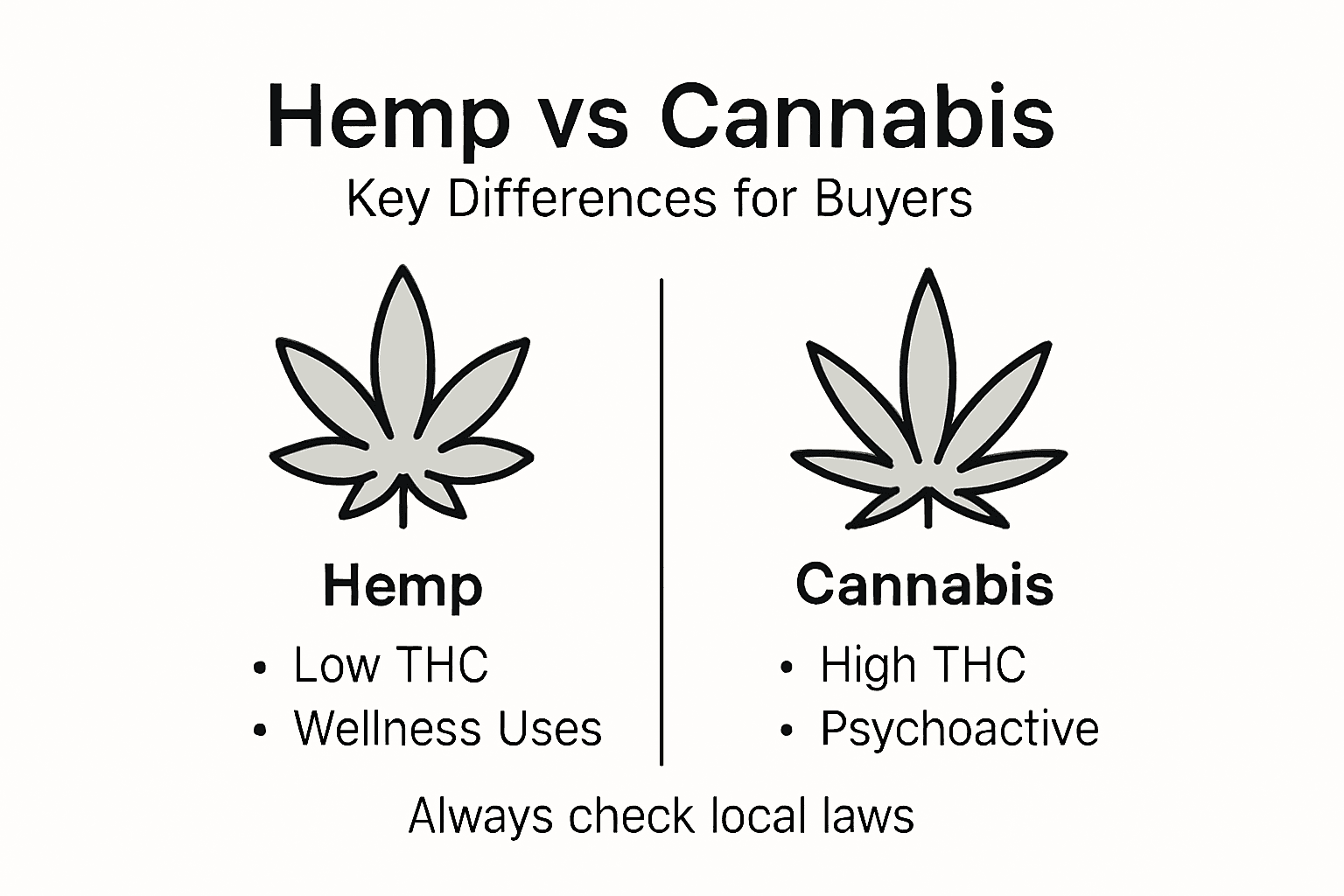
Here’s a clear summary highlighting the main differences between hemp and marijuana for consumer awareness:
| Attribute | Hemp | Marijuana |
|---|---|---|
| Primary Use | Industrial, wellness | Medical, recreational |
| Intoxication Potential | Non-intoxicating | Psychoactive effects |
| Legal Status (U.S.) | Federally legal | Controlled substance |
| Common Applications | Textiles, CBD oil, supplements | THC products, medical treatments |
| Cultivation Focus | Fast, tall growth | Dense flower production |
Pro tip: Always verify the THC content and legal status of cannabis products in your specific jurisdiction before purchasing or consuming.
Key Differences in Plant Types and Uses
Hemp and cannabis represent two distinct agricultural and industrial approaches within the same plant species, each cultivated for dramatically different purposes. Selective breeding has created remarkable variations in plant characteristics tailored to specific industrial, nutritional, and medicinal applications.
The primary distinctions between hemp and cannabis varieties emerge through their specialized breeding objectives:
-
Hemp Cultivation Goals:
- Fiber production for textiles and industrial materials
- Seed and oil extraction
- Low THC content (under 0.3%)
- Rapid, slender plant growth
-
Cannabis Cultivation Goals:
- High cannabinoid concentration
- Medicinal and recreational applications
- Dense female flower production
- Higher THC content for psychoactive effects
Genetic Diversity plays a crucial role in differentiating these plant varieties. Hemp demonstrates extensive phenotypic variability, allowing cultivation across diverse environmental conditions. Cannabis breeding focuses intensely on chemical composition, particularly targeting specific cannabinoid profiles for targeted therapeutic or recreational outcomes.

Pro tip: Research the specific genetic lineage and cultivation purpose of any cannabis or hemp product to understand its potential applications and chemical characteristics.
THC, CBD, and Chemical Composition Explained
Cannabis contains a remarkably complex chemical profile with over 6,000 distinct compounds, creating a sophisticated landscape of cannabinoids, terpenes, and flavonoids. These chemical variations determine the plant’s potential therapeutic, recreational, and industrial applications, making understanding its composition crucial for informed consumers.
The two most prominent cannabinoids demonstrate dramatically different characteristics:
-
THC (Tetrahydrocannabinol):
- Primary psychoactive compound
- Responsible for the ‘high’ sensation
- Concentrated in marijuana varieties
- Regulated due to intoxicating properties
-
CBD (Cannabidiol):
- Non-intoxicating compound
- Investigated for potential therapeutic benefits
- Commonly found in hemp varieties
- Does not produce psychoactive effects
Compound Variability significantly impacts product outcomes. Accurate measurement techniques help differentiate hemp and marijuana, ensuring precise THC content determination and supporting consumer safety. The chemical composition can vary dramatically between cultivars, influencing everything from medical applications to industrial uses.
Pro tip: Always request a detailed Certificate of Analysis to understand the precise chemical composition of any cannabis or hemp product you’re considering purchasing.
Below is a quick reference about cannabinoid impact on product choices:
| Cannabinoid | Effect on Products | Typical Source |
|---|---|---|
| THC | Creates psychoactive effects | Marijuana varieties |
| CBD | Supports wellness without intoxication | Hemp varieties |
| Minor Cannabinoids | May offer targeted benefits | Both plant types |
Legal Status and Global Regulations
Hemp regulation varies dramatically across global jurisdictions, creating a complex landscape for consumers and producers. International frameworks distinguish between hemp and marijuana primarily through THC concentration, with most countries establishing strict guidelines to control cannabis-related products.
Key regulatory approaches around the world include:
-
North American Regulations:
- United States allows hemp with 0.3% THC or less
- Canada permits both medical and recreational cannabis use
- Extensive licensing and testing requirements
-
European Union Regulations:
- Uniform THC threshold at 0.3% for hemp
- Individual countries maintain unique implementation strategies
- Strong emphasis on agricultural and industrial hemp production
Global cannabis policies demonstrate significant complexity, with nations adopting diverse approaches ranging from complete prohibition to progressive legalization. Some countries permit medical use with strict controls, while others have decriminalized possession or established comprehensive regulatory frameworks. The legal status often depends on nuanced distinctions between hemp and marijuana, primarily determined by THC content.
Pro tip: Always verify the specific legal status of cannabis and hemp products in your local jurisdiction before purchasing or transporting.
How Differences Affect Product Choices
Hemp and cannabis chemical differences profoundly impact product development, creating distinct markets with unique consumer applications. The chemical profiles fundamentally determine how manufacturers design and market their products, influencing everything from wellness supplements to industrial materials.
Product selection varies significantly across different categories:
-
Wellness and Nutritional Products:
- Hemp-derived: High CBD, low THC content
- Focused on therapeutic and nutritional benefits
- Legal in most jurisdictions
- Suitable for broad consumer markets
-
Recreational and Medicinal Products:
- Cannabis-derived: Higher THC concentrations
- Psychoactive and targeted medical applications
- Strictly regulated
- Limited legal accessibility
Genetic and chemical variations guide product development strategies, with manufacturers carefully selecting plant varieties to meet specific market demands. Hemp products typically emphasize nutritional and therapeutic benefits, while cannabis products target more specialized medical or recreational uses. This strategic differentiation ensures that consumers receive precisely formulated products aligned with their intended purpose.
Pro tip: Always carefully review product labels and certificates of analysis to understand the exact chemical composition and potential effects before making a purchase.
Discover the Right Cannabis Experience with Confidence
Choosing between hemp and cannabis products can be overwhelming given the complex legal and chemical differences discussed in the article “Hemp vs Cannabis: What Buyers Need to Know.” Many consumers face challenges understanding THC content, verifying product quality, and selecting products that meet their wellness or recreational needs without confusion. This uncertainty can create hesitation and frustration when shopping for cannabis-derived items.
At Avondale Apothecary, we address these concerns head on by offering a curated selection of premium cannabis strains, edibles, concentrates, and wellness products with full transparency. Every product includes detailed Certificates of Analysis so you know the exact cannabinoid profile and legal compliance. Whether you seek non-intoxicating hemp-based items rich in CBD or higher THC cannabis for medical or recreational purposes, our platform ensures you shop confidently and safely within your jurisdiction.
Experience the difference of informed choice today with our easy-to-navigate online cannabis storefront.
Elevate your cannabis journey now by exploring Avondale Apothecary where quality, transparency, and variety come together. Dont wait to find products tailored precisely to your needs backed by trusted information. Begin your exploration at Avondale Apothecary and make your next purchase with clarity and assurance.
Frequently Asked Questions
What is the main difference between hemp and cannabis?
Hemp and cannabis both come from the Cannabis sativa plant, but the main difference is their THC content. Hemp contains 0.3% or less THC, making it non-intoxicating, while cannabis (or marijuana) has higher THC levels that produce psychoactive effects.
Can I use hemp products for wellness purposes?
Yes, hemp products are often used for wellness due to their high CBD content and low THC levels. They can provide therapeutic benefits without the psychoactive effects associated with marijuana.
How do I know if a cannabis product is legal?
To determine if a cannabis product is legal, check its THC content and local regulations regarding cannabis use. Hemp products with 0.3% THC or less are typically legal, while marijuana is subject to more stringent regulations.
Why is understanding the chemical composition of hemp and cannabis important?
Understanding the chemical composition is crucial because it influences the product’s effects and potential applications. For example, CBD in hemp can have wellness benefits without intoxication, while THC in cannabis is responsible for the ‘high’ sensation.