
Choosing the right cannabis product can feel complicated when words like THC and CBD appear everywhere, but each offers truly distinct effects that matter for your wellness. These core cannabinoids work through separate channels in your body, shaping everything from mood to pain relief. If you want results that match your goals, understanding the real difference between THC and CBD—not just marketing claims—empowers smarter, safer decisions for your personal needs. Boldly comparing these compounds reveals why finding your ideal fit goes beyond guessing.
Table of Contents
- THC And CBD Defined: Core Cannabis Compounds
- How THC And CBD Affect Your Body And Mind
- Major Differences In Effects And Uses
- Legal Status And Safety Considerations Globally
- Choosing The Best Option For Your Needs
Key Takeaways
| Point | Details |
|---|---|
| Understanding THC and CBD | THC is psychoactive and provides immediate symptom relief, while CBD is non-psychoactive and supports wellness without intoxication. |
| Choosing Based on Goals | Your choice between THC and CBD depends on your specific wellness needs, such as pain management or anxiety relief. |
| Consumption Methods Matter | The method of consumption significantly affects onset and duration of effects; inhalation acts fast, while edibles provide longer-lasting relief. |
| Legal and Safety Considerations | Always verify the legal status of cannabis products in your area and prioritize products with Certificates of Analysis for safety and quality assurance. |
THC and CBD Defined: Core Cannabis Compounds
When you’re evaluating cannabis products at Avondale Apothecary, you’re really making a choice between two fundamentally different compounds. Tetrahydrocannabinol (THC) and cannabidiol (CBD) are the primary cannabinoids that shape how cannabis affects your body and mind, yet they work through remarkably different mechanisms. Understanding what sets them apart is the foundation of making a choice that actually aligns with your wellness goals rather than guessing based on marketing claims.
Cannabis plants contain over 568 distinct molecules, but THC and CBD consistently dominate research and consumer attention for good reason. THC is the psychoactive compound responsible for the “high” people associate with cannabis. When you consume THC, it binds directly to cannabinoid receptors in your brain and nervous system, triggering the euphoric, relaxing, or sometimes anxious sensations people experience. The strength of this effect depends on THC concentration and your individual sensitivity. Beyond the psychoactive effects, THC offers potential therapeutic applications for chronic pain, nausea, and sleep issues, though research is still evolving. CBD operates on a completely different plane. This cannabinoid doesn’t produce intoxication. Instead, it interacts with your body’s endocannabinoid system more indirectly, influencing serotonin receptors, vanilloid receptors, and other pathways without directly binding to CB1 receptors in your brain the way THC does. This is why people often describe CBD as providing relaxation without the high. Many users incorporate CBD into daily wellness routines for potential benefits like anxiety management, inflammation support, and general balance.
What makes your choice between them more nuanced is that cannabis products vary dramatically in their THC to CBD ratios. Products are typically classified as THC-dominant (higher THC, minimal CBD), CBD-dominant (higher CBD, minimal THC), or balanced formulations containing comparable amounts of both. A THC-dominant flower strain will produce noticeably different effects than a CBD-dominant tincture or a balanced edible. Your desired outcome, lifestyle, tolerance level, and local regulations all influence which category serves you best. Someone managing chronic pain might gravitate toward THC or balanced products for comprehensive support, while a health-conscious professional seeking stress relief during their day might prefer CBD-only options that don’t interfere with work performance. The reality is that one compound isn’t inherently better than the other. Instead, each serves different needs and preferences for different people at different times.
Pro tip: Check the Certificates of Analysis (COAs) on Avondale Apothecary products to see the exact THC and CBD percentages before purchasing. This transparency ensures you’re getting what the product claims and helps you identify the ratio that matches your specific wellness goals.
Here’s a quick comparison of key characteristics and uses of THC versus CBD:
| Aspect | THC | CBD |
|---|---|---|
| Psychoactive Effect | Causes a noticeable high | No intoxication, clear-headed |
| Onset of Action | Fast (inhaled), slow (edible) | Subtle, gradual over days |
| Typical Medical Uses | Pain, sleep, appetite boost | Anxiety, inflammation, epilepsy |
| Key Safety Considerations | Avoid for pregnancy, under 25 | Check purity, rare side effects |
| Work/Day Use Suitability | Not recommended | Highly suitable |
| Legal Status | Heavily regulated | More widely accepted |
How THC and CBD Affect Your Body and Mind
Your brain is wired with cannabinoid receptors, and when THC or CBD enters your system, they interact with these receptors in fundamentally different ways. Understanding these mechanisms explains why two compounds from the same plant can produce such divergent effects. THC binds directly to CB1 receptors concentrated in your brain, which is why THC causes psychoactive effects by altering mood, perception, and cognition. This direct binding is what creates the characteristic high people describe as euphoria, altered time perception, or heightened sensory awareness. The intensity depends on THC concentration, consumption method, and your individual neurobiology. CBD, by contrast, doesn’t directly bind to CB1 receptors in the same way. Instead, this non-psychoactive cannabinoid influences multiple receptor systems throughout your body and brain, including serotonin receptors, vanilloid receptors, and others. This indirect approach means CBD won’t produce intoxication, making it suitable for people who need mental clarity during work or daily responsibilities.
The practical implications of these different mechanisms matter significantly for your wellness routine. THC’s effects tend to be more immediate and noticeable. When inhaled, you might feel effects within minutes. When consumed as edibles, onset takes longer (usually 1-2 hours) but effects last considerably longer, sometimes 6-8 hours. CBD typically works more subtly. You won’t experience an obvious shift in consciousness, but over days or weeks of consistent use, many people report gradual improvements in anxiety, sleep quality, or pain perception. Research indicates that CBD’s modulation of neurotransmitters and inflammation pathways underpins its potential therapeutic effects on conditions like anxiety, epilepsy, and certain neurological disorders. This is why some people use THC-dominant products for immediate symptom relief while using CBD as part of ongoing wellness maintenance.
What’s equally important is understanding how these compounds affect your brain over time. Occasional or moderate THC use poses minimal risk for most adults, but chronic use, particularly starting from a young age, may impair learning and cognitive function according to current research. CBD appears to work differently. Some evidence suggests CBD may actually counteract certain negative effects of THC, such as anxiety or paranoia. This is why balanced products containing both compounds appeal to many users. Your age, personal health history, cognitive demands in your work, and consumption frequency all influence whether THC-dominant, CBD-dominant, or balanced products serve you best. A 35-year-old managing chronic pain as a weekend user faces different considerations than a 26-year-old student seeking occasional stress relief. Someone with a family history of mental health conditions might approach THC differently than someone without such predispositions. The point is that your body and mind respond to these compounds in personalized ways.
Pro tip: Start with lower doses and track how you feel over several hours or days before adjusting your amount, especially with edibles or THC products, since effects take time to fully develop and accumulate in your system.
Major Differences in Effects and Uses
The practical applications of THC and CBD diverge sharply because of how they interact with your body. THC excels at immediate symptom relief. It’s particularly effective for chronic pain management, stimulating appetite in people undergoing medical treatments, and controlling nausea. When you need fast results, THC works quickly. The trade-off is that psychoactive effect. Some people embrace it as part of their wellness routine on weekends or evenings. Others avoid it entirely because they need clear cognition for work, caregiving, or driving. CBD operates in a completely different therapeutic lane. While THC’s primary therapeutic applications focus on pain and appetite, CBD shows promise across anxiety, epilepsy, and inflammatory conditions without causing intoxication. This distinction matters enormously when you’re choosing products. A healthcare professional managing anxiety might gravitate toward CBD isolates or CBD-dominant products they can use during work hours. Someone managing severe chronic pain as their primary condition might explore THC-dominant options for evening use or balanced formulations that combine both compounds’ benefits.
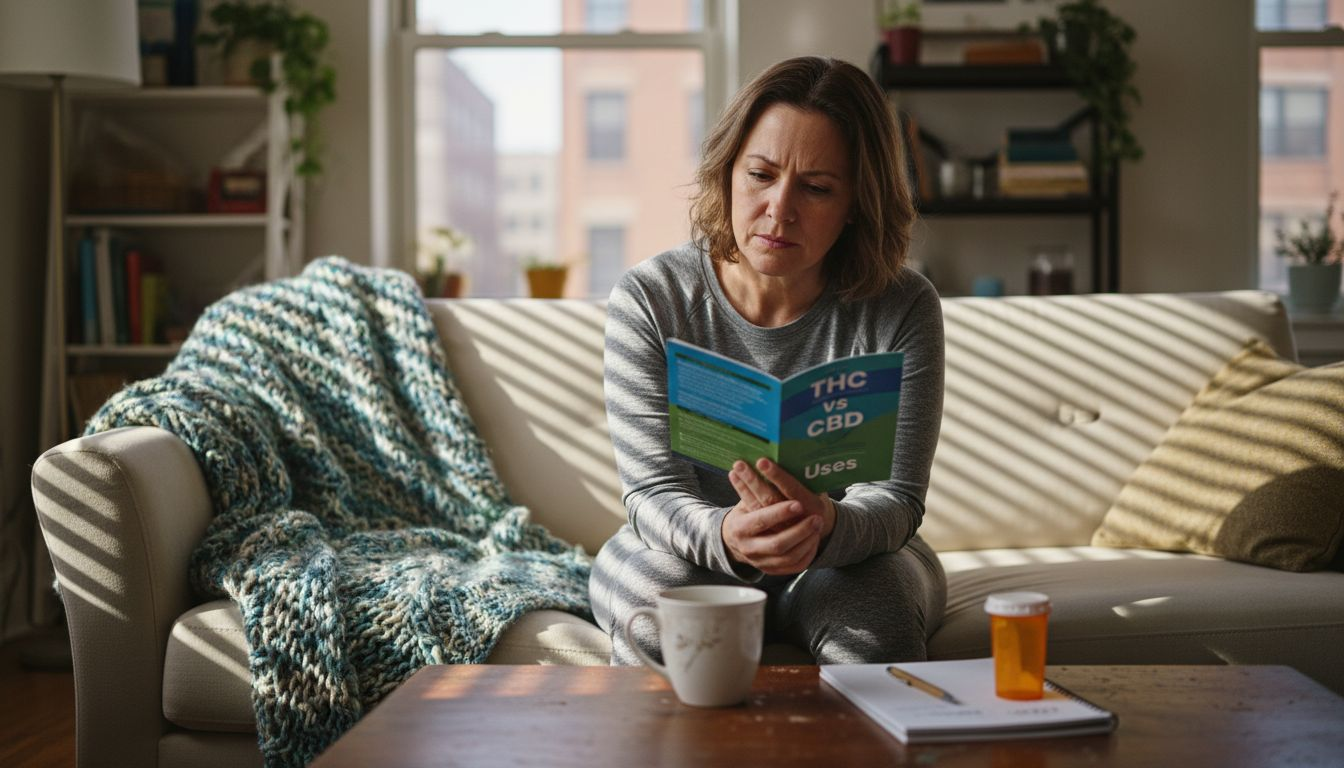
The mechanisms behind these different uses reveal why one compound isn’t universally better. THC binds strongly to CB1 receptors in your brain and nervous system, which is why it produces euphoria, altered perception, and the characteristic high. This direct, powerful interaction is precisely what makes it effective for certain medical applications but also what limits its use in contexts requiring mental clarity. CBD works differently. It influences multiple receptor systems indirectly, modulating enzymatic and inflammatory pathways without directly flooding CB1 receptors. CBD’s interactions with numerous receptors produce therapeutic benefits that lack intoxication, making it suitable for daily use or situations where sobriety is essential. This is why you’ll see CBD in everything from morning wellness routines to products specifically designed for athletes or professionals.
Here’s what makes this genuinely practical for your decision: the combination of THC and CBD in balanced products leverages complementary effects. Some evidence suggests CBD can actually reduce certain negative effects THC might produce, like anxiety or paranoia. This means a balanced formulation might deliver pain relief or sleep support with fewer psychological side effects than THC alone. Your personal situation determines what makes sense. If you work in safety-sensitive roles, CBD-only options provide real benefits without occupational risk. If you’re managing chronic conditions on weekends or in the evenings, THC or balanced products might deliver more comprehensive relief. If you’re exploring cannabis for the first time, starting with CBD allows you to experience cannabinoid effects without the uncertainty of intoxication. Age matters too. Someone in their 40s with established chronic pain has different considerations than someone in their 20s exploring wellness options. Your family history of mental health conditions, your work demands, your personal tolerance for altered consciousness, and your specific health goals all guide whether THC-dominant, CBD-dominant, or balanced products align with your reality.
Pro tip: Keep a brief journal noting the product type, dosage, time of consumption, and how you felt over the following hours to identify which THC to CBD ratio delivers the effects you actually want, then use those insights to refine your future purchases.
Legal Status and Safety Considerations Globally
The legal landscape for cannabis products remains remarkably fragmented across the globe, and this matters directly to your purchasing decisions at Avondale Apothecary. The primary distinction regulators use is THC content. Most countries classify products based on whether THC concentration stays below a specific threshold, commonly either 0.3% or 1% by dry weight. This seemingly technical distinction has enormous practical implications. Products meeting these thresholds in regulated markets are often legally accessible, while anything exceeding them may be restricted or illegal depending on your location. CBD legality follows a different trajectory. Because CBD is non-psychoactive, many regions have legalized or created specific regulatory frameworks for CBD products independently of THC restrictions. North America and parts of Europe have embraced CBD with formal regulations, while many African and Asian countries maintain strict prohibitions on all cannabis-derived products regardless of THC or CBD content. The result is a genuinely complex situation where a product legal in Canada might be illegal in Australia, and something freely available in the European Union could be restricted in Singapore.
Understanding global hemp and cannabis regulatory thresholds reveals how production and trade patterns emerged. Major cultivation centers developed in China, Europe, and Canada partly because these regions established clear legal frameworks defining acceptable THC levels. This regulatory clarity enabled farmers and manufacturers to confidently invest in hemp and cannabis infrastructure. The variation in THC thresholds between countries affects commercial competitiveness and which products companies can legally produce and sell. A product manufactured in Europe to meet 0.2% THC standards might not comply with different requirements in North America. These aren’t arbitrary bureaucratic differences. They represent each country’s policy decisions about balancing public health, agricultural development, and market access. What this means for you is that legal status genuinely depends on your specific location, and that status continues evolving as more research emerges and more governments reconsider their positions.
Safety considerations deserve equal attention to legal status. The fact that a product is legal doesn’t automatically mean it’s safe, and the inverse matters too. Products purchased from licensed retailers like Avondale Apothecary with transparent Certificates of Analysis (COAs) provide quality assurance you might not get from unregulated sources. Third-party lab testing verifies actual THC and CBD content, screens for pesticides and mold, and confirms the product matches its labeling. This transparency protects you from unknowingly consuming far more THC than expected or encountering contaminated products. CBD-dominant products carry fewer risks than THC products since they don’t cause intoxication, but quality still matters. An unlabeled or untested CBD product might contain unexpected THC levels, heavy metals, or other contaminants. For THC products specifically, responsible use means understanding that consumption methods affect peak concentration and duration. Edibles take longer to take effect but produce stronger effects than inhaled products. Starting with lower doses and waiting at least two hours before consuming more prevents accidental overconsumption. Pregnant people and those under 25 should generally avoid THC products since research suggests potential impacts on fetal development and developing brains. These aren’t just abstract concerns. They’re practical safety considerations that protect your health.
The regulatory environment will continue shifting. CBD legality varies significantly by region based on THC content thresholds and regulatory context, with acceptance increasing due to CBD’s non-psychoactive profile. As more countries recognize CBD’s potential therapeutic benefits without intoxication risk, legal frameworks are expanding. THC remains more restricted globally, but medical cannabis programs have expanded in numerous countries, recognizing therapeutic value in carefully controlled settings. Your responsibility is checking local regulations before purchasing and understanding what you’re consuming. A product might be legal in your country but restricted if you travel. Online purchases from international retailers might violate local laws despite being legal where the retailer operates.
Pro tip: Before purchasing any THC or CBD product, verify it’s legal in your jurisdiction, check the third-party lab results on Avondale Apothecary’s product pages to confirm actual cannabinoid content and purity, and understand your local restrictions on possession limits and usage contexts.
Choosing the Best Option for Your Needs
Selecting between THC and CBD comes down to honest assessment of what you actually need and your real-world constraints. Start by identifying your primary goal. Are you managing chronic pain that interferes with daily function? Seeking anxiety relief that won’t compromise your work performance? Looking to improve sleep quality? Trying CBD as a general wellness addition to your routine? These questions matter because they guide which compound serves you better. Chronic pain sufferers often benefit from THC or balanced formulations because of the compound’s potency and faster onset. If you need immediate relief, THC delivers noticeable effects within minutes of inhalation or 1-2 hours after consuming edibles. Anxiety sufferers with full-time jobs typically prefer CBD because they can integrate it into morning or afternoon routines without cognitive impairment. General wellness seekers often start with CBD isolates or CBD-dominant products to experience cannabinoid benefits with zero intoxication risk. The key is matching the compound’s profile to your actual lifestyle, not an idealized version of it.
Your consumption method matters as much as which compound you choose. Inhalation (smoking or vaping) produces fast onset (5-15 minutes) and shorter duration (2-4 hours), ideal when you want immediate symptom control. Edibles take longer to work (1-3 hours depending on food in your stomach) but produce longer-lasting effects (6-8 hours or more), making them suitable for sustained pain management or overnight sleep support. Tinctures and sublingual products offer middle ground with moderate onset (15-45 minutes) and moderate duration (4-6 hours). Topicals apply directly to affected areas without entering your bloodstream, making them excellent for localized pain or skin conditions without systemic effects. At Avondale Apothecary, you’ll find detailed product information specifying which consumption method each product uses and realistic onset and duration expectations. Use this information strategically. If you work day shifts and need afternoon anxiety management, a fast-acting CBD tincture makes more sense than an evening-only edible. If you struggle with nighttime pain that disrupts sleep, a THC or balanced edible consumed two hours before bed leverages the longer duration for sustained relief through the night.
Here is a summary of common cannabis product types and their onset and duration expectations:
| Product Type | Onset Time | Duration of Effects |
|---|---|---|
| Inhaled (smoke/vape) | 5-15 minutes | 2-4 hours |
| Edibles | 1-3 hours | 6-8 hours or longer |
| Tinctures/Sublingual | 15-45 minutes | 4-6 hours |
| Topicals | 15-30 minutes | Variable, localized |
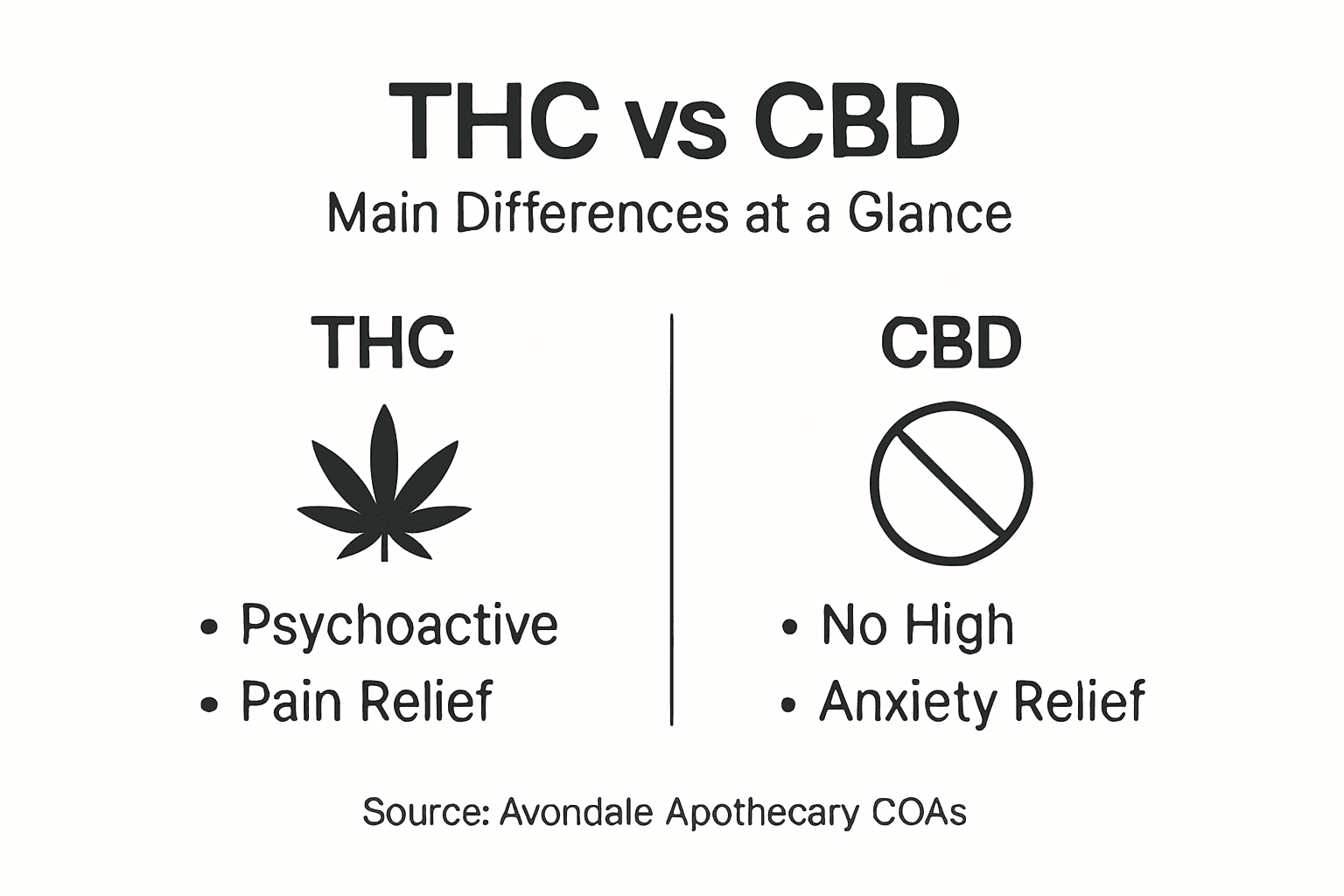
Three practical assessment tools simplify your decision. First, ask yourself about your tolerance for psychoactivity. If the answer is “zero tolerance,” CBD-only products eliminate uncertainty. If you’re open to it but cautious, start with balanced products containing roughly equal THC and CBD, since CBD moderates some of THC’s intensity. Second, consider your consumption frequency. Daily users typically prefer CBD since it produces no tolerance buildup and won’t accumulate in your system. Occasional users can experiment more broadly since they’re not building dependency or managing daily side effects. Third, evaluate your access to quality information. Products from licensed retailers with available Certificates of Analysis let you verify actual cannabinoid content. Products lacking this transparency create risk because you don’t know what you’re consuming. Avondale Apothecary provides COAs for transparency, enabling you to make informed choices based on actual compound levels rather than marketing claims.
Start conservatively regardless of which option you choose. Buy a single product in a lower strength and use it consistently for 5-7 days before adjusting. Your body and mind need time to adapt and you need time to observe genuine effects versus placebo response. Keep that journal we mentioned earlier. Note the product type, time consumed, dosage, and how you felt over the following hours. After 7-10 days, you’ll have real data about whether this option works for your situation. If it does, you can explore variations. If it doesn’t, you haven’t wasted money on large quantities. This measured approach feels slow compared to the urgency some people bring to wellness decisions, but it prevents costly mistakes and helps you identify your optimal option rather than someone else’s recommendation.
Your perfect choice might change over time too. Someone who successfully used THC for acute pain relief might transition to CBD-dominant products as pain decreases. A person managing anxiety might discover that occasional THC provides different benefits than daily CBD. Your health evolves, your life circumstances shift, and your needs adjust accordingly. The goal isn’t finding a permanent single answer. It’s building enough understanding to make informed choices aligned with your current reality, then reassessing when circumstances change. That’s how you move from guessing based on marketing to actually choosing products that serve your specific wellness goals.
Pro tip: Use the detailed product descriptions and Certificates of Analysis on Avondale Apothecary to compare THC and CBD ratios across similar product types, then start with the lowest effective dose of your chosen option to establish a baseline before adjusting upward.
Find Your Perfect Match Between THC and CBD with Avondale Apothecary
Choosing between THC and CBD is a personal journey shaped by your unique wellness goals, lifestyle, and tolerance. If you are looking for trusted, high-quality cannabis products with transparent information like Certificates of Analysis to guide your choice, Avondale Apothecary is here to help. Whether you want the clear-headed calm of CBD for daytime stress or the more immediate relief from THC for pain and sleep support, our carefully curated selection offers options tailored to your needs.
Explore the full range of products and detailed descriptions now at Avondale Apothecary. Start your discovery with confidence and find balanced, THC-dominant, or CBD-dominant solutions that fit your routine. Don’t wait to embrace a personalized wellness approach that matches your body and mind’s unique responses. Begin your journey at Avondale Apothecary homepage and experience the difference transparency and quality make.
Frequently Asked Questions
What are the key differences between THC and CBD?
THC is the psychoactive component of cannabis, known for producing a ‘high’ and is often used for pain relief and nausea control. CBD, on the other hand, is non-psychoactive and is mainly utilized for anxiety relief, inflammation support, and general wellness without affecting mental clarity.
How do THC and CBD affect the body and mind differently?
THC binds directly to CB1 receptors in the brain, producing euphoric effects and altering mood and perception. In contrast, CBD interacts with multiple receptors indirectly, often resulting in therapeutic benefits like anxiety reduction and pain relief without causing intoxication.
Which consumption method is recommended for THC and CBD?
Inhaled products provide fast effects (5-15 minutes) and shorter duration (2-4 hours), making them suitable for immediate relief. Edibles take longer to kick in (1-3 hours) but offer prolonged effects (6-8 hours), ideal for sustained management of symptoms. Tinctures offer moderate onset and duration, while topicals are used for localized relief.
Are there any safety considerations when using THC or CBD products?
Yes, while both compounds can be safe, it’s important to check for third-party lab-tested products to ensure quality and consistency. THC use is generally cautioned against for pregnant individuals and those under 25 due to potential effects on brain development. Always start with lower doses, especially with edibles, to understand how your body reacts.