
Most American consumers find themselves comparing Delta-8 and Delta-9 THC as curiosity about cannabis products grows worldwide. With over 60 percent of adults seeking transparency about cannabinoid effects and legal status, making informed choices has never felt more urgent. Understanding the molecular differences between these THC variants can open new perspectives on safety, potency, and legal implications so you can shop confidently no matter where you live.
Table of Contents
- Defining Delta-8 And Delta-9 THC
- Chemical Structure And Psychoactive Effects
- Legal Status And Global Regulations
- Product Quality, Safety, And Certificate Testing
- Choosing Between Delta-8 And Delta-9
Key Takeaways
| Point | Details |
|---|---|
| Delta-8 vs. Delta-9 THC | Delta-8 THC has a lower psychoactive potency compared to Delta-9 THC, offering a milder experience, often preferred for reduced anxiety. |
| Legal Considerations | The legal status of Delta-8 and Delta-9 THC varies widely; always check local regulations before purchasing. |
| Product Safety | Consumers should prioritize products with certifications highlighting rigorous testing to ensure quality and safety. |
| Personal Selection | Choosing between Delta-8 and Delta-9 should consider individual tolerance and desired effects for optimal experience. |
Defining Delta-8 and Delta-9 THC
Tetrahydrocannabinol (THC) exists in multiple molecular configurations, with Delta-8 and Delta-9 representing two fascinating variations of this complex cannabinoid. While both share similar chemical structures, they differ significantly in their effects and interactions with the human body. Molecular variations impact their psychoactive properties.
Delta-9 THC is the primary psychoactive compound found in cannabis, responsible for the traditional “high” associated with marijuana consumption. It binds strongly with cannabinoid receptors in the brain, producing more intense psychological and physiological effects. Delta-8 THC, by contrast, is a less abundant isomer that occurs in much smaller quantities within the cannabis plant. Subtle structural differences create distinct pharmacological profiles.
Chemically, these compounds differ by the placement of a specific double bond in their molecular structure. For Delta-9, this bond appears on the ninth carbon chain, while Delta-8 features the bond on the eighth carbon chain. This minute structural variation translates into meaningful differences in how each compound interacts with the human endocannabinoid system, resulting in varied potency and subjective experiences for users.
Pro tip: When exploring cannabis products, always confirm the specific THC variant to understand potential effects and legal considerations.
Here is a concise comparison of Delta-8 and Delta-9 THC across key dimensions:
| Attribute | Delta-8 THC | Delta-9 THC |
|---|---|---|
| Molecular Bond Position | Eighth carbon | Ninth carbon |
| Natural Prevalence | Rare in cannabis | Most abundant form |
| Psychoactive Potency | Mild effects | Strong effects |
| Typical User Experience | Clear-headed, less anxiety | Altered perception, possible anxiety |
Chemical Structure and Psychoactive Effects
The molecular structure of Delta-8 and Delta-9 THC represents a critical factor in understanding their distinct psychoactive properties. Cannabinoid receptor interactions reveal subtle differences that significantly impact user experiences. These compounds share an almost identical chemical framework, with a crucial variation in the placement of a double bond that determines their interaction with the human endocannabinoid system.
Delta-9 THC demonstrates a stronger binding affinity to CB1 receptors in the brain, which translates to more intense psychological effects. Its molecular configuration allows for a more potent interaction, typically producing more pronounced euphoria, altered sensory perception, and potential anxiety. Delta-8 THC, conversely, exhibits a weaker receptor engagement, resulting in a milder and more controlled psychoactive experience. Pharmacological profiles differ based on molecular configuration.

Researchers have observed that the slight structural deviation between these compounds creates meaningful variations in user experience. Delta-8’s position of the double bond on the eighth carbon atom instead of the ninth contributes to its reputation for producing a more clear-headed, less anxiety-inducing effect. This nuanced difference highlights the complexity of cannabinoid interactions and underscores the importance of understanding molecular subtleties in cannabis chemistry.
Pro tip: Consult with cannabis professionals to understand how individual molecular variations might impact your personal physiological response to different THC variants.
Legal Status and Global Regulations
Federal regulations surrounding Delta-8 and Delta-9 THC create a complex legal landscape that varies dramatically across different jurisdictions. The 2018 Farm Bill created an unexpected legal pathway for Delta-8 THC, inadvertently establishing a regulatory framework that allowed hemp-derived cannabinoids with less than 0.3% Delta-9 THC to exist in a legal gray area. This legislative nuance opened the door for widespread Delta-8 product distribution across the United States.
Delta-9 THC remains a federally controlled substance, classified as a Schedule I drug with strict legal restrictions. Most states maintain prohibitive stances, though some have established medical and recreational cannabis programs that permit controlled Delta-9 THC usage. State-level cannabis regulations continue evolving, creating a dynamic and often confusing regulatory environment for consumers and manufacturers alike. The legal distinctions between Delta-8 and Delta-9 often hinge on their source material and precise chemical composition.
Internationally, cannabis regulations demonstrate even greater complexity. Some countries maintain absolute prohibitions on all THC variants, while others have more nuanced approaches distinguishing between hemp-derived and marijuana-based products. The emerging global conversation around cannabinoids continues to challenge existing legal frameworks, with regulatory bodies struggling to develop comprehensive guidelines that address the unique properties of Delta-8 and Delta-9 THC.
Pro tip: Always verify current local regulations before purchasing or consuming any THC products, as legal status can change rapidly and vary significantly between jurisdictions.
Product Quality, Safety, and Certificate Testing
Testing methodologies for Delta-8 and Delta-9 THC demand sophisticated analytical techniques to ensure accurate identification and quantification. High-performance liquid chromatography (HPLC) represents the gold standard for analyzing these complex cannabinoid variants, given their nearly identical molecular structures. The precision required for distinguishing between Delta-8 and Delta-9 THC creates significant challenges for laboratory testing protocols.
The synthetic production of Delta-8 THC introduces substantial safety concerns that underscore the critical importance of comprehensive product testing. Quality control remains inconsistent across cannabis product markets, with many products displaying alarming variations in potency and potential contaminant presence. Reputable manufacturers must provide detailed certificates of analysis that transparently document cannabinoid concentrations, potential solvent residues, pesticide levels, and microbiological screening results.
Consumers should prioritize products from manufacturers who demonstrate rigorous testing standards and provide full transparency through comprehensive certificates of analysis. These documents should include detailed analytical results covering multiple safety parameters, including cannabinoid profile, heavy metal content, residual solvents, and microbiological contamination screening. The complexity of Delta-8 THC production means that without stringent testing protocols, consumers could potentially be exposed to unsafe manufacturing byproducts or unpredictable chemical compositions.
Pro tip: Always request and thoroughly review the complete certificate of analysis before purchasing any Delta-8 or Delta-9 THC products, paying close attention to third-party laboratory testing details.
This summary highlights essential safety checks consumers should review when purchasing THC products:
| Certificate Test Component | Importance | Notes |
|---|---|---|
| Cannabinoid Profile | Ensures accurate THC content | Confirms labeling accuracy |
| Heavy Metal Screen | Identifies contamination risk | Protects consumer health |
| Pesticide Residue | Verifies agricultural safety | Reduces toxic exposure |
| Microbiological Analysis | Detects harmful microbes | Safeguards product purity |
Choosing Between Delta-8 and Delta-9
Consumer selection between Delta-8 and Delta-9 THC hinges on multiple critical factors, including desired psychological effects, personal tolerance, and legal accessibility. The fundamental differences between these cannabinoids create distinct experiences that appeal to different user preferences. Delta-9 THC typically delivers a more intense, traditional cannabis high characterized by stronger psychoactive effects, while Delta-8 offers a gentler, more controlled alternative.
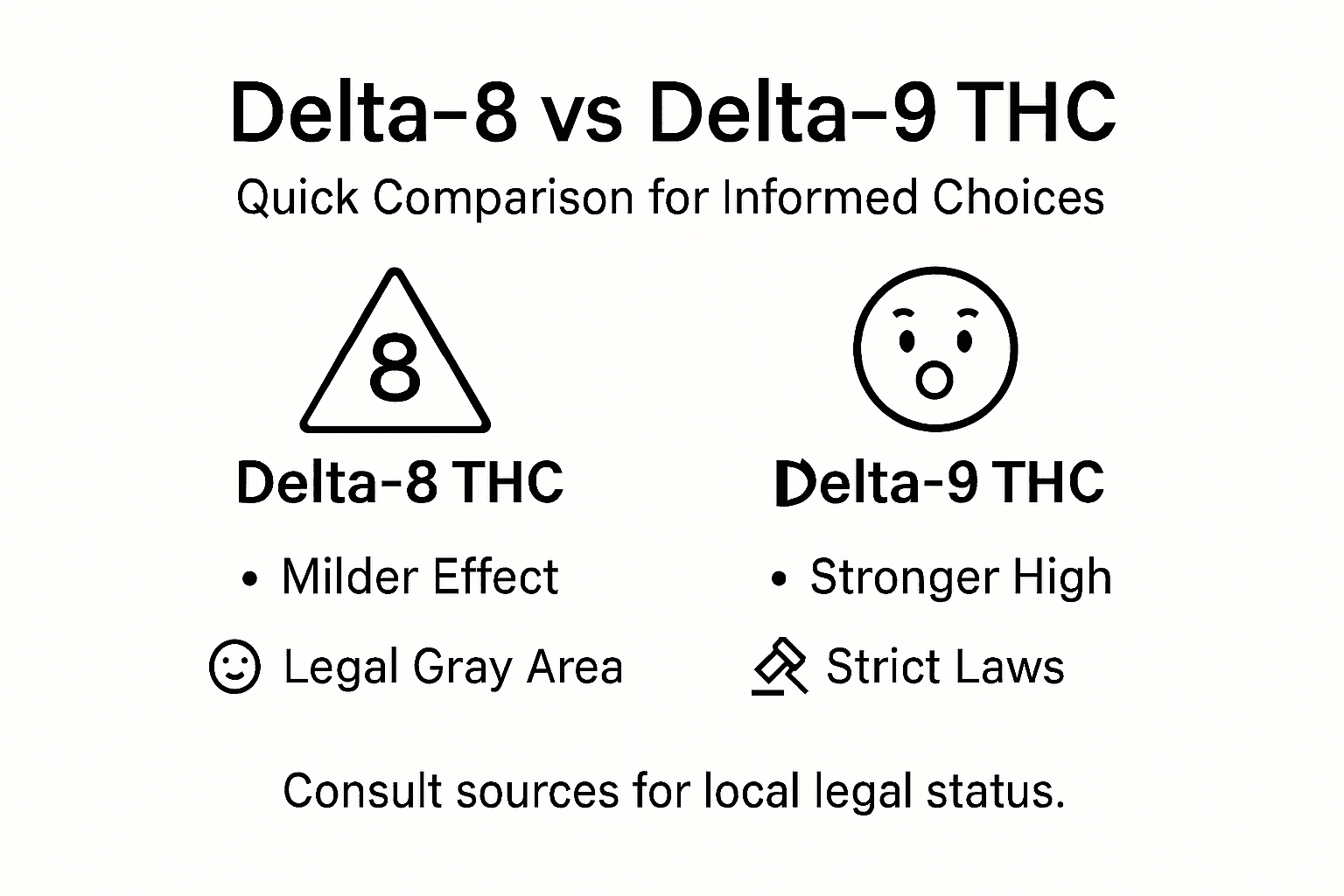
Individual physiological responses play a significant role in determining the most suitable THC variant. Users sensitive to anxiety or seeking more functional experiences often prefer Delta-8 due to its milder psychoactive profile. The reduced intensity of Delta-8 makes it an attractive option for those who want subtle relaxation without overwhelming cognitive disruption. Factors such as prior cannabis experience, personal metabolism, and specific wellness objectives should guide the selection process.
Beyond personal preferences, legal considerations remain paramount in choosing between Delta-8 and Delta-9 THC. Regulatory landscapes vary dramatically across jurisdictions, with Delta-8 often existing in a more permissive legal environment. Consumers must carefully evaluate local regulations, potential drug testing implications, and the specific therapeutic or recreational outcomes they seek. Understanding one’s own tolerance, desired effects, and local legal constraints is crucial in making an informed cannabinoid selection.
Pro tip: Consult with a cannabis healthcare professional to assess your individual physiological response and determine which THC variant aligns best with your specific wellness goals and tolerance levels.
Discover Your Ideal THC Experience with Confidence
Navigating the differences between Delta-8 and Delta-9 THC can be overwhelming when trying to find the right product tailored to your needs. If you have concerns about psychoactive potency, anxiety triggers, or legal availability, Avondale Apothecary offers a transparent and high-quality selection of cannabis products backed by detailed Certificates of Analysis. Understanding the molecular nuances and legal factors discussed in the article empowers you to choose products that promote clear-headed relaxation or more traditional effects with peace of mind.
Start your journey with trusted access to premium cannabis strains, edibles, and concentrates by visiting Avondale Apothecary. Take control of your cannabis experience today and explore a curated collection designed for safety, potency, and personal preference. Don’t wait to embrace the THC variant that fits your lifestyle with confidence and clarity.
Frequently Asked Questions
What is the main difference between Delta-8 THC and Delta-9 THC?
Delta-8 THC has a double bond on the eighth carbon chain, while Delta-9 THC has it on the ninth carbon chain. This slight structural variation leads to different psychoactive effects, with Delta-8 generally producing milder effects compared to the more potent Delta-9 THC.
How do the effects of Delta-8 THC compare to Delta-9 THC?
Delta-9 THC is known for producing intense psychoactive effects, including euphoria and altered perception, while Delta-8 THC tends to provide a more clear-headed and less anxiety-inducing experience. Users often choose Delta-8 for a milder, more controlled effect.
Why is the legal status of Delta-8 THC different from Delta-9 THC?
Delta-8 THC occupies a legal gray area due to the 2018 Farm Bill, which allows hemp-derived cannabinoids with less than 0.3% Delta-9 THC to be legal. Conversely, Delta-9 THC is classified as a Schedule I controlled substance at the federal level, making it illegal in many states.
What should I look for when choosing Delta-8 or Delta-9 THC products?
It’s essential to check the product’s certificate of analysis, which should detail cannabinoid profiles, heavy metal content, and pesticide residues. Make sure to choose products from reputable manufacturers that undergo thorough testing to ensure safety and quality.