
Shopping for cannabis can feel confusing when every product comes with different certificates and unfamiliar terminology. For health-conscious consumers across North America, understanding what makes a cannabis product safe and high quality is critical. Learning the difference between cannabis certificates and core definitions empowers you to spot trustworthy products and avoid hidden risks—whether you’re buying flower, concentrates, or edibles.
Table of Contents
- Cannabis Certificates And Core Definitions
- Types Of Cannabis Certificates Explained
- Certificate Of Analysis Essentials And Layout
- Legal And Safety Standards For Cannabis Products
- Common Errors In Certificate Review And Avoidance Tips
Key Takeaways
| Point | Details |
|---|---|
| Understanding Certificates | Cannabis certificates verify product composition and safety, helping consumers make informed choices. |
| Types of Certificates | Different cannabis certificates serve specific purposes, including documenting composition, quality assurance, and regulatory compliance. |
| Importance of COAs | A Certificate of Analysis (COA) provides essential data on cannabinoid levels and contaminants, ensuring product transparency. |
| Avoiding Common Errors | Consumers should be aware of common mistakes when reviewing certificates, such as verifying lab accreditation and matching batch numbers. |
Cannabis certificates and core definitions
Before you can confidently evaluate a cannabis product, you need to understand what the certificates are actually measuring. A cannabis certificate is an official document verifying the composition, safety, and quality of a product through laboratory testing. Think of it as a health report card for cannabis—it tells you exactly what’s in the product and what isn’t.
The terminology surrounding cannabis can feel confusing because the industry uses specific definitions. Cannabis itself refers to dried leaves, flowers, stems, and seeds of the cannabis plant, but the actual product you’re buying might be processed into something completely different. The U.S. Pharmacopeia (USP) recognizes over 100 cannabinoids in the cannabis plant, making standardized testing absolutely necessary for consumer protection.
Here’s what you need to know about key definitions:
- Cannabinoids: The active compounds in cannabis, with THC and CBD being the most recognized
- Certificates of Analysis (COAs): Lab reports documenting cannabinoid content, potency, and contaminants
- Terpenes: Aromatic compounds that affect flavor, smell, and effects
- Plant material: Raw flower or unprocessed cannabis
- Derived products: Oils, edibles, concentrates, and other items made from cannabis
Why does this vocabulary matter? Because your certificate will use these exact terms. When you’re looking at a product from Avondale Apothecary or any retailer, the accompanying certificate uses standardized language so you can compare products fairly across different purchases.
The relationship between the plant and the final product is crucial. A certificate for cannabis flower tests the plant material directly. But if you’re buying an edible or concentrate, the certificate reflects how the original plant was processed and what final product resulted. This distinction affects everything you see on the report.
Most importantly, certificates provide transparency. They answer the basic questions: What cannabinoids are actually in this product? How much THC or CBD? Are there pesticides or heavy metals? This is where quality control begins.
A cannabis certificate isn’t just paperwork—it’s your verification that what you’re buying matches what you think you’re getting.
Understanding cannabis compliance and testing standards helps you recognize legitimate certificates from credible labs. Not all certificates carry equal weight, and knowing the definitions helps you spot the difference between a thorough analysis and a minimal one.
Pro tip: Save the definitions from your first product’s certificate in your phone or notes app—this creates a personal reference guide you can quickly check when comparing new products, making future purchases much faster.
Types of cannabis certificates explained
Not all cannabis certificates are created equal. Different certificates serve different purposes, and knowing which type you’re looking at matters when evaluating product safety. The certificates you encounter fall into several distinct categories, each measuring something specific about the product.
Certificate of Analysis (COA) is the most common certificate you’ll see. This is a lab report documenting what’s actually in the product—cannabinoid potency, terpene profiles, and contaminant testing. When you buy from Avondale Apothecary, the COA is your window into product composition. It answers the basic question: Is this product what the label says it is?
Then there are quality assurance certifications, which focus on how the product was made rather than just what’s in it. ASTM International’s cannabis standards provide frameworks for these certifications, covering everything from cultivation practices to packaging procedures. These certifications verify that producers follow consistent, safe manufacturing processes.
Regulatory compliance certificates prove that a product meets legal requirements in its state or region. Since cannabis laws vary significantly across North America, a product legal in one jurisdiction might not be in another. These certificates confirm you’re buying something permitted where you live.
Here’s what distinguishes the main certificate types:
- Lab testing certificates: Document cannabinoid content, terpenes, and contaminants
- Quality certifications: Verify production standards and manufacturing safety
- Compliance certificates: Confirm legal status in your specific market
- Grower/producer certifications: Validate cultivation or processing credentials
When examining cannabis flower testing and quality standards, you’re essentially looking at how different certificate types work together. A complete product evaluation combines multiple certificate types—the lab analysis plus quality standards plus compliance verification.
Professional certifications exist too. These train people working in the cannabis industry on legal, medical, and business aspects rather than certifying the products themselves. They’re different from consumer-facing product certificates but equally important for industry credibility.
The key difference? Product certificates protect you as a buyer. Professional certificates protect you by ensuring the people selling to you know what they’re doing.
A legitimate cannabis product should come with at least a Certificate of Analysis and proof of regulatory compliance—anything less means incomplete transparency.
When shopping, look for multiple certificate types working together. A single COA alone doesn’t tell the whole story. Combined certificates demonstrate that a producer takes quality seriously at every stage.
Here’s a quick comparison of the main cannabis certificate types and their focus areas:
| Certificate Type | Main Purpose | Key Information Provided |
|---|---|---|
| Certificate of Analysis (COA) | Product composition | Cannabinoid, terpene, contaminant data |
| Quality Assurance Certification | Manufacturing process quality | Production practices and consistency |
| Regulatory Compliance Certificate | Legal status confirmation | State/province compliance and limits |
| Grower/Producer Certification | Producer credentials | Cultivation and processing validation |
This overview helps clarify which certificate answers which consumer question.
Pro tip: Request the issuing lab’s accreditation information when you see a certificate—accredited labs follow stricter standards and their results carry more weight than unaccredited facilities.
Certificate of Analysis essentials and layout
A Certificate of Analysis (COA) follows a standard structure so you can quickly find the information that matters. Understanding this layout makes reading certificates fast and reliable, whether you’re buying flower, concentrates, or edibles from Avondale Apothecary.
Every legitimate COA includes several core sections. The header identifies the testing lab, its accreditation status, and contact information. This tells you whether the lab is credible and accountable. The sample information section describes what was tested—the product name, batch number, date received, and testing date.

Then comes the critical section: test results. This is where you find cannabinoid potency (THC, CBD, THCa), terpene profiles, and contamination levels. The results show actual percentages or parts per million (ppm) for each compound tested. This section answers your key question: What’s actually in this product?
The methodology section explains how the lab conducted tests. Different testing methods can produce slightly different results, so knowing the method matters. Cannabinoid identification and analysis standards ensure labs use consistent, reliable techniques.
Here’s what you’ll typically see on a COA:
- Cannabinoid panel: THC, THCa, CBD, CBDa, and minor cannabinoids
- Terpene profile: Limonene, myrcene, pinene, and others affecting flavor and effects
- Pesticide screening: Confirms absence of harmful chemicals
- Microbial testing: Checks for bacteria, mold, and fungi
- Heavy metals: Tests for lead, cadmium, and arsenic
- Residual solvents: Relevant for concentrates and extracts
The compliance section confirms whether the product passes regulatory requirements for your region. This is non-negotiable—a product might have great cannabinoid profiles but still fail if it contains prohibited pesticides or exceeds legal THC limits.
Finally, the lab certification shows who performed the testing and their signature or seal. This verifies accountability. An accredited lab’s certification carries more weight than an unaccredited facility.
A complete COA should be dated, specific to the exact batch you’re buying, and signed by an accredited laboratory—anything else is incomplete.
Some COAs look intimidating with technical jargon. The cannabinoid percentages matter most for your purchase decision. Higher THC doesn’t always mean better quality, but it tells you what to expect in terms of potency and effects.
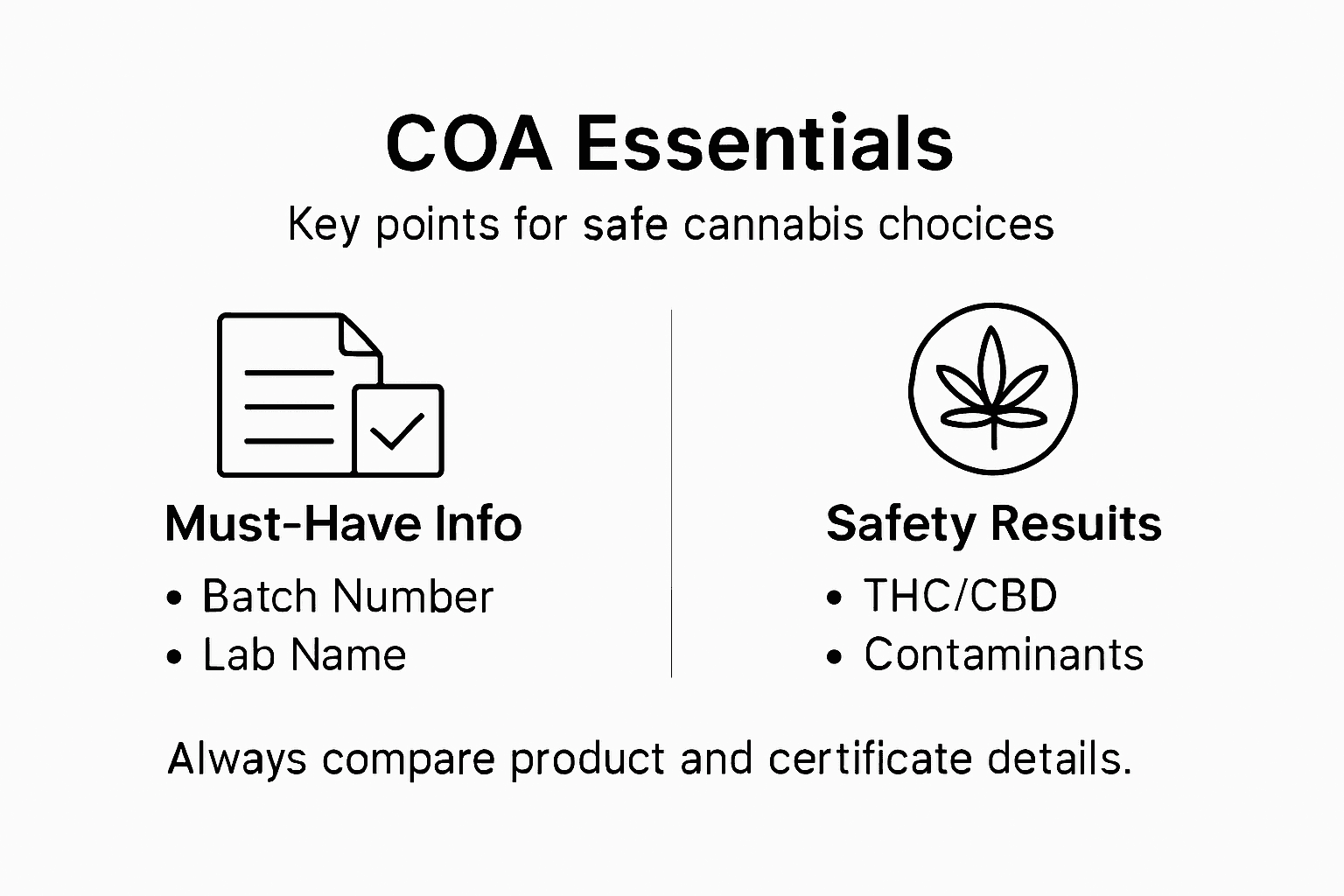
Pro tip: Cross-reference the batch number on the product label with the batch number on the COA—they must match exactly to confirm the certificate belongs to the specific product you purchased.
Legal and safety standards for cannabis products
Cannabis products sold in North America must meet strict legal and safety standards set by government agencies. These standards exist to protect you from contaminated products, mislabeled potency, and unsafe manufacturing practices. Understanding what standards apply helps you make informed purchasing decisions.
The foundation of product safety is mandatory laboratory testing. Every cannabis product sold through legal channels gets tested for cannabinoid content, pesticides, mold, bacteria, and heavy metals. These aren’t optional checks—they’re required by law in most jurisdictions. A product without proper testing documentation shouldn’t end up in your cart.
Potency limits vary by location but exist in most places. Some regions cap THC content per serving or package, while others focus on labeling accuracy. The point is ensuring products don’t exceed legal thresholds and labels reflect actual content. This protects new users from unexpectedly strong products.
Packaging and labeling regulations mandate specific information appears on every product. You’ll see cannabinoid percentages, serving sizes, warning labels, and batch numbers. Comprehensive cannabis safety standards require clear disclosure of what’s in the product and potential health warnings for vulnerable groups.
Here’s what regulatory frameworks typically require:
- Accurate cannabinoid labeling: THC and CBD percentages must match COA results
- Contamination testing: Mandatory screening for pesticides, heavy metals, and microbial pathogens
- Child-resistant packaging: All products must be tamper-evident and child-proof
- Warning labels: Required health and safety information clearly displayed
- Batch tracking: Traceability from cultivation through retail sale
- Testing documentation: Certificate of Analysis available to consumers
Different states and provinces set different standards, which matters if you travel or order across borders. What’s legal and compliant in one jurisdiction might violate regulations elsewhere. Always check local requirements before purchasing.
Licensed retailers like Avondale Apothecary carry only products meeting regulatory standards. Unlicensed sources offer no guarantee of safety or accuracy. Products from regulated channels come with accountability—if something goes wrong, there’s documentation and recourse.
A product without a complete Certificate of Analysis and proper regulatory labeling hasn’t met minimum safety standards, regardless of price or reputation.
Laboratory accreditation matters significantly. Accredited testing facilities follow stricter protocols than unaccredited labs. Accreditation indicates the lab undergoes regular audits and maintains consistent quality standards.
Pro tip: Before buying, verify the retailer’s licensing status through your state or provincial cannabis control board—legitimate businesses display their license number publicly, and you can confirm its validity online.
Common errors in certificate review and avoidance tips
Most people make predictable mistakes when reading cannabis certificates. These errors can lead you to buy unsafe products or overlook red flags. Learning what to watch for transforms you from a passive buyer into an informed consumer.
The biggest mistake is ignoring lab accreditation. Not all laboratories maintain the same standards. An unaccredited lab might produce impressive-looking certificates while cutting corners on actual testing. Always verify that the testing facility holds proper accreditation before trusting their results.
Another common error is misreading cannabinoid percentages. Consumers often confuse THCa (inactive) with THC (active), or they misunderstand what the percentages mean. A 20% THC product isn’t twice as strong as a 10% THC product—potency effects are more complex. Understanding the difference prevents unexpected experiences.
People frequently overlook contamination thresholds. A certificate might show pesticides are present, but at what level? Different jurisdictions set different limits. Just because something appears on the test doesn’t automatically mean it’s unsafe—the concentration matters. Understanding cannabis testing standards helps you interpret threshold data correctly.
Common review mistakes include:
- Missing batch number verification: Not matching the product label to the certificate
- Ignoring test dates: Old certificates might not reflect current product quality
- Skipping the methodology section: Different testing methods produce different results
- Overlooking compliance notes: Missing regulatory failure information at document bottom
- Accepting partial results: Some certificates only test for cannabinoids, missing contaminants
- Trusting undated certificates: Legitimate labs always date their reports
Another frequent error involves assuming higher THC equals better quality. THC potency matters, but so do terpenes, cannabinoid ratios, and absence of contaminants. A lower-potency product with excellent terpene profiles might deliver better effects than a high-THC product with harsh contaminants.
Many buyers don’t verify lab contact information. Legitimate labs list their address, phone number, and accreditation details. If this information is vague or missing, the certificate lacks accountability. You should be able to contact the lab directly to confirm results.
A valid certificate includes lab accreditation, batch number, test date, contamination screening, and clear contact information—if any element is missing, the certificate is incomplete.
Time-sensitive information gets overlooked often. Cannabis components degrade over time, so a certificate from six months ago might not reflect current product quality. Retailers should provide recent certificates, not old ones.
Use this table as a reference to avoid common mistakes when reviewing cannabis certificates:
| Mistake to Avoid | Why It Matters | How to Prevent It |
|---|---|---|
| Ignoring lab accreditation | Results may be unreliable | Always verify accreditation |
| Confusing cannabinoid percentages | Misjudges product potency | Understand label and lab terms |
| Missing batch number match | Certificate may not belong to product | Check batch numbers carefully |
| Overlooking contamination limits | Potential health risks | Review contaminant levels and thresholds |
| Trusting undated certificates | Data may be outdated | Check for recent test dates |
Staying aware of these pitfalls leads to safer, more informed purchases.
Pro tip: Take a photo of the certificate when you buy, then save it with the product name and date—this creates your own quality history and makes comparing products across future purchases much easier.
Ensure Your Cannabis Choices Are Safe and Transparent with Avondale Apothecary
Navigating cannabis certificates can be challenging when you want to make smart, safe purchases. The Certificate of Analysis and understanding terms like cannabinoids, terpenes, and compliance are essential to avoid risks like contaminants or mislabeled potency. At Avondale Apothecary, we prioritize transparency by providing detailed COAs with every product so you can verify quality and safety effortlessly. Explore our curated selection of premium cannabis options including THCA Flower – AALLC and Edibles – AALLC all backed by trustworthy lab testing.
Take control of your cannabis experience by choosing products with full certification and compliance. Visit Avondale Apothecary now and shop with confidence knowing every product meets rigorous safety standards. Don’t wait until uncertainty affects your wellbeing secure your next purchase today with reliable certificates and superior quality.
Frequently Asked Questions
What is a cannabis certificate, and why is it important?
A cannabis certificate is an official document that verifies the composition, safety, and quality of a cannabis product through laboratory testing. It acts as a health report card, providing vital information about cannabinoid content, potency, and contaminants, ensuring consumers make safe choices.
What key information should I look for on a Certificate of Analysis (COA)?
When examining a COA, look for core sections including the cannabinoid panel (THC, CBD levels), terpene profiles, contamination testing (pesticides, heavy metals), and compliance status. Verify that the certificate is dated and relates specifically to the product batch you are purchasing.
How can I ensure the lab testing my cannabis product is credible?
To verify a lab’s credibility, check for its accreditation details on the COA. Accredited labs follow strict standards for testing, which gives their results more weight. You can also contact the lab directly to confirm their credentials and testing methods.
What should I do if the cannabis product does not have a complete certificate?
If a cannabis product lacks a complete Certificate of Analysis or displays incomplete information, it’s best to avoid purchasing it. Products without proper documentation may not meet safety standards, and you deserve transparency regarding what you’re consuming.