

Finding clarity in cannabis regulations can feel overwhelming when every country sets its own unique rules. For cannabis businesses and retailers aiming to operate legally and earn consumer trust, understanding compliance goes far beyond simply following local laws. This guide breaks down the essentials of cannabis compliance, debunks persistent myths, and highlights the critical standards that ensure both legal success and consumer confidence worldwide.
Table of Contents
- Cannabis Compliance Defined And Misconceptions
- Types Of Regulatory Frameworks Worldwide
- Core Licensing And Product Tracking Requirements
- Packaging, Labeling, And Retail Safety Standards
- Retailer Duties, Risks, And Common Mistakes
Key Takeaways
| Point | Details |
|---|---|
| Understanding Compliance | Cannabis compliance involves complex regulations and legal frameworks that vary by jurisdiction, essential for legal operations. |
| Effective Strategies | Businesses must implement continuous legal education, proactive monitoring, and robust documentation practices to remain compliant. |
| Global Regulatory Variance | Different countries exhibit unique cannabis regulations, from medical-only frameworks to full legalization, requiring tailored compliance approaches. |
| Retailer Responsibilities | Cannabis retailers face specific compliance duties, including ID verification and inventory management, to mitigate legal and financial risks. |
Cannabis Compliance Defined and Misconceptions
Cannabis compliance represents a critical framework governing legal cannabis operations worldwide. Unlike simplistic assumptions, compliance involves intricate regulatory navigation across multiple jurisdictions and legal domains.
At its core, cannabis compliance encompasses a comprehensive system of legal and regulatory standards that guide cultivation, processing, distribution, and sales. These frameworks aim to protect public health, ensure product safety, and maintain strict operational standards.
Key misconceptions about cannabis compliance include:
- Believing legalization means unrestricted operations
- Assuming uniform regulations across different states or countries
- Thinking medical and recreational cannabis follow identical rules
- Presuming federal and state laws are consistently aligned
Complex Legal Landscape
The regulatory environment surrounding cannabis is remarkably nuanced. International legal frameworks vary dramatically, ranging from total prohibition to comprehensive medical and recreational use programs. Businesses must understand these intricate differences to maintain legal standing.
Successful compliance requires:
- Continuous legal education
- Proactive regulatory monitoring
- Robust documentation practices
- Regular internal audits
- Adaptable operational protocols
Practical Implementation
Effective cannabis compliance demands more than basic legal adherence. Organizations must develop sophisticated systems that anticipate regulatory changes, maintain meticulous records, and demonstrate consistent commitment to safety and transparency.
Pro tip: Invest in comprehensive legal consultation and regularly update your compliance strategies to stay ahead of evolving regulatory landscapes.
Types of Regulatory Frameworks Worldwide
Cannabis regulatory frameworks represent a complex global landscape reflecting diverse sociopolitical approaches to cannabis management. Worldwide cannabis regulations demonstrate significant variations across different jurisdictions, each with unique strategic objectives and public policy considerations.
The primary regulatory models include:
- Medical-only access frameworks
- Full recreational legalization
- Decriminalization with controlled markets
- Strict prohibition models
Comprehensive Regulatory Categories
Global policy approaches to cannabis regulation can be categorized into five distinct models:
- Public safety focused frameworks
- Public health oriented strategies
- Medicinal cannabis access programs
- Consumer cannabis market regulations
- Racial justice-driven policy approaches
Jurisdictional Considerations
Each regulatory framework reflects specific regional goals, cultural attitudes, and political contexts. Countries like Canada and Uruguay have pioneered comprehensive legalization models, while others maintain more restrictive medical-only or decriminalization approaches.
Here’s a summary comparing global cannabis regulatory models and their main objectives:
| Regulatory Model | Primary Focus | Typical Examples |
|---|---|---|
| Medical-only access | Patient health and safety | Germany, Israel |
| Full recreational legalization | Consumer freedom, tax revenue | Canada, Uruguay |
| Decriminalization with controls | Reduce penalties, manage access | Portugal, Netherlands |
| Strict prohibition | Public safety, legal deterrence | Japan, Saudi Arabia |
| Racial justice-driven policies | Equity, social reform | Some U.S. states |
Effective regulatory frameworks balance public health protection, consumer safety, and market development objectives.
Implementation Challenges
Navigating these diverse regulatory landscapes requires sophisticated understanding of local and international legal nuances. Cannabis businesses must remain adaptable and continuously monitor evolving regulatory environments.
Pro tip: Develop a flexible compliance strategy that can quickly adapt to changing regulatory frameworks across different jurisdictions.
Core Licensing and Product Tracking Requirements
Cannabis licensing represents a complex regulatory mechanism designed to ensure comprehensive oversight of cannabis operations. Worldwide licensing requirements mandate rigorous application processes that evaluate multiple critical dimensions of cannabis business operations.
Key licensing components typically include:
- Business legitimacy verification
- Security measure assessments
- Product quality assurance protocols
- Background checks for key personnel
- Financial stability evaluations
Product Tracking Systems
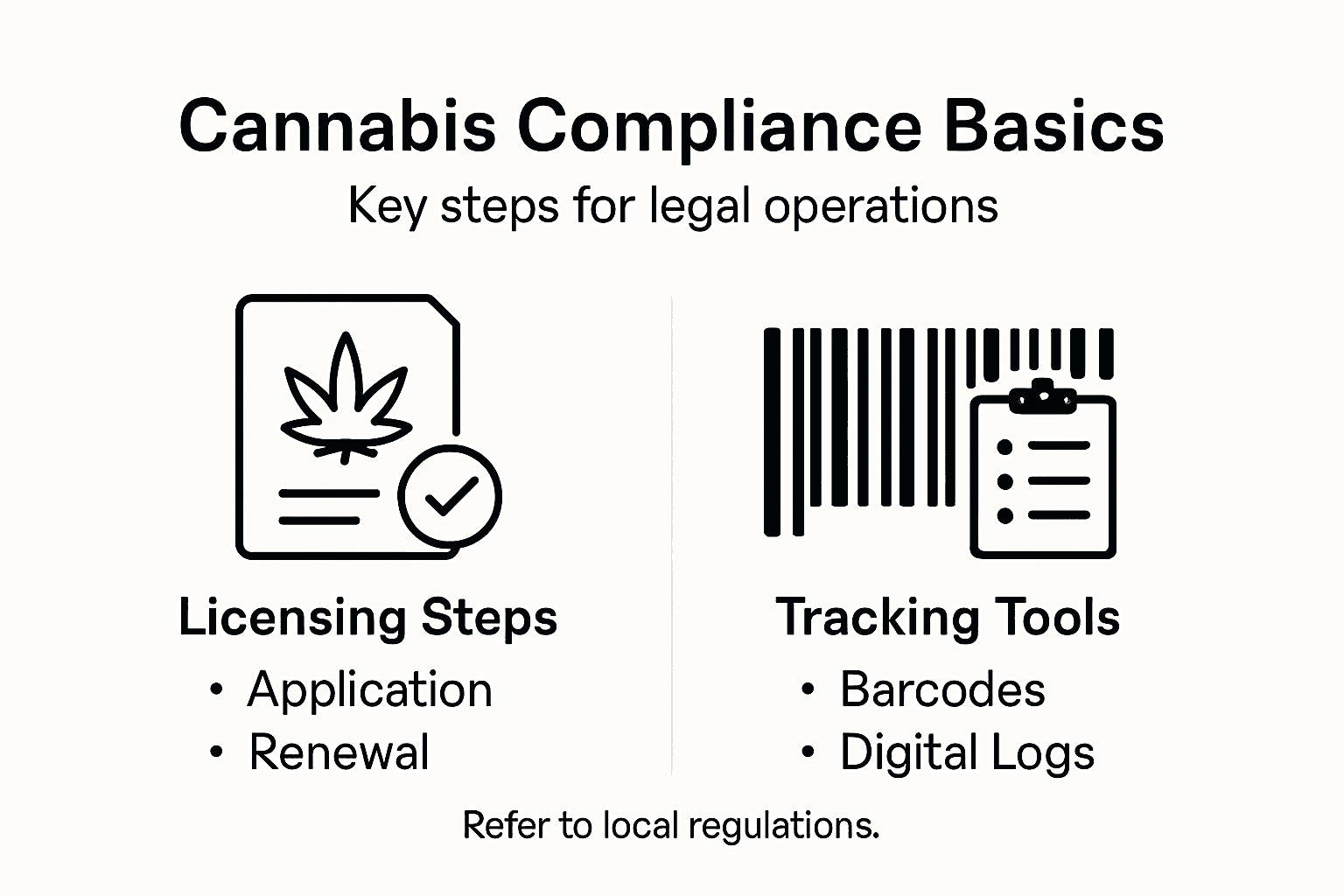
Cannabis tracking systems are essential for maintaining regulatory compliance and preventing product diversion. These sophisticated digital platforms enable real-time monitoring of cannabis products from cultivation through final sale.
Core tracking requirements often encompass:
- Seed-to-sale documentation
- Inventory management reporting
- Digital transfer monitoring
- Real-time data collection
- Comprehensive traceability mechanisms
Regulatory Compliance Challenges
Navigating licensing and tracking requirements demands meticulous attention to detail and robust technological infrastructure. Businesses must invest in sophisticated systems that can adapt to evolving regulatory landscapes and provide transparent, verifiable documentation.
Effective product tracking reduces fraud risks and enhances overall industry accountability.
Implementation Strategies
Successful cannabis operations prioritize comprehensive compliance strategies that integrate advanced tracking technologies with proactive regulatory management. This approach minimizes potential legal risks and demonstrates commitment to industry standards.

Pro tip: Develop a comprehensive digital tracking system that provides granular, real-time monitoring of all cannabis product movements.
Packaging, Labeling, and Retail Safety Standards
Cannabis packaging standards represent a critical component of consumer safety and regulatory compliance. Packaging regulations mandate comprehensive requirements designed to protect consumers and prevent inappropriate product access.
Key packaging requirements typically include:
- Child-resistant containers
- Tamper-evident packaging
- Plain packaging restrictions
- Clear health warnings
- Detailed product information
Labeling Compliance
Retail safety standards emphasize transparent and informative product labeling. Essential label components must provide:
- Precise cannabinoid content measurements
- Lot numbers and tracking identifiers
- Licensing authority details
- Potential health risk disclosures
- Responsible consumption guidelines
Consumer Protection Mechanisms
Packaging design plays a crucial role in preventing accidental ingestion and protecting vulnerable populations. Regulations focus on creating barriers that limit youth appeal while ensuring comprehensive consumer education about product contents and potential effects.
Effective packaging is the first line of defense in responsible cannabis distribution.
Compliance Implementation
Successful cannabis retailers must continuously adapt to evolving packaging standards, investing in sophisticated design and printing technologies that meet stringent regulatory requirements across different jurisdictions.
Pro tip: Implement a dynamic packaging verification system that can quickly adapt to changing regulatory standards in multiple markets.
Retailer Duties, Risks, and Common Mistakes
Cannabis retail compliance demands comprehensive understanding of complex regulatory requirements. Retailer risks encompass multiple critical operational dimensions that require meticulous management and proactive strategies.
Key retailer duties include:
- Rigorous ID verification protocols
- Strict purchase limit enforcement
- Comprehensive recordkeeping
- Maintaining robust security infrastructure
- Ensuring consistent employee training
Common Compliance Mistakes
Critical retailer compliance errors frequently arise from several fundamental operational weaknesses:
This reference table outlines common challenges and effective strategies for cannabis retail compliance:
| Challenge | Impact on Business | Recommended Strategy |
|---|---|---|
| Expired licenses | Legal risks, fines | Scheduled license renewal audits |
| Employee training gaps | Compliance failure, errors | Regular regulatory education sessions |
| Inventory mismanagement | Loss, regulatory penalties | Integrated digital inventory systems |
| Data security weaknesses | Privacy breaches, penalties | Encrypted records and access controls |
- Possessing expired or improper licenses
- Inadequate employee regulatory training
- Patient and customer privacy breaches
- Inventory mismanagement
- Poor data security practices
Risk Mitigation Strategies
Successful cannabis retailers must develop sophisticated compliance frameworks that anticipate regulatory changes and create multiple layers of operational protection. This approach involves continuous staff education, regular internal audits, and adaptive management techniques.
Proactive compliance is the most effective defense against potential legal and financial penalties.
Operational Safeguards
Establishing comprehensive risk management protocols requires ongoing commitment to understanding evolving regulatory landscapes and implementing robust internal control mechanisms that protect both the business and its customers.
Pro tip: Develop a quarterly compliance review process that systematically evaluates and updates your retail operational standards.
Master Cannabis Compliance with Quality You Can Trust
Navigating the complex world of cannabis compliance requires not only understanding evolving regulations but also ensuring access to products that meet the highest standards of safety and quality. Whether you seek rigorously tested cannabis options or need transparent documentation to support your legal operations, Avondale Apothecary offers a curated selection designed to align with key compliance demands mentioned in the article, such as meticulous product tracking and clear labeling.
Explore our extensive range of compliant cannabis products including our premium High-Resin Hemp Flower and carefully crafted Pre Rolls. Each product is supported by comprehensive Certificates of Analysis to help you maintain confidence and transparency in your cannabis choices. Start building your trusted cannabis inventory today at Avondale Apothecary and stay ahead in the legal cannabis market with compliance at your side.
Frequently Asked Questions
What is cannabis compliance?
Cannabis compliance refers to the legal and regulatory standards governing cannabis operations, including cultivation, processing, distribution, and sales, aimed at protecting public health and ensuring product safety.
Why is understanding cannabis compliance important for businesses?
Understanding cannabis compliance is crucial for businesses as it helps navigate the complex legal landscape, ensuring they operate within the law, avoid penalties, and maintain a good standing in the industry.
What are common misconceptions about cannabis compliance?
Common misconceptions include believing that legalization means unrestricted operations, assuming regulations are the same across all jurisdictions, and thinking medical and recreational cannabis follow identical rules.
How does packaging play a role in cannabis compliance?
Packaging plays a crucial role in cannabis compliance by ensuring consumer safety through child-resistant containers, tamper-evident features, and clear labeling that includes health warnings and product information.