
Finding cannabis products that truly deliver transparency and quality can feel overwhelming when regulations differ from country to country and state to state. The clash between federal and state laws shapes access, safety, and pricing in regulated markets, directly affecting every purchase you make. This article offers a clear look at the core purpose of cannabis-regulated systems, showing how government oversight, lab testing, and legal frameworks protect your rights and guide your options as a smart consumer.
Table of Contents
- Cannabis-Regulated Market Core Definition
- Types And Models Of Cannabis Regulation
- How Regulated Cannabis Markets Operate
- Legal Frameworks And Compliance Requirements
- Risks, Obligations, And Consumer Rights
Key Takeaways
| Point | Details |
|---|---|
| Understanding Cannabis Regulation | A cannabis-regulated market involves government oversight of production, sales, and consumption, ensuring safety and quality compared to unregulated options. |
| Consumer Safety Measures | Regulated markets require mandatory product testing and transparency, which protect consumers from harmful products and misleading labeling. |
| Know Your Rights | Consumers are entitled to accurate product information and safety data, highlighting the importance of verifying Certificates of Analysis before purchase. |
| Compliance and Accountability | Retailers must comply with strict legal frameworks that enforce safety standards and consumer transparency, impacting product pricing and availability. |
Cannabis-regulated market core definition
A cannabis-regulated market is a legal system where cannabis sales, production, and consumption are controlled by government agencies rather than happening in the black market. Think of it like the difference between buying alcohol at a licensed store versus from an unlicensed source—one has oversight, the other doesn’t.
The current U.S. cannabis situation creates a complex landscape. At the federal level, marijuana remains a Schedule I substance under the Controlled Substances Act, meaning the federal government classifies it as having no accepted medical use. However, many states have enacted their own laws permitting medical or recreational cannabis use, creating what experts call a federal-state conflict.
This tension shapes everything you experience as a consumer:
- Access depends on your state’s specific regulations
- Product quality and safety standards vary by jurisdiction
- Pricing fluctuates based on local supply, demand, and tax rates
- Testing and labeling requirements differ across regions
In regulated markets, cannabis products undergo mandatory testing for potency, pesticides, microbial contaminants, and heavy metals. Sellers must provide transparent information about what’s in each product, including detailed lab results. This is where platforms like Avondale Apothecary differentiate themselves by offering comprehensive Certificates of Analysis (COAs) for every product.
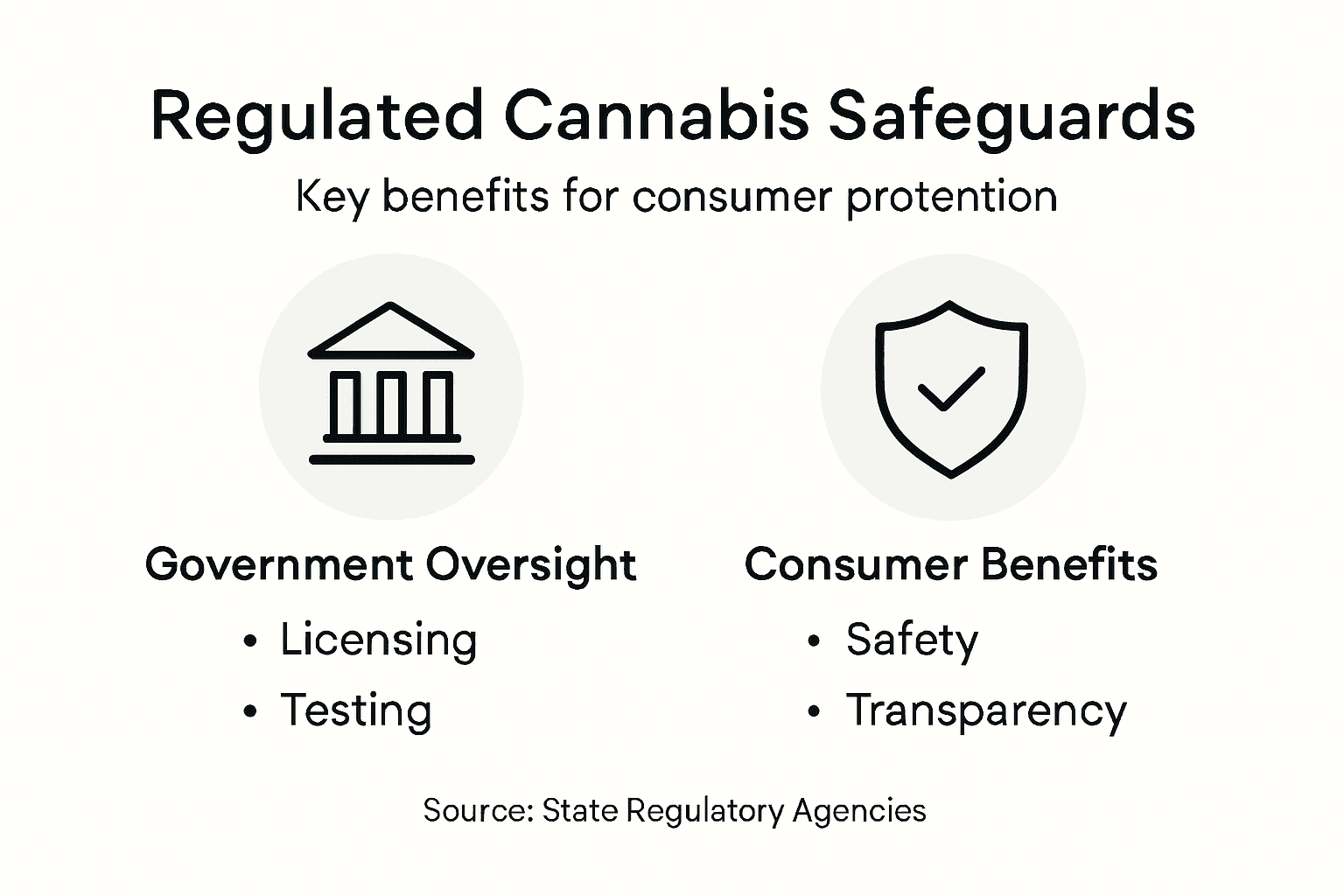
Unregulated markets lack these protections entirely. Products may contain unknown contaminants, mislabeled potency, or dangerous additives. Consumers have no recourse if a product causes harm.
Key characteristics of regulated markets include:
- Licensed retailers operating under state oversight
- Mandatory product testing and quality assurance
- Clear labeling with THC/CBD content and origin information
- Tax collection and revenue reporting
- Age verification requirements (typically 21+)
- Restrictions on marketing and packaging
When you purchase from a regulated retailer, you’re participating in a system designed to protect you. The regulatory framework ensures someone verified the product’s contents, tested it for safety, and tracked it from production to purchase.
Regulated markets transform cannabis from an uncontrolled product into one backed by government oversight, testing requirements, and legal accountability.
Understanding this core definition matters because it explains why regulated products cost more than black market alternatives—you’re paying for safety verification, quality assurance, and legal accountability. Your consumer choices directly support this system’s legitimacy.
Pro tip: When evaluating cannabis products, always verify the retailer’s licensing status and request COAs for transparency—these documents prove the product passed independent testing and contain what the label claims.
Types and models of cannabis regulation
Cannabis regulation doesn’t follow a one-size-fits-all approach. Different countries and states use distinct models based on their values, economic goals, and public health priorities. Understanding these frameworks helps you see why your local market looks different from another state’s.
The primary regulatory models fall into four main categories. Global cannabis regulatory models range from strict state control to more open market approaches, each creating different consumer experiences and product availability.
State monopoly model:
- Government controls production, distribution, and retail
- Limited product selection but standardized quality
- Examples include Canada’s initial framework and some European countries
- Higher prices due to limited competition
Licensing model:
- Private companies operate under government oversight
- Multiple licensed producers and retailers compete
- Regulatory agencies set standards and enforce compliance
- Used in most U.S. states with legal cannabis
Social club model:
- Non-profit organizations serve members
- Limited marketing and distribution
- Popular in Spain and other European nations
- Focuses on harm reduction over profit
Market liberalization model:
- Minimal government control beyond safety standards
- Private businesses operate with few restrictions
- Highest product variety and lowest prices
- Rare globally; poses regulatory challenges
Each model affects what you experience as a consumer. In a licensing model like most U.S. states, multiple retailers compete for your business, offering variety. A state monopoly limits choices but guarantees consistency. Cannabis compliance requirements vary significantly based on which model your state adopted.
Your state’s specific model determines everything from product availability to pricing to testing standards. Some states allow home cultivation; others forbid it entirely. Some permit mail-order delivery; others require in-person purchases only.
The regulatory model your state chose fundamentally shapes your access to products, pricing, and the variety of cannabis goods available to you.
You’ll notice these differences when comparing prices, product selection, and retailer experiences across state lines. A premium flower strain available in California might be illegal to sell in a neighboring state with stricter regulations.
Here’s a comparison of the main cannabis regulatory models and how they affect consumer experience:
| Regulatory Model | Main Control Method | Consumer Choices | Typical Product Pricing |
|---|---|---|---|
| State Monopoly | Government manages all aspects | Limited selection | Higher, stable prices |
| Licensing | Private firms with oversight | Wide variety | Competitive, mid-range |
| Social Club | Non-profit clubs for members | Niche, limited | Moderate, member-driven |
| Market Liberalization | Minimal restrictions | Very broad | Lowest, highly variable |
Pro tip: Research your state’s specific regulatory model and local retailer licensing status to understand why certain products cost more or why your preferred items might be unavailable—regulations, not retailers, often control availability.
How regulated cannabis markets operate
Regulated cannabis markets function through a structured system where government agencies, licensed businesses, and safety testing work together. Think of it like a factory assembly line with multiple quality checkpoints instead of a single producer making products in secret.

The core framework involves several interconnected layers. Regulated cannabis supply chains require licensing producers, distributors, and retailers, quality assurance testing, taxation, and strict compliance with legal standards. Each layer serves a specific purpose in moving products from cultivation to your hands.
The operational flow looks like this:
- Licensed growers cultivate cannabis under regulatory oversight
- Products undergo mandatory laboratory testing for potency and contaminants
- Approved products move to licensed distributors and retailers
- Retailers verify customer age and track all sales
- Tax revenue gets collected at multiple points
Licensing creates accountability at every stage. Growers must follow cultivation standards, use approved pesticides, and maintain detailed records. Testing labs verify cannabinoid content, residual solvents, and microbial safety. Retailers must implement age verification and keep inventory records that regulators can audit.
The Netherlands’ cannabis supply chain experiment demonstrates this in practice. Designated growers supply cannabis to licensed coffee shops under strict quality controls and distribution oversight. This phased approach monitors compliance, tracks public health outcomes, and reduces illicit market activity.
Taxation creates another control point. When you purchase cannabis, taxes fund regulatory agencies, public health programs, and law enforcement. This creates funding for the system itself.
Key operational safeguards include:
- Seed-to-sale tracking systems that follow every product
- Regular compliance audits and surprise inspections
- Mandatory product testing by independent laboratories
- Age verification technology at point of sale
- Packaging and labeling requirements for consumer information
The cannabis retail process reflects these regulatory requirements in how premium retailers like Avondale Apothecary serve customers. Each product comes with complete documentation proving it passed testing.
Regulated markets create transparency through documentation, testing, and accountability that black market products simply cannot provide.
When you buy from a regulated retailer, you’re accessing products that survived multiple regulatory checkpoints. The system isn’t perfect, but it prevents the worst outcomes that plague unregulated markets.
The following table summarizes the key safeguards in regulated cannabis supply chains:
| Safeguard | Purpose | Benefit to Consumers |
|---|---|---|
| Mandatory lab testing | Ensure potency & safety | Reduces contamination risk |
| Age verification | Prevent underage sales | Protects youth, enforces law |
| Seed-to-sale tracking | Monitor movement & inventory | Increases traceability |
| Compliance audits | Detect non-compliance early | Improves product confidence |
| Transparent labeling | Inform buyers about contents | Supports informed choices |
Pro tip: Request Certificates of Analysis (COAs) before purchasing—these documents prove your product passed independent testing and confirm cannabinoid potency and contamination screening.
Legal frameworks and compliance requirements
Cannabis businesses operate within complex legal frameworks that vary dramatically by location. These aren’t simple rules—they’re interconnected systems designed to prevent illegal activity while protecting consumers and maintaining market integrity.
Compliance requirements span multiple areas. Cannabis retailers must meet financial regulations, product standards, operational protocols, and reporting obligations. Missing even one requirement can result in license suspension or criminal penalties.
Financial and anti-money laundering compliance:
Cannabis businesses operate in a unique position because federal prohibition creates banking challenges. Canadian cannabis regulations include strict anti-money laundering and anti-terrorist financing controls that businesses must follow. These frameworks impose stringent reporting, due diligence, and oversight obligations on cannabis-related companies.
Retailers must document customer transactions, verify identities, and report suspicious activity to financial authorities. This creates an audit trail that makes cannabis markets less attractive to criminal organizations.
Product and operational compliance:
- Testing requirements for potency, pesticides, and microbial contaminants
- Packaging and labeling standards with specific warning language
- Inventory tracking from production to sale
- Employee background checks and training
- Security systems including surveillance and alarm monitoring
- Record retention for audits and investigations
International frameworks add another layer. European cannabis regulations navigate UN drug control conventions while implementing national compliance measures. Countries balance licensing, quality control, marketing restrictions, and law enforcement cooperation to ensure compliance and consumer protection.
Each state in the U.S. creates its own compliance standards on top of these principles. A product compliant in Colorado might violate California regulations. Retailers must understand local rules specifically.
What this means for you as a consumer:
Compliance requirements create the transparency you see at legitimate retailers. Those detailed product labels, testing certificates, and age verification processes aren’t bureaucratic hassle—they’re your protection. Retailers investing in compliance are filtering out contaminated or mislabeled products before they reach you.
Legal compliance requirements exist to protect you, not restrict you—they’re the difference between safe products and dangerous unknowns.
When a retailer displays COAs and tracks inventory meticulously, they’re meeting legal obligations that benefit your safety. The cost of compliance gets reflected in product pricing, but you’re paying for accountability.
Pro tip: Before making a purchase, confirm your retailer displays licenses prominently and provides testing documentation—these visible compliance markers indicate they take regulatory requirements seriously and prioritize consumer safety.
Risks, obligations, and consumer rights
Regulated cannabis markets create a balancing act between consumer protection and market access. You have rights in these systems, but you also face specific risks that differ from unregulated markets. Understanding both protects you.
Consumer rights in regulated markets are legally defined. Cannabis consumers have rights to safe, accurately labeled products and transparent information, though enforcement varies by jurisdiction. Retailers must provide clear labeling, accurate potency information, and ingredient disclosures. You’re legally entitled to know what you’re purchasing.
Your specific consumer rights include:
- Access to complete product testing data (Certificates of Analysis)
- Accurate labeling of THC, CBD, and other cannabinoids
- Warning labels for known health risks and allergens
- Protection of purchase privacy and personal information
- Recourse if a product is contaminated or mislabeled
- Age-appropriate restrictions to prevent youth access
Producers and retailers have legal obligations matching your rights. They must adhere to safety standards, provide clear labeling, and protect consumer privacy. These obligations exist to ensure informed and secure purchasing experiences.
However, risks remain despite regulation. Regulated cannabis markets increase adult usage without raising youth consumption, but product quality and safety depend on consistent enforcement. Some retailers cut corners on testing protocols. Labeling accuracy varies across brands. Enforcement agencies lack resources to audit every transaction.
Specific risks you should know about:
- Potency variation between products labeled identically
- Inconsistent enforcement of safety standards across jurisdictions
- Product diversity making quality assessment difficult
- Limited recourse if you experience adverse effects
- Privacy concerns with purchase tracking systems
Your obligations as a consumer include responsible use. Age verification exists for your protection and legal compliance. If you’re underage, purchasing is illegal in all regulated markets. If you’re of legal age, you’re responsible for using products safely and following local consumption laws.
Regulated markets give you rights and protections, but they require you to make informed decisions and verify product quality yourself.
When purchasing, don’t assume all products meet the same standards. Retailers operating under premium standards like Avondale Apothecary go beyond minimum legal requirements by verifying COAs independently and offering detailed product information.
Pro tip: Compare testing documents across brands before purchasing—different labs use different standards, so requesting COAs from independent facilities ensures you’re getting genuinely verified products rather than relying on producer-affiliated testing.
Experience True Transparency in Cannabis-Regulated Markets Today
Navigating the complex world of cannabis regulation can feel overwhelming when safety and quality are at stake. The challenge for consumers lies in verifying product authenticity, accessing reliable Certificates of Analysis, and trusting that their purchases meet rigorous compliance standards. With the risks of unregulated markets looming large, it is essential to choose a retailer committed to delivering verified, lab-tested products that uphold your consumer rights and safety.
At Avondale Apothecary, we understand these pain points and offer a curated selection of cannabis products where transparency and accountability are foundational. Each item listed on Avondale Apothecary comes with comprehensive Certificates of Analysis to provide you with full insight into potency and safety. Shop our exclusive collection with confidence knowing you are supporting a regulated market ecosystem designed to protect you.
Discover the peace of mind that comes from purchasing through a compliant, trusted source. Visit Avondale Apothecary now and explore how premium cannabis products with verified quality can elevate your experience. Do not settle for uncertain quality when your safety and satisfaction demand certainty.
Frequently Asked Questions
What is a cannabis-regulated market?
A cannabis-regulated market is a legal system where the production, distribution, and sale of cannabis is overseen by government authorities, ensuring safety, quality, and legal accountability unlike the black market.
How does the cannabis regulatory model affect product availability and pricing?
Different regulatory models create varying levels of market control. For instance, a state monopoly can limit product options and set higher prices, while a licensing model promotes competition, resulting in a wider variety of products and potentially lower prices.
What are the key benefits of purchasing from a regulated cannabis retailer?
Purchasing from a regulated retailer provides consumers with protections such as mandatory product testing for safety and potency, clear labeling of THC/CBD content, age verification, and recourse if products are contaminated or mislabeled.
How can I ensure the cannabis products I buy are safe and accurately labeled?
Look for products that come with a Certificate of Analysis (COA), which verifies that the product has undergone independent laboratory testing for potency and contaminants. Also, check for clear labeling that provides detailed information on the product’s contents.