
Many cannabis users lose up to 30% of their product’s potency within the first few months due to common storage mistakes like using plastic bags, exposing containers to light, or ignoring humidity control. This guide walks you through a scientifically backed workflow to preserve cannabis freshness, flavor, and potency for 6 to 12 months. You’ll learn optimal environmental conditions, the best containers, handling practices, and special considerations for concentrates and edibles.
Table of Contents
- Prerequisites: What You Need Before Starting Cannabis Storage
- Step 1: Optimal Environmental Conditions for Cannabis Storage
- Step 2: Best Storage Containers and Materials
- Step 3: Handling and Usage Best Practices
- Step 4: Storage for Special Cannabis Products (Concentrates & Edibles)
- Step 5: Common Storage Mistakes and Troubleshooting
- Step 6: Safety Considerations for Cannabis Storage at Home
- Step 7: Expected Results and Timelines
Key Takeaways
| Point | Details |
|---|---|
| Temperature and Humidity | Ideal storage is 60–68°F and 59–63% humidity to preserve 95% potency over 6 months. |
| Container Selection | Use airtight glass jars with humidity packs; avoid plastic bags to prevent trichome damage and degradation. |
| Light and Oxygen Protection | Store in dark, UV-resistant, childproof containers and limit opening frequency to minimize exposure. |
| Special Product Storage | Concentrates and edibles require tailored conditions: silicone containers for concentrates, controlled humidity for edibles. |
| Safety and Compliance | Childproof, odor-proof storage protects households and complies with cannabis compliance guidelines. |
Prerequisites: What You Need Before Starting Cannabis Storage
Before diving into the storage workflow, gather the right tools and prepare your storage environment. Without these essentials, even the best intentions won’t preserve your cannabis effectively.
You need airtight glass containers or specialized cannabis jars to prevent oxygen from degrading cannabinoids and terpenes. Mason jars work well, but purpose-built cannabis jars often include UV protection and integrated humidity monitoring. Humidity control packs maintaining 58–62% relative humidity are vital; brands like Boveda or Integra Boost are widely trusted.
Your storage space should be cool, ideally between 60–68°F, and completely dark. A closet, drawer, or dedicated cabinet away from heat sources and windows works best. Light exposure, especially UV rays, accelerates terpene loss and cannabinoid breakdown.
Childproof, odor-proof, airtight storage containers reduce accidental ingestion risks and control smell, which is critical if you share your home with children or pets. Many states mandate childproof storage as part of cannabis compliance guidelines, so check local regulations.
Labels and tools to track strain names and storage dates help you manage your supply. Knowing when you stored each batch lets you consume older products first, ensuring nothing sits too long.
Essential Storage Checklist:
- Airtight glass jars or UV-resistant cannabis containers
- Humidity control packs (58–62% RH)
- Cool, dark storage location (60–68°F)
- Childproof locking mechanism or secure cabinet
- Labels, markers, and tracking system
| Item | Purpose | Example |
|---|---|---|
| Glass Mason Jars | Airtight, non-porous seal | Wide-mouth quart jars |
| Humidity Packs | Maintain 58–62% RH | Boveda 62%, Integra Boost |
| UV-Resistant Jars | Block light-induced degradation | Infinity Jars, Miron glass |
| Childproof Containers | Safety and compliance | Locking stash boxes |
| Temperature Monitor | Track storage conditions | Digital hygrometer |
Pro Tip: Invest in a small digital hygrometer to monitor both temperature and humidity inside your storage area. This $10 tool can save hundreds of dollars in lost product by alerting you to environmental drifts before damage occurs.
Step 1: Optimal Environmental Conditions for Cannabis Storage
Environmental factors make or break your cannabis storage success. Temperature, humidity, light, and oxygen levels directly impact how long your product stays fresh and potent.
Maintaining temperature between 60–68°F preserves up to 95% of cannabinoids over 6 months. Temperatures above 77°F accelerate cannabinoid conversion and terpene evaporation, while freezing can make trichomes brittle and break off. Your ideal storage spot stays consistently cool without dramatic swings.
Relative humidity maintained at 59–63% RH prevents mold formation and slows terpene evaporation. Too dry (below 55%), and your cannabis becomes harsh and brittle. Too moist (above 65%), and you risk mold growth within days. Humidity packs automatically regulate moisture, creating a stable microclimate inside your containers.
Light exposure causes up to 31% terpene loss within 30 days in clear containers under indoor light. UV rays are particularly destructive, breaking down both cannabinoids and the aromatic compounds that give each strain its unique flavor profile. Opaque containers or UV-resistant glass eliminate this risk entirely.
Oxygen exposure drives oxidation, converting THC to CBN and degrading other cannabinoids. Airtight containers slow this process dramatically. Every time you open your jar, you introduce fresh oxygen, so minimize opening frequency and consider vacuum-sealing for long-term storage beyond 6 months.
Critical Environmental Parameters:
- Temperature: 60–68°F (avoid heat and freezing)
- Relative Humidity: 59–63% RH (use humidity packs)
- Light: Complete darkness or UV-resistant containers
- Oxygen: Airtight seal, minimal opening frequency
- Air Circulation: Avoid direct airflow or fans near storage
These conditions work together. A cool, dark cabinet with airtight jars containing humidity packs creates the perfect environment for cannabinoid stability and duration. Miss even one factor, and degradation accelerates.
Consistent monitoring beats guesswork. Check your storage area weekly for the first month, then monthly thereafter. If you notice any environmental drift, adjust immediately before product quality suffers.
Step 2: Best Storage Containers and Materials
Choosing the right container is just as important as controlling your environment. The wrong material can introduce contaminants, allow air exchange, or even pull terpenes from your cannabis.
Glass mason jars with humidity packs are the gold standard; avoid plastic bags which cause static and trichome loss. Glass is non-porous, chemically inert, and doesn’t leach compounds. It provides an airtight seal when properly closed and won’t react with cannabinoids or terpenes over time.
Plastic bags are the worst option for anything beyond a few days. Static electricity generated by plastic attracts and damages trichomes, pulling them off the flower. Plastic is also semi-permeable to air and moisture, allowing gradual degradation even when sealed. Never use plastic bags for storage beyond immediate transport.
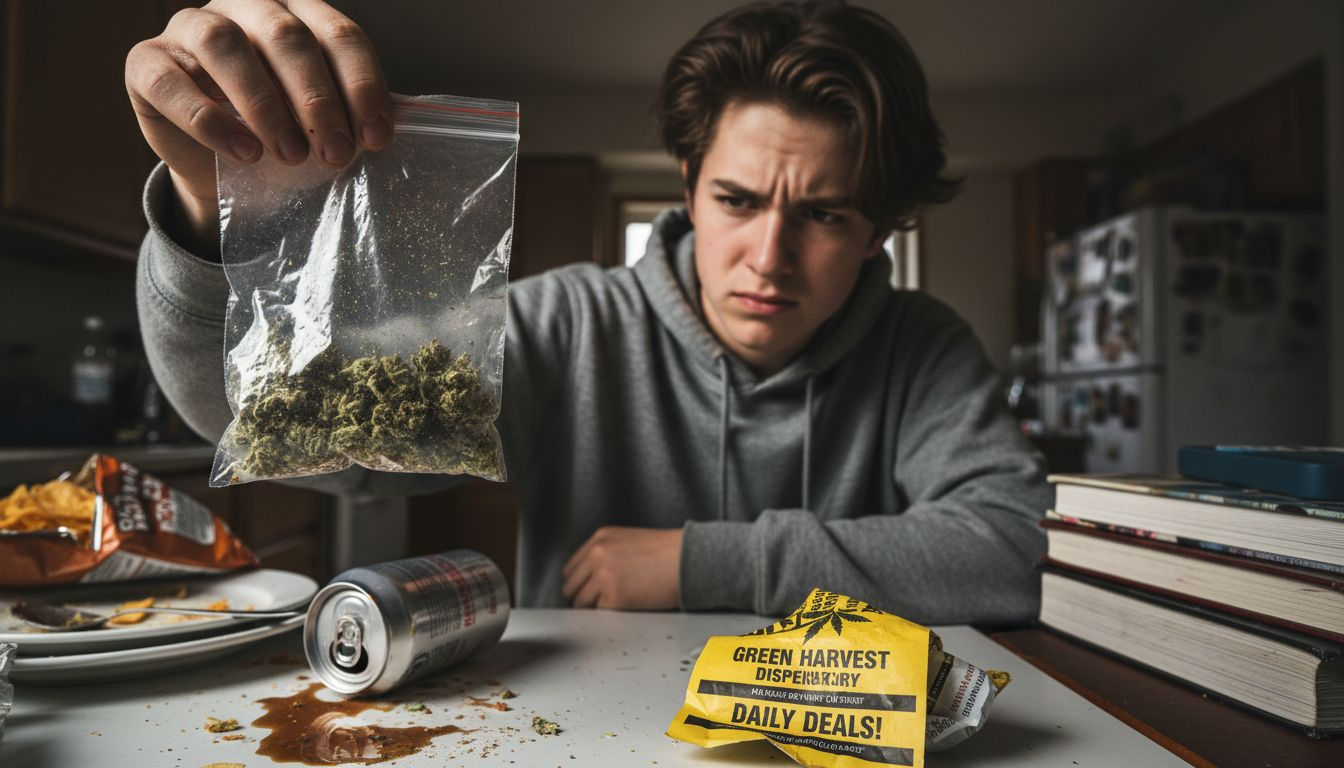
Opaque or UV-protective jars preserve terpene profiles better than clear containers. Amber glass blocks most UV light, while specialty violet glass (Miron or Infinity jars) provides even greater protection. If you use clear glass, store it in a completely dark location to compensate.
Childproof and odor-proof containers enhance safety and discretion for home storage. Locking stash boxes, smell-proof bags with combination locks, or jars with child-resistant lids meet legal requirements in many jurisdictions and protect curious hands.
| Container Type | Advantages | Disadvantages | Best Use |
|---|---|---|---|
| Glass Mason Jars | Airtight, non-porous, inert | Breakable, not UV-resistant if clear | Long-term flower storage |
| UV-Resistant Jars | Blocks light damage, airtight | More expensive | Premium strains, long-term |
| Plastic Bags | Cheap, portable | Static damage, air permeable | Short transport only |
| Metal Tins | Durable, opaque | Can dent, may rust | Travel, short-term |
| Childproof Containers | Safety compliance, lockable | Bulkier, higher cost | Household storage |
Size your containers appropriately. Excess air space inside a jar accelerates oxidation, so choose containers that fit your quantity snugly. For larger collections, divide cannabis into smaller jars rather than storing everything in one large container. This way, you only expose a portion to air when accessing your supply.
Pro Tip: Label each jar with the strain name, purchase or cure date, and expected freshness timeline. This simple habit ensures you consume older products first and helps you identify which strains respond best to your cannabis storage compliance routine.
Step 3: Handling and Usage Best Practices
Even perfect containers and environment won’t help if you mishandle your cannabis during daily use. Small habits compound over time, either preserving or degrading your supply.
Limit container opening frequency to reduce oxygen exposure and label jars with strain and storage dates for management. Every time you open a jar, you exchange the stable internal atmosphere for room air, introducing oxygen, humidity fluctuations, and potential contaminants. Plan your usage to minimize openings: take out what you need for a few days rather than accessing your main supply multiple times daily.
Daily Handling Protocol:
- Wash and dry your hands thoroughly before handling cannabis to avoid introducing oils, moisture, or bacteria.
- Open containers only when actively accessing product; don’t leave jars open while preparing consumption.
- Use clean, dry utensils or tools to remove cannabis instead of touching it directly whenever possible.
- Close and seal containers immediately after use, ensuring airtight closure.
- Return containers to storage location promptly; don’t leave them on counters exposed to light and temperature changes.
- Inspect product briefly during each access for any signs of mold, discoloration, or off odors.
- Rotate stock by using older batches first, following your labeled storage dates.
Avoid frequent agitation to preserve trichomes and terpene profiles. Shaking jars or roughly handling flowers breaks off trichomes and bruises plant material, accelerating degradation. When you need to inspect your cannabis, gently tilt the jar rather than shaking it.
Store containers away from heat and light sources. Even if your jars are opaque, placing them near radiators, ovens, or sunny windows creates temperature fluctuations that stress your cannabis. Consistency matters more than hitting exact numbers, so find a stable spot and leave your containers there.
These handling best practices seem minor individually but collectively extend freshness by weeks or months. The difference between a rushed, careless approach and a methodical one shows up clearly in potency tests and flavor profiles at the 6-month mark.
Step 4: Storage for Special Cannabis Products (Concentrates & Edibles)
Flowers aren’t the only cannabis products requiring proper storage. Concentrates and edibles have unique characteristics that demand tailored approaches.
Store concentrates in silicone or parchment in airtight, cool, dark conditions to prolong freshness for weeks to months. Concentrates like shatter, wax, budder, and live resin are highly potent and temperature-sensitive. Heat causes them to lose consistency, becoming runny or sticky, while also degrading cannabinoids and terpenes faster than in flower form.
Silicone containers work well for sticky concentrates because the product doesn’t adhere to the walls, making retrieval easy. For shatter or more stable concentrates, parchment paper inside a glass container prevents sticking while maintaining cleanliness. Store these in your refrigerator’s least humid zone (not the door) for maximum preservation, but let them reach room temperature before opening to prevent condensation.
Cannabis edibles should be stored at 55–70°F and 35–50% relative humidity in dark, clean environments to prevent stickiness and mold. Gummies, chocolates, baked goods, and beverages each have specific needs based on ingredients and formulation.
Gummies require lower humidity than flower to prevent them from becoming sticky or growing mold. Keep them in airtight containers with food-safe desiccant packets if you live in a humid climate. Chocolates need cool storage but not refrigeration unless temperatures exceed 70°F, as temperature shock can cause bloom (whitish surface discoloration) that affects texture but not potency.
Baked goods and beverages follow standard food storage guidelines with added consideration for cannabinoid preservation. Refrigerate baked edibles if they contain dairy or cream fillings, and consume within labeled expiration dates. Infused beverages should be refrigerated after opening and consumed within 3 to 5 days for best quality.
Special Product Storage Guidelines:
- Concentrates: Silicone or parchment, refrigerated, airtight containers, return to room temperature before opening
- Gummies: 55–70°F, 35–50% RH, airtight with desiccant if needed, dark storage
- Chocolates: Cool (below 70°F), dry, avoid temperature shock, original packaging if resealable
- Baked Goods: Refrigerate if perishable ingredients, airtight containers, consume within 5 to 7 days
- Beverages: Refrigerate after opening, consume within 3 to 5 days, shake before use
These products often come with manufacturer storage recommendations on packaging. Follow those guidelines while applying the general principles from this guide. When in doubt, cooler and darker beats warm and exposed.
For more detailed guidance on consuming infused products safely, explore our resource on edibles safety and storage, which covers dosing, onset times, and best practices for different edible formats.
Step 5: Common Storage Mistakes and Troubleshooting
Even experienced users make storage mistakes that quietly sabotage their cannabis quality. Recognizing and correcting these errors quickly prevents major losses.
Humidity above 70% leads to mold formation within 72 hours, making cannabis unsafe. Mold appears as white, gray, or black fuzzy growth, often with a musty smell. If you spot mold, discard the entire container contents immediately. Consuming moldy cannabis poses serious health risks, especially for immunocompromised individuals. Don’t try to salvage moldy product by removing visible growth; spores permeate the entire batch.
Never use plastic bags for long-term storage due to static and air permeability. This mistake is so common it deserves repeating. Many dispensaries provide plastic exit bags for transport, but these are meant for the trip home only. Transfer your purchase to proper glass containers within hours of getting home.
Avoid transparent containers exposed to light. Clear glass seems fine if stored in a dark cabinet, but each time you retrieve or return containers, light exposure occurs. The cumulative effect over months adds up. Either use opaque containers or keep clear glass in a location where zero light reaches it, even during access.
Reducing container opening frequency limits oxygen-driven potency loss. If you find yourself opening your main storage jar daily, portion out a week’s supply into a smaller container. This sacrifices that small amount to more frequent exposure while protecting your larger reserve.
Common Mistakes and Fixes:
- Mistake: Storing in bathroom or kitchen (humid environments)
- Fix: Move to bedroom closet or dedicated storage cabinet with stable conditions
- Mistake: Leaving jars near windows or heat vents
- Fix: Relocate to interior spaces away from temperature extremes
- Mistake: Overfilling containers (excess air space)
- Fix: Right-size containers to your quantity, or use multiple smaller jars
- Mistake: Skipping humidity packs
- Fix: Add Boveda or Integra Boost packs rated for your container size
- Mistake: Not labeling storage dates
- Fix: Label all containers immediately with strain and date
Pro Tip: Perform a monthly storage audit. Check each container for any signs of mold, moisture accumulation, or seal failure. Replace humidity packs every 3 to 4 months, or when they become rigid. This 10-minute monthly routine catches problems early, before they become expensive losses.
If you discover degraded cannabis, analyze what went wrong. High humidity? Poor seal? Light exposure? Understanding the cause helps you refine your system for storage mistake compliance and prevents repeat failures.
Step 6: Safety Considerations for Cannabis Storage at Home
Proper storage isn’t just about preserving quality; it’s about protecting your household and complying with legal requirements.
Childproof, odor-proof, airtight storage containers reduce accidental ingestion risks and control smell. Children cannot distinguish cannabis edibles from regular candy or snacks, and even small amounts can cause serious medical emergencies in young children. Locking containers, combination stash boxes, or high shelves inaccessible to children are all essential.
Store cannabis out of reach of children and inform household members about safe storage. Everyone in your home should know where cannabis is kept and understand it’s off-limits to minors and pets. Don’t rely solely on physical barriers; education creates an additional safety layer.
Comply with state regulations for cannabis legal safety and concealment. Many states mandate that cannabis be stored in locked containers or spaces, with specific penalties for violations. Check your local laws to ensure your storage method meets legal requirements, especially if you grow your own cannabis or keep large quantities.
Regularly inspect storage for security and product integrity. A locked box doesn’t help if the lock fails or the box is easily pried open. Test your security measures quarterly and upgrade if needed.
Home Storage Safety Checklist:
- All cannabis secured in childproof, lockable containers or spaces
- Storage location known only to responsible adults in household
- Clear household rules communicated about cannabis access
- Pets cannot access storage area (some pets are attracted to cannabis smell)
- Compliance with local storage regulations verified
- Emergency contact information (poison control: 1-800-222-1222) readily available
- Regular security and integrity inspections scheduled
“The best storage system is one that protects both your product and your loved ones. Invest in quality childproof containers and maintain them diligently. The small cost and effort are nothing compared to the potential harm from accidental exposure.”
Beyond physical safety, odor control prevents unwanted attention and maintains discretion. Even in legal states, many people prefer to keep their cannabis use private. Activated carbon-lined bags or boxes, along with airtight containers, contain smell effectively.
For comprehensive guidance on maintaining compliant storage safety compliance as regulations evolve, consult updated state resources annually or whenever laws change.
Step 7: Expected Results and Timelines
Understanding realistic timelines helps you plan consumption and identify when cannabis has passed its prime.
Cannabis potency and freshness peak for 6 to 12 months under ideal conditions with gradual terpene and cannabinoid degradation. This isn’t a sudden cliff where quality collapses overnight. Instead, you’ll notice subtle changes first: slightly muted aroma, less pronounced flavor, marginally reduced effects. By 12 months, even well-stored cannabis shows measurable potency decline, typically 15 to 20% below initial levels.
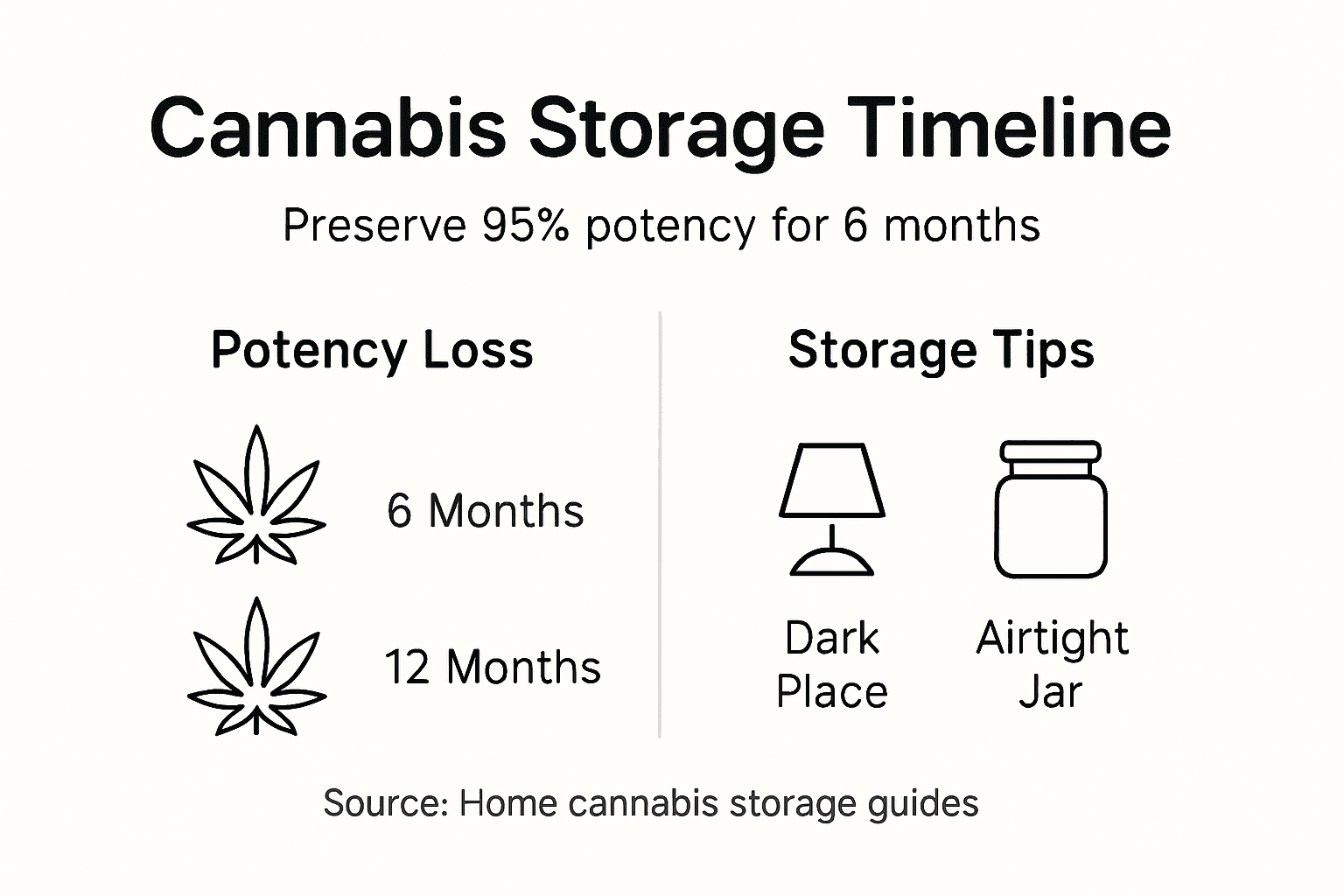
Proper storage reduces potency loss by more than 25% compared to improper methods. The difference between careful storage and careless handling compounds dramatically over time. Cannabis stored in a plastic bag in a warm, bright drawer might lose 40 to 50% potency in 6 months, while the same strain in a glass jar with humidity control in a cool closet retains 90% or more.
Terpene and cannabinoid degradation occur gradually, not suddenly. THC slowly converts to CBN, which is less psychoactive but more sedating. Terpenes evaporate or oxidize, first losing the most volatile light notes, then deeper base aromas. You might notice your citrus-forward strain losing its bright lemon scent after 8 months, even though the earthy undertones remain.
Visible mold, discoloration, or musty odor indicate spoilage and product should be discarded. Don’t gamble with questionable cannabis. If you see any fuzzy growth, detect ammonia or musty smells, or notice significant color changes (yellowing, browning, dark spots), throw it away. No amount of potency preservation justifies health risks.
| Storage Period | Expected Quality | Indicators | Action |
|---|---|---|---|
| 0 to 3 months | Peak freshness | Full aroma, vibrant color, maximum potency | Consume premium strains |
| 3 to 6 months | Excellent | Slight aroma reduction, 5 to 10% potency loss | Use normally |
| 6 to 12 months | Good | Noticeable aroma fading, 15 to 20% potency loss | Prioritize older stock |
| 12+ months | Fair to declining | Muted flavor, 25%+ potency loss | Inspect carefully, consume soon |
| Any period | Unsafe | Mold, discoloration, musty smell | Discard immediately |
Track your consumption patterns against cannabis freshness timelines to optimize purchasing. If you consistently find yourself with 8-month-old cannabis, you’re buying too much at once. Right-sizing your purchases to your actual consumption rate ensures you always enjoy peak quality.
Some strains degrade faster than others. Terpene-rich, aromatic strains lose character more quickly than less complex varieties. High-THC strains maintain potency well but may lose flavor nuances. Experiment with different strains to learn which hold up best in your specific storage conditions.
Optimize Your Cannabis Experience with Avondale Apothecary
Now that you understand proper cannabis storage, put that knowledge into action with products designed for quality and longevity. Avondale Apothecary offers premium strains, concentrates, and edibles, all with detailed Certificates of Analysis for transparency.
Explore our curated selection of cannabis strains optimized for diverse preferences and effects. Each strain listing includes terpene profiles, potency data, and our expert storage recommendations to help you maintain peak freshness from delivery to consumption.
Discover our quality cannabis concentrates collection, featuring shatter, wax, live resin, and distillates from trusted producers. We provide specific storage guidance with every concentrate purchase to ensure you preserve those delicate terpenes and cannabinoids.
For edibles enthusiasts, our comprehensive guide on safe cannabis edibles storage complements this storage workflow with product-specific advice. Combined with our premium edibles selection, you’ll enjoy consistent potency and flavor throughout each product’s lifecycle.
Frequently Asked Questions
How long can cannabis stay fresh if properly stored?
Cannabis stays fresh for 6 to 12 months in ideal conditions of 60–68°F and 59–63% humidity in airtight glass containers. Potency declines gradually thereafter, losing 15 to 20% by 12 months. Special products like edibles and concentrates follow manufacturer expiration dates, typically 3 to 6 months for edibles and 6 to 12 months for concentrates when refrigerated. Track your cannabis freshness duration by labeling containers with storage dates.
Is it safe to store cannabis in plastic bags?
Plastic bags cause static electricity that damages trichomes and are air permeable, leading to rapid potency and terpene loss. They’re acceptable only for short transport immediately after purchase. For any storage beyond a few hours, transfer cannabis to airtight glass jars with humidity control packs. The investment in proper containers pays for itself by preserving your product’s value.
How can I prevent mold when storing cannabis at home?
Maintain relative humidity between 59 and 63% using humidity control packs and keep temperature at 60 to 68°F in airtight containers. Avoid humidity above 70%, which can cause mold within 72 hours. Inspect your cannabis weekly for the first month after storage to catch any issues early. If you live in a humid climate, consider using desiccant packs or dehumidifiers near your storage area to prevent mold in cannabis storage.
What are the best containers for preserving cannabis potency?
Airtight glass mason jars with humidity control packs are the gold standard for long-term cannabis storage. Opaque or UV-resistant containers like amber glass or violet Miron glass provide additional protection against light-induced degradation. Choose containers sized appropriately to your quantity to minimize air space, and ensure they have childproof features if required by local regulations or household safety needs.