
Finding a trustworthy cannabis brand can feel challenging when every dispensary claims to offer something unique. For conscious consumers dedicated to quality and transparency, true loyalty is about more than repeat purchases—it is a complex, evolving connection shaped by personalized experiences and transparent information. This article explores what defines cannabis customer loyalty, why the relationship between brand and buyer matters, and the key strategies that help conscious consumers make informed choices.
Table of Contents
- Defining Cannabis Customer Loyalty
- Types of Loyalty Programs and Strategies
- Key Features and Engagement Methods
- Industry Challenges and Legal Considerations
- Maximizing Retention and Avoiding Pitfalls
Key Takeaways
| Point | Details |
|---|---|
| Understanding Customer Loyalty | Cannabis customer loyalty encompasses product consistency, excellent customer service, and community engagement, forming strong relationships beyond transactions. |
| Effective Loyalty Programs | Successful cannabis loyalty programs should focus on personalized engagement and meaningful rewards, allowing customers to feel connected to the brand. |
| Navigating Legal Challenges | Cannabis retailers must balance consumer engagement with compliance, adapting loyalty strategies to meet evolving regulatory frameworks. |
| Maximizing Retention Strategies | Retention requires personalized communication and holistic experiences that build trust and consistently deliver value to consumers. |
Defining Cannabis Customer Loyalty
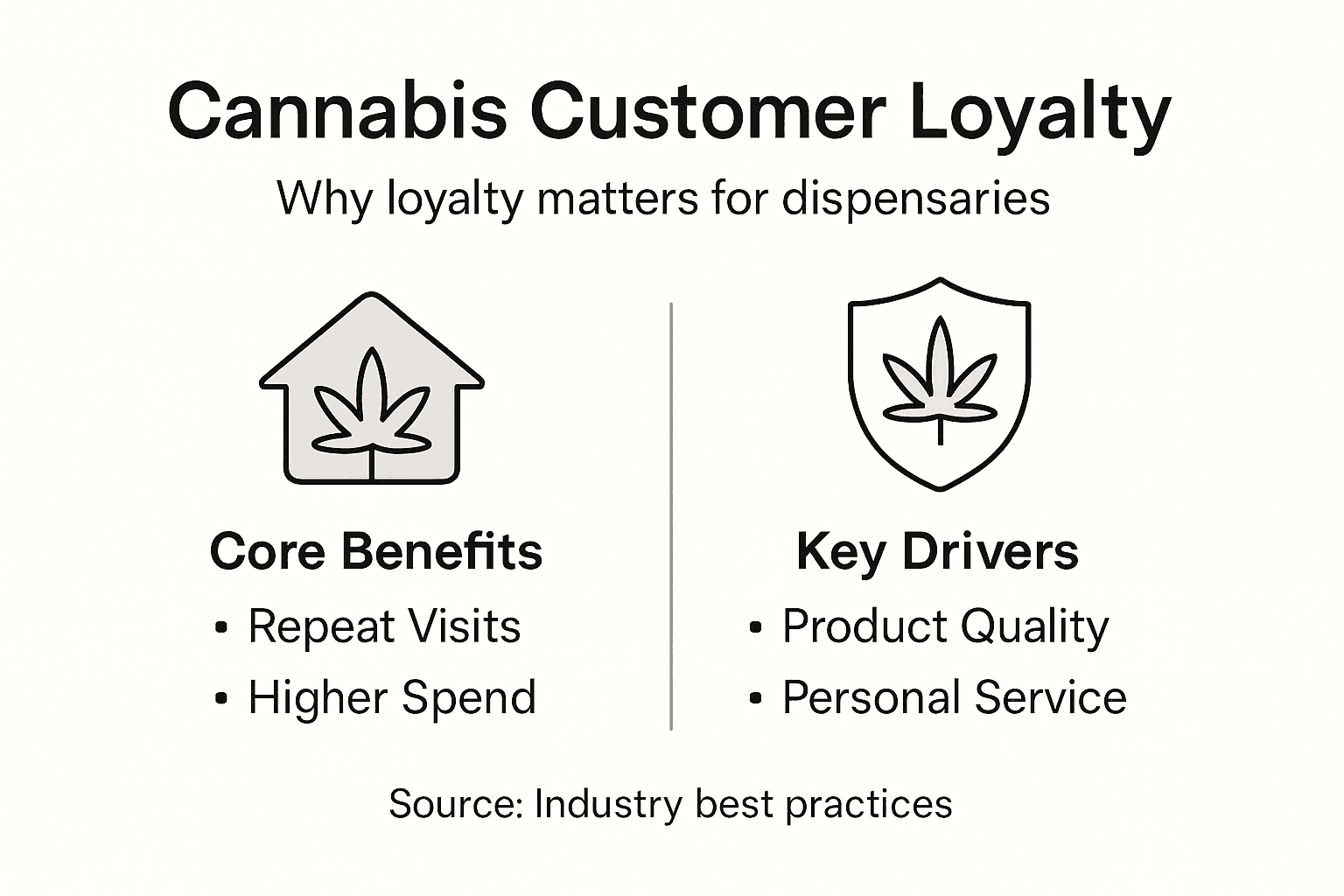
Customer loyalty in the cannabis market goes far beyond simple repeat purchases. It represents a complex, multifaceted relationship between consumers and cannabis brands that encompasses trust, product quality, and personalized experiences. Cannabis consumer purchase behaviors demonstrate that loyalty emerges from strategic interactions that meet evolving customer expectations.
At its core, cannabis customer loyalty involves several critical components:
- Product Consistency: Reliable quality across product lines
- Customer Service Excellence: Responsive and knowledgeable support
- Educational Resources: Providing transparent product information
- Personalized Recommendations: Tailoring experiences to individual preferences
- Community Engagement: Creating meaningful connections beyond transactions
The competitive nature of the cannabis market makes customer loyalty particularly challenging. Brands must differentiate themselves through unique value propositions that extend beyond mere product offerings. This requires understanding nuanced consumer preferences and developing strategies that transform transactions into lasting relationships.
Customer loyalty is not just about selling cannabis products—it’s about creating meaningful connections that keep consumers returning.
Pro tip: Track and analyze your customer interaction data to continuously refine your loyalty approach and anticipate emerging consumer needs.
Types of Loyalty Programs and Strategies
Cannabis retailers are increasingly adopting sophisticated loyalty programs to differentiate themselves in a highly competitive market. Customer behavior across loyalty programs demonstrates that modern consumers expect more than simple point accumulation—they seek meaningful engagement and personalized experiences.
The most effective cannabis loyalty programs typically include several strategic approaches:
- Point-Based Systems: Reward purchases with redeemable points
- Tiered Membership Levels: Create progressive reward structures
- Referral Programs: Incentivize customer recommendations
- Birthday/Anniversary Rewards: Personalized recognition
- Product Education Credits: Reward learning about cannabis products
Successful loyalty strategies go beyond transactional rewards. They focus on building genuine connections by understanding individual consumer preferences, consumption patterns, and wellness goals. This requires sophisticated data tracking and personalization techniques that transform routine purchases into meaningful relationships.
Cannabis loyalty programs are not just about discounts—they’re about creating a sense of community and personalized care.
The complexity of designing these programs demands careful consideration of legal restrictions, consumer privacy, and engagement metrics. Retailers must balance regulatory compliance with creative incentive structures that genuinely resonate with their target audience.

The following table highlights how key cannabis loyalty program types differ in focus and business benefit:
| Loyalty Program Type | Main Objective | Typical Customer Benefit | Example Business Impact |
|---|---|---|---|
| Point-Based System | Encourage frequent spending | Accumulate points on buys | Boost repeat purchases |
| Tiered Membership Levels | Reward loyalty progression | Access higher-level perks | Build long-term brand commitment |
| Referral Program | Drive new customer traffic | Rewards for referrals | Grow customer base organically |
| Education Credits | Increase product knowledge | Earn rewards by learning | Improve informed purchase choices |
Pro tip: Implement a flexible loyalty program that allows members to customize their rewards and tracking preferences to maximize engagement and trust.
Key Features and Engagement Methods
Psychological engagement plays a critical role in designing effective cannabis loyalty programs. Cannabis loyalty program psychology reveals that successful strategies leverage sophisticated behavioral science techniques to transform casual consumers into committed brand advocates.
Key engagement methods for cannabis loyalty programs include:
- Gamification: Creating interactive reward experiences
- Social Proof: Highlighting community recommendations
- Loss Aversion: Designing time-sensitive rewards
- Personalized Tracking: Customizing individual consumer journeys
- Educational Incentives: Rewarding product knowledge acquisition
Advanced loyalty programs go beyond transactional rewards by creating immersive experiences that connect deeply with consumer motivations. This approach requires sophisticated data analysis and personalized communication strategies that anticipate and fulfill individual consumer needs.
Effective loyalty programs are not about discounts—they’re about creating meaningful connections that resonate with individual consumer experiences.
Technology plays a crucial role in modern loyalty engagement, enabling retailers to track consumer preferences, predict behavior patterns, and design increasingly sophisticated reward mechanisms that feel uniquely tailored to each customer.
Pro tip: Design your loyalty program with flexible tracking options that allow consumers to control their data sharing and reward preferences.
Industry Challenges and Legal Considerations
Cannabis retail regulatory frameworks present complex challenges that fundamentally reshape loyalty program design and implementation. The cannabis industry operates under unprecedented legal constraints that require innovative approaches to customer engagement while maintaining strict compliance with evolving regulations.
Key legal and regulatory challenges include:
- Age Verification: Implementing robust digital and in-person verification systems
- Data Privacy: Protecting consumer information under stringent healthcare regulations
- Marketing Restrictions: Navigating limited advertising and promotional channels
- Compliance Documentation: Maintaining meticulous records of customer interactions
- Cross-State Regulatory Differences: Managing varying legal requirements across jurisdictions
Successful cannabis loyalty programs must develop flexible strategies that can adapt to rapidly changing legal landscapes. This requires sophisticated technological infrastructure that can quickly modify reward structures, communication protocols, and data management practices in response to new regulatory requirements.
Cannabis loyalty programs must balance consumer engagement with rigorous legal compliance—a delicate and complex challenge.
The most effective approaches integrate legal considerations directly into program design, treating regulatory compliance not as a constraint but as an opportunity to demonstrate transparency, professionalism, and commitment to consumer protection.
Here is a quick reference to major regulatory hurdles and their direct impacts on loyalty programs:
| Regulatory Challenge | Effect on Loyalty Programs | Adaptation Approach |
|---|---|---|
| Age Verification | Limits marketing to verified customers | Implement strict ID checks |
| Data Privacy Laws | Restricts personal data collection | Use secure, anonymized systems |
| Ad/Promo Restrictions | Limits available communication channels | Focus on in-store engagement |
| Cross-State Differences | Creates varied compliance requirements | Design flexible program rules |
Pro tip: Consult legal experts specializing in cannabis regulations to design loyalty programs that are both innovative and fully compliant with current legal standards.
Maximizing Retention and Avoiding Pitfalls
Cannabis retailers struggling with customer retention face unique challenges that require sophisticated, nuanced strategies. The cannabis market’s competitive landscape demands more than traditional loyalty approaches—it requires deep understanding of consumer motivations and persistent engagement techniques.
Key strategies for maximizing customer retention include:
- Personalized Communication: Tailoring messaging to individual consumer preferences
- Consistent Product Quality: Maintaining high standards across product lines
- Educational Content: Providing valuable cannabis knowledge and usage insights
- Transparent Pricing: Offering fair and consistent pricing strategies
- Community Building: Creating meaningful connections beyond transactional interactions
Successful retention goes beyond simple rewards programs. It involves creating holistic experiences that demonstrate genuine understanding of consumer needs, preferences, and wellness goals. This requires continuous data analysis, proactive communication, and adaptive engagement strategies that evolve with changing consumer expectations.
Customer retention in cannabis isn’t about transactions—it’s about building trust and delivering consistent value.
The most effective retention strategies recognize that each customer represents a unique journey. By developing flexible, personalized approaches that respect individual preferences while providing meaningful value, cannabis retailers can transform occasional buyers into committed, long-term advocates.
Pro tip: Develop a comprehensive customer feedback mechanism that allows continuous improvement of your loyalty and retention strategies.
Build Lasting Connections with Quality and Transparency
Understanding the key to cannabis customer loyalty means addressing challenges like product consistency, personalized experiences, and trust. At Avondale Apothecary, we focus on providing a curated selection of premium products, including our popular High-Resin Hemp Flower – AALLC. We back every product with comprehensive Certificates of Analysis to ensure transparency and quality you can depend on. This approach not only supports your loyalty building efforts but helps create meaningful connections with your customers through consistent quality and education.
Explore our wide range of cannabis products today and experience how Avondale Apothecary’s commitment to transparency and superior quality can strengthen customer trust and retention. Visit Avondale Apothecary now to start crafting loyalty that lasts.
Frequently Asked Questions
What are the key components of cannabis customer loyalty?
Cannabis customer loyalty is built on essential components such as product consistency, excellent customer service, educational resources, personalized recommendations, and community engagement.
Why is it important to implement a loyalty program in the cannabis industry?
A loyalty program helps cannabis retailers differentiate themselves in a competitive market by fostering genuine connections and encouraging repeat purchases, transforming casual consumers into committed brand advocates.
How can personalized recommendations improve customer loyalty?
Personalized recommendations enhance customer loyalty by tailoring the shopping experience to individual preferences, making consumers feel valued and understood, which encourages repeat purchases.
What are some challenges associated with cannabis loyalty programs?
Challenges include navigating legal and regulatory constraints, ensuring data privacy, implementing effective age verification, and adapting to varying compliance requirements across different jurisdictions.