
Finding the right cannabis flower can feel overwhelming when you see labels like AAAA or Single-A across dispensary shelves. This matters because every grade signals a real difference in quality, purity, and experience—from flavor and aroma to potency and burn. By learning how cannabis flower grading creates a common language in dispensaries, you gain clarity and confidence to choose premium products that truly match your expectations.
Table of Contents
- What Cannabis Flower Grading Really Means
- Key Grading Systems And Their Categories
- Essential Quality Indicators In Flower Grading
- Risks, Pitfalls, And Misconceptions In Grading
- How Grading Impacts Legal And Safe Choices
Key Takeaways
| Point | Details |
|---|---|
| Understanding the Grading Scale | Cannabis flower is graded from A to AAAA to signify quality, with higher grades indicating better cultivation and processing. |
| Importance of Certificates of Analysis | Requesting COAs provides insight into the product’s potency and safety, ensuring transparency in what you purchase. |
| Visual and Sensory Indicators | Look for dense buds, visible trichomes, and an aromatic profile to assess quality before buying. |
| Beware of Mislabeling | Misleading labels and inconsistent grading practices can lead to unexpected experiences; always verify claims from trusted sources. |
What Cannabis Flower Grading Really Means
Cannabis flower grading is a standardized system that categorizes cannabis quality into tiers—typically ranging from A (Single-A) to AAAA (Quad-A). This isn’t about the strain name; it’s about how well the flower was grown, processed, and preserved.
The grading system reflects the care taken during cultivation and processing. A higher grade indicates better attention to detail at every stage, from seed to sale.
Understanding the Grading Scale
The grades work like this: lower grades contain impurities and lower potency, while higher grades feature dense buds, rich terpene profiles, and smooth flavor. Think of it as the difference between a hastily trimmed bud and one that’s been carefully hand-selected.
Grading creates a common language across the cannabis industry. Producers, retailers, and consumers all know what “AAAA” means without guessing. This standardization makes trade and purchasing decisions much easier.
Key factors assessed in grading include:
- Flower structure (bud density and shape)
- Trichome density (those crystal-like formations covering the flower)
- Terpene profile (the aromatic compounds that create flavor and effects)
- Burn characteristics (how smooth the flower burns and how it tastes)
- Aroma and color (visual appeal and scent intensity)
Why Grading Matters for Your Purchase
When you buy cannabis, the grade tells you what to expect. AAAA flower will deliver a completely different experience than A-grade flower—better flavor, smoother smoke, and generally more potent effects.
The standardized cannabis grading scale evaluates these qualities objectively, providing a final quality score that reflects both visual and sensory characteristics. This removes guesswork from your shopping experience.
Grading also helps identify impurities. Lower-grade flower might contain seeds, stems, or mold spores. Higher grades are cleaner and safer.
Quality grading ensures you know exactly what you’re buying before you purchase—no surprises once you open the package.
Understanding cannabis flower anatomy helps you spot quality indicators yourself, beyond just reading the grade.
Pro tip: When shopping, check for buds that are dense but not rock-hard, with visible trichomes that catch the light, and ask about the terpene profile to match your preferred flavor and effects.
Key Grading Systems and Their Categories
Two major grading systems dominate the cannabis industry. The first is the letter-based A to AAAA+ scale, which originated in Canada during the 1990s and remains widely used across North America. The second is the International Cannabis and Hemp Standards (ICHS), a 100-point objective grading framework used globally.
Understanding these systems helps you decode what you’re actually buying when you shop.
Here’s how flower grades and the ICHS system differ in evaluation approach:
| Grading System | Evaluation Method | Common Usage | Objectivity |
|---|---|---|---|
| A to AAAA Scale | Visual and sensory inspection | North America dispensaries | Subjective, varies by retailer |
| ICHS 100-Point | 4-category numerical scoring | International testing labs | Highly objective, reproducible |
The A to AAAA Scale
This letter-based system ranks flower from lowest to highest quality in four tiers. Each grade has distinct characteristics that affect your experience.
Here’s what each grade represents:
- Single-A (A): Lowest quality; contains impurities like seeds and stems; lower potency and flavor
- Double-A (AA): Mid-tier quality; better bud structure; improved terpene profile; good for casual use
- Triple-A (AAA): High-quality; dense buds; strong aroma; commonly found in dispensaries; reliable experience
- Quad-A (AAAA): Premium top-shelf; exceptional bud density; rich terpene profiles; smooth flavor; maximum potency
Each grade jump reflects noticeable improvements in bud density, aroma intensity, trichome coverage, and overall flavor quality.
The A to AAAA+ cannabis grading scale has become the informal standard across North American cannabis retail, making it easy to communicate quality expectations.
The 100-Point ICHS System
The International Cannabis and Hemp Standards system takes a more scientific approach. Instead of letters, graders assess flower on four specific categories and assign numerical scores.
The ICHS evaluation focuses on:
- Aroma (scent intensity and quality)
- Color (visual appeal and hue consistency)
- Structure (bud density and formation)
- Trichome assessment (crystal coverage and appearance)
These scores combine into a final certificate that summarizes flower quality objectively and reproducibly. This means the same flower scores the same way regardless of who’s grading it.
The ICHS system removes personal bias from grading, creating a transparent, reproducible quality standard that buyers, suppliers, and consumers can trust worldwide.
While the ICHS is gaining traction internationally, the A-AAAA letter system remains more common in North American dispensaries. Many retailers use both systems for clarity.
Pro tip: Ask your retailer which grading system they use and request their Certificate of Analysis (COA) alongside the grade—this gives you the most complete picture of what you’re purchasing.
Essential Quality Indicators in Flower Grading
When you’re examining cannabis flower, certain visual and sensory cues tell you everything about quality. These indicators work together to reveal whether you’re holding premium flower or something mediocre.
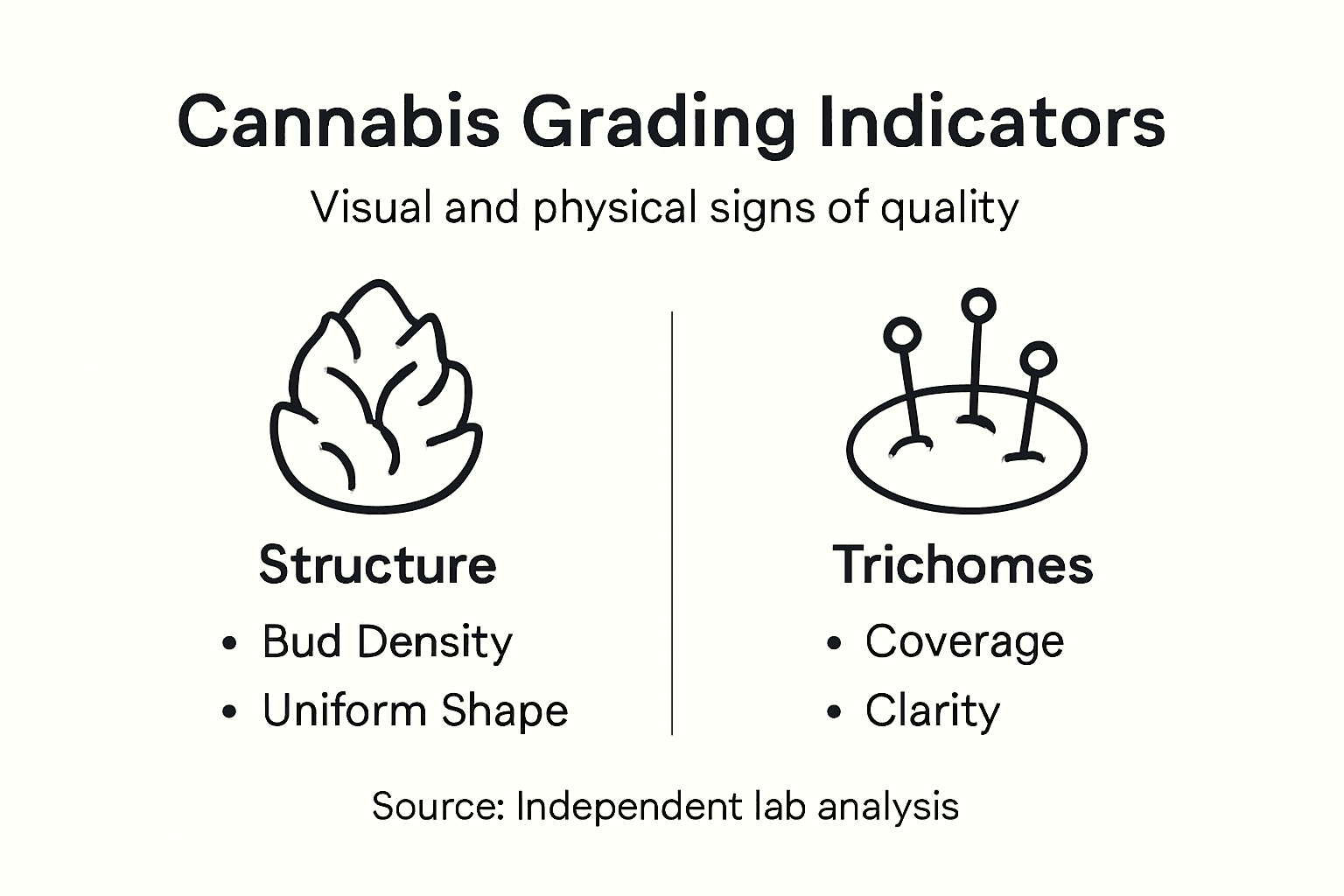
Graders and experienced consumers evaluate the same characteristics. Learning to spot them yourself gives you confidence when shopping.
Visual and Physical Signs
Start by looking at bud density and structure. High-quality flower has tightly packed, visually uniform buds that feel slightly sticky to the touch. Loose, airy buds indicate poor cultivation or improper curing.
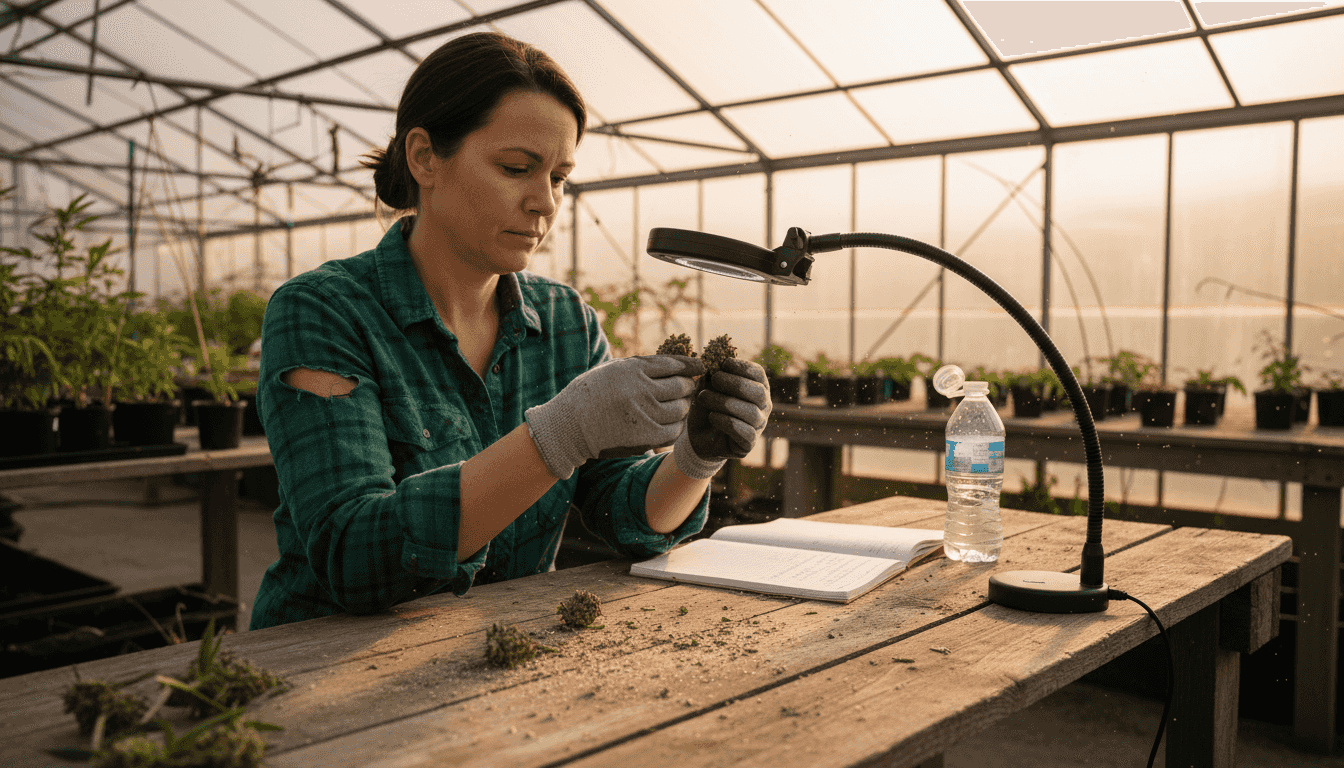
Trichome coverage is your next observation point. Those tiny, crystal-like structures covering the flower should be abundant and visible to the naked eye. The more trichomes you see, the higher the potency and quality.
Color matters too. Look for vibrant, consistent hues across buds—bright greens, purples, or oranges suggest proper nutrient balance and care during growth. Dull, uniform brown coloring often signals old flower or poor handling.
Key visual indicators to assess:
- Dense, compact bud formation
- Abundant visible trichomes (crystals)
- Vibrant, varied coloration
- Minimal visible seeds or stems
- No signs of mold or discoloration
Aroma and Flavor
Smell is a direct window into terpene profile and quality. Premium flower has a pungent, complex aroma that hits immediately when you open the container. Weak or musty smells indicate poor storage or low terpene content.
When you consume the flower, quality cannabis should deliver pronounced flavor that matches the aroma profile. Harsh, chemical tastes suggest contamination or improper curing.
Burn Characteristics and Testing
How flower burns tells you about purity and curing quality. High-quality flower produces light-colored ash and burns smoothly without harshness. Dark or black ash indicates residual nutrients or contaminants still in the flower.
Clean burns mean minimal pesticides, heavy metals, or other sprays were used during cultivation. Proper curing removes excess moisture, allowing for smooth consumption.
The combination of dense structure, abundant trichomes, vibrant color, and pungent aroma indicates superior cultivation care and proper processing—exactly what higher grades represent.
Cannabis flower testing provides objective verification of quality indicators through laboratory analysis, confirming what your senses detect.
Pro tip: When shopping, ask to smell the flower and examine it closely under light before buying—vibrant color, visible trichomes, and pungent aroma are your best indicators of premium quality.
Risks, Pitfalls, and Misconceptions in Grading
Not all cannabis sold carries accurate grading. The reality is messier than the letter grades suggest. Understanding what can go wrong helps you make safer, smarter purchases.
The cannabis industry still lacks uniform regulation across most jurisdictions. This creates opportunities for mislabeling and inconsistent grading practices.
Inaccurate Labeling and Potency Claims
One of the biggest problems is false THC content labeling. Research shows that 70% of cannabis products fail to meet label accuracy standards, with actual THC content falling outside the acceptable ±20% tolerance range.
This means a product labeled as 20% THC might actually contain 12% or 28%. That’s a massive difference in your actual experience and effects.
Mislabeling happens for several reasons:
- Inconsistent testing methods between labs
- Intentional deception by retailers or producers
- Outdated or unreliable grading practices
- Lack of regulatory oversight in some markets
When potency claims are wrong, consumers either get less effect than expected or experience stronger effects than anticipated. Both scenarios create safety and satisfaction problems.
Grade Inflation and Subjective Standards
Grade inflation is real. Some retailers label mid-quality flower as AAAA to justify higher prices. Without standardized grading across all producers, one store’s AAA might be another’s AA.
Subjective grading means different evaluators might rate the same flower differently. Visual inspections vary between people, creating inconsistency.
Misconceptions About Grading
Many consumers believe higher grades guarantee better effects. Grade reflects quality and potency potential, not necessarily how it will affect you personally. Individual response varies based on tolerance, body chemistry, and consumption method.
Another misconception: grade equals strain quality. The grade describes that specific batch’s condition, not the strain’s inherent characteristics. A good strain grown poorly gets a low grade.
Common misconceptions to avoid:
- All AAAA flower costs proportionally more
- Higher grade always means stronger effects
- Grading is standardized everywhere
- Visual appearance alone determines true quality
- All retailers grade consistently
Grading systems help, but they’re only as reliable as the retailer using them. Request Certificates of Analysis to verify claims beyond the grade label.
How to Protect Yourself
Demand transparency. Reputable retailers provide Certificates of Analysis (COAs) from independent testing labs. These verify cannabinoid content, terpene profiles, and test for contaminants like pesticides and heavy metals.
Shop with retailers who stand behind their grading. Ask questions about their grading methodology and testing practices. If they can’t explain their system clearly, shop elsewhere.
Pro tip: Always request the Certificate of Analysis before purchasing—this third-party lab report shows actual THC/CBD content and contaminant testing, cutting through any grading inaccuracies or misleading labels.
How Grading Impacts Legal and Safe Choices
Grading isn’t just about picking the best flower—it’s about legal compliance and personal safety. When you buy graded cannabis from licensed retailers, you’re making a choice that protects your health and supports legitimate markets.
Understanding this connection empowers you to avoid unregulated products and make informed decisions.
The Safety Connection
Accurate grading directly impacts your health and safety. When grading systems work properly, they ensure flower has been tested for contaminants like pesticides, heavy metals, and mold.
Unregulated or mislabeled flower carries hidden risks. You don’t know what you’re actually consuming or how potent it is. Medical users face especially serious dangers—incorrect potency claims can interfere with medications or medical conditions.
Key safety benefits of proper grading:
See how proper grading supports consumer safety and legal compliance:
| Benefit | Consumer Impact | Legal Impact |
|---|---|---|
| Lab-tested purity | Reduces health risks from contaminants | Meets regulatory quality standards |
| Accurate labeling | Ensures correct potency and effects | Supports product traceability |
| Independent verification | Builds trust in retailers | Enables government oversight |
| Transparent grading | Guides better purchase decisions | Promotes safe, regulated markets |
- Verified cannabinoid content (THC/CBD levels)
- Contaminant testing results
- Proper storage and handling documentation
- Traceability from producer to consumer
- Independent laboratory verification
Legal Compliance Matters
Legal cannabis markets require grading and labeling for regulatory enforcement. Governments use these standards to track products, identify bad actors, and protect consumers. When you buy graded flower from licensed retailers, you’re supporting systems designed to keep products safe.
Accurate grading and labeling promote informed purchasing in legal markets, reducing risks from unregulated alternatives. Licensed dispensaries must follow strict protocols that unlicensed sellers ignore.
Buying from legal sources means:
- Product traceability and accountability
- Third-party lab testing confirmation
- Regulatory oversight and enforcement
- Consumer protection mechanisms
- Tax revenue supporting public services
Medical Users and Grading Accuracy
For medical cannabis patients, grading accuracy is critical. Dosing depends on knowing actual THC and CBD levels. Mislabeled potency can cause serious problems—either ineffective treatment or dangerous overconsumption.
Medical users should always request Certificates of Analysis and discuss grading with their healthcare provider. Never guess at dosing based on grade alone.
Grading systems work best when retailers, regulators, and consumers all take them seriously—accurate grading protects health, ensures legal compliance, and builds trust in cannabis markets.
Making Safe, Legal Choices
Choose retailers who prioritize transparency. They should readily provide testing documentation and explain their grading methodology. This shows they’re invested in your safety and legal compliance.
Understand that buying from licensed, regulated sources costs more than black market alternatives. That price difference reflects the testing, compliance, and accountability built into legal markets.
When you buy properly graded cannabis from licensed retailers, you’re making a choice that protects yourself and supports safer markets overall.
Pro tip: Always buy from licensed dispensaries in your jurisdiction, verify COAs match the grade claim, and ask if their testing meets state or provincial regulations—this ensures you’re getting legal, safely tested flower.
Discover Premium Cannabis You Can Trust at Avondale Apothecary
Choosing truly high-quality cannabis flower means understanding the grading system and ensuring transparency and safety every step of the way. If you want to skip the guesswork around potency, purity, and aroma, explore our curated selection of High-Resin Hemp Flower that meets stringent quality standards and come complete with Certificates of Analysis. At Avondale Apothecary, we prioritize providing detailed product information so you know exactly what you are getting.
Elevate your cannabis experience today by shopping with confidence at Avondale Apothecary. Whether you prefer pre-rolls, concentrates, or want to delve deeper into understanding cannabis flower anatomy, our user-friendly site and transparent grading information empower safer and smarter purchases. Explore our Pre Rolls collection or visit our homepage to start discovering the difference that verified quality flowering makes.
Frequently Asked Questions
What does cannabis flower grading mean?
Cannabis flower grading is a standardized system that categorizes the quality of cannabis based on factors such as bud density, trichome coverage, and aroma. It ranges from A (Single-A) to AAAA (Quad-A), with higher grades indicating better quality and potency.
How can I assess the quality of cannabis flower?
To assess the quality of cannabis flower, look for visual signs like bud density, trichome coverage, and color. Also, pay attention to aroma and flavor when you open the container. High-quality flower should deliver a pungent smell and pleasant flavor when consumed.
What is the difference between the A to AAAA grading scale and the ICHS system?
The A to AAAA grading scale is a subjective method primarily used in North America, ranking flowers from lowest to highest quality. In contrast, the ICHS (International Cannabis and Hemp Standards) uses a 100-point system that evaluates specific characteristics objectively, providing a more consistent quality assessment across different regions.
Why is the grading of cannabis flower important for consumers?
Grading is important because it helps consumers understand what to expect in terms of quality and potency. Higher graded flowers typically offer a better experience, with improved flavor, smoother smoke, and increased potency. Additionally, accurate grading can help identify potential contaminants, ensuring safer consumption.