

Many seasoned cannabis consumers notice their favorite products start to feel less potent over time. This shift is not just in your head. THC tolerance develops as your body adapts at the cellular level to repeated cannabis use, creating real changes in how cannabinoids work in your brain. Understanding this process matters if you want consistent enjoyment, avoid overconsumption, and maximize the benefits of each session. Gain practical insight into THC tolerance and learn to fine-tune your cannabis experience for the long run.
Table of Contents
- What Is THC Tolerance And How It Develops
- Types Of Tolerance: Acute, Chronic, And Cross
- How THC Tolerance Changes Cannabis Effects
- Managing And Resetting Your THC Tolerance
- Risks, Misconceptions, And Mistakes To Avoid
Key Takeaways
| Point | Details |
|---|---|
| THC Tolerance Mechanisms | THC tolerance develops through receptor desensitization and downregulation, requiring larger doses to achieve similar effects. |
| Types of Tolerance | Acute, chronic, and cross-tolerance represent different adaptations of cannabinoid receptors to THC and other substances. |
| Impact on Experience | Increased tolerance can lead to reduced psychoactive effects and altered cognitive performances, challenging traditional perceptions of intoxication. |
| Management Strategies | Implementing tolerance breaks, reducing THC concentration, and mindful usage can help reset sensitivity and optimize the cannabis experience. |
What Is THC Tolerance and How It Develops
THC tolerance represents a complex neurobiological adaptation that fundamentally transforms how cannabis consumers experience psychoactive effects. At its core, tolerance develops through intricate cellular mechanisms where the body progressively adjusts to repeated cannabinoid exposure, requiring increasingly larger quantities to achieve similar physiological responses.
Understanding this phenomenon begins with exploring how cannabinoid receptors respond to repeated THC interaction. Cellular adaptations in cannabinoid systems reveal that prolonged THC consumption triggers significant neurological changes. These adaptations occur primarily through two key mechanisms:
- Receptor desensitization, where cannabinoid receptors become less responsive
- Downregulation of receptor availability in brain regions responsible for psychoactive experiences
The process of developing THC tolerance isn’t uniform across all consumers. Factors influencing tolerance rate include:
- Frequency of cannabis consumption
- Individual metabolic differences
- Genetic predispositions
- Potency of consumed cannabis products
- Body composition and overall health
Neurobiological Research suggests that tolerance isn’t simply about requiring more THC, but represents a sophisticated biological response. Complex neurological tolerance mechanisms indicate that some users might actually experience reduced sensitivity over time, challenging traditional understanding of substance tolerance.

Pro tip: Track your cannabis consumption and observe how your body’s response changes to understand your personal tolerance development more effectively.
Types of Tolerance: Acute, Chronic, and Cross
Cannabis tolerance is not a monolithic concept but a nuanced spectrum of neurological adaptations that manifest in distinct ways. Types of cannabis tolerance reveal the complex mechanisms by which the human body responds to repeated THC exposure, each representing a unique physiological adjustment.
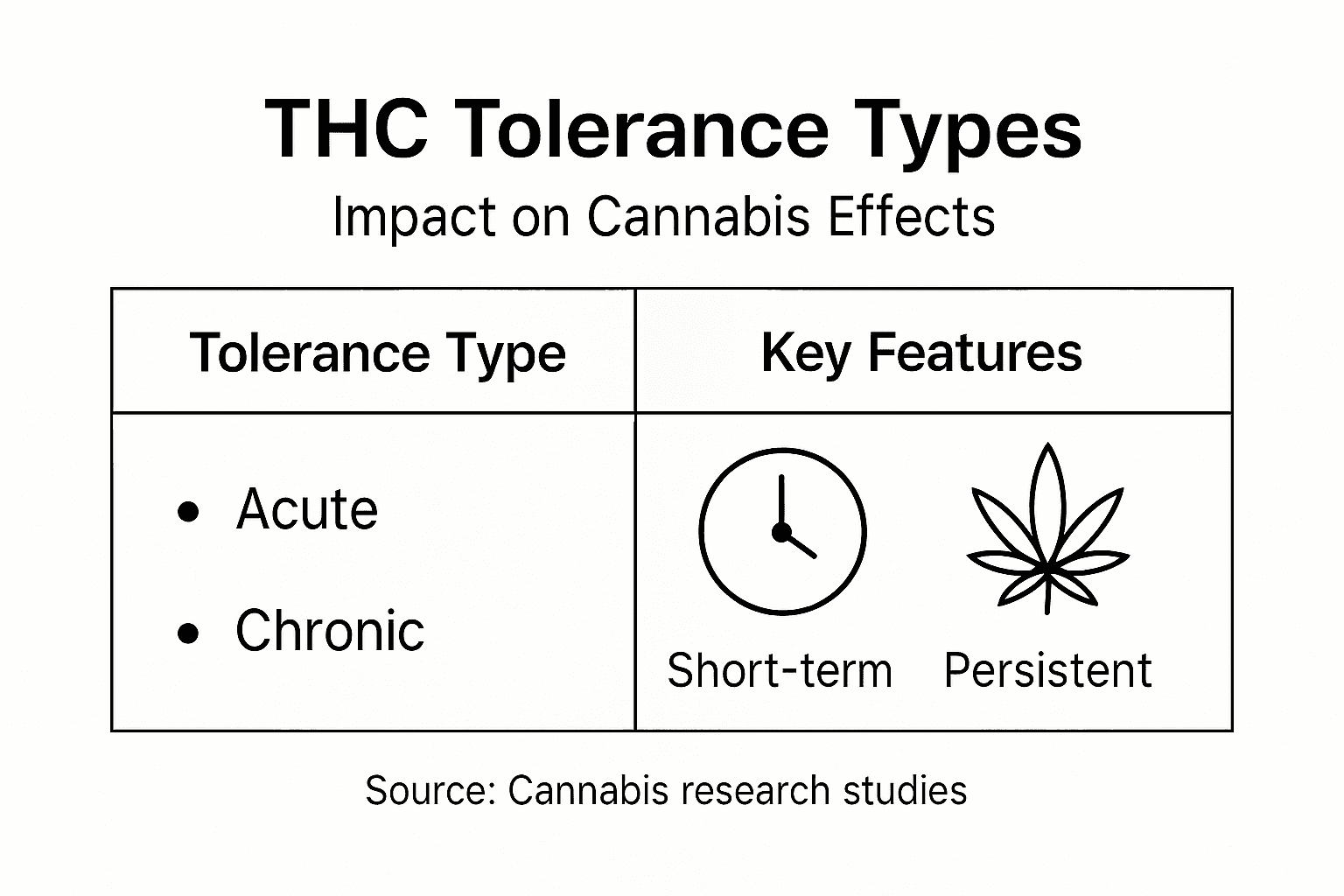
Acute Tolerance represents the most immediate form of tolerance, occurring within a single consumption session. Key characteristics include:
- Rapid diminishing of psychoactive effects
- Decreased sensitivity during the same usage event
- Temporary neurological adaptations
- Shorter-term impact on cannabinoid receptor response
Chronic Tolerance develops through prolonged and consistent cannabis consumption. This type of tolerance involves more profound neurological changes:
- Gradual reduction in receptor sensitivity
- Requirement for progressively higher THC doses
- Long-term neuroadaptive processes
- Potential changes in brain chemistry
Cross-Tolerance represents a fascinating phenomenon where tolerance to THC impacts responsiveness to other cannabinoids or related substances. Clinical tolerance mechanisms suggest that this type of tolerance can extend beyond cannabis, potentially influencing how an individual responds to various psychoactive compounds.
Cross-tolerance demonstrates the intricate interconnectedness of neurological receptor systems and highlights the body’s sophisticated adaptive mechanisms.
Pro tip: Monitor your cannabis consumption patterns and be mindful of how your body’s response changes over time to better understand your individual tolerance development.
Here’s a comparison of the three main types of cannabis tolerance:
| Tolerance Type | Onset Timing | Key Neurological Feature | Typical Impact on Effects |
|---|---|---|---|
| Acute | Same session | Temporary receptor adaptation | Fast decrease in potency |
| Chronic | Weeks to months | Lasting receptor changes | Gradual need for higher doses |
| Cross-Tolerance | Varies by substance | Overlap in cannabinoid pathways | Reduced response to related drugs |
How THC Tolerance Changes Cannabis Effects
THC tolerance fundamentally transforms the cannabis experience, creating a complex interplay between neurological adaptation and psychoactive response. Tolerance alters cannabis intoxication in ways that dramatically shift how users perceive and experience cannabinoid effects.
Psychoactive Effect Modifications occur through several key neurological mechanisms:
- Reduced intensity of euphoric sensations
- Diminished cognitive and motor impairment
- Decreased sensitivity to typical dose ranges
- Altered perception and sensory experiences
Frequent cannabis consumers experience profound changes in their physiological and psychological responses. Unlike novice users, experienced consumers require higher THC concentrations to achieve similar effects, a phenomenon driven by neuroadaptive processes in cannabinoid receptor systems.
Cognitive and Behavioral Shifts represent another critical dimension of tolerance. THC impairment patterns demonstrate that frequent users develop unique neurological adaptations, making traditional measurement of intoxication increasingly complex:
- Increased metabolic efficiency in processing THC
- Refined neural pathway responses
- Reduced observable behavioral markers of intoxication
- More stable cognitive performance at previously challenging dose levels
Tolerance is not merely a reduction in effects, but a sophisticated neurological recalibration of the body’s cannabinoid response systems.
Pro tip: Periodically assess your cannabis consumption patterns and be mindful of how your tolerance levels might be influencing your overall experience and potential therapeutic outcomes.
Managing and Resetting Your THC Tolerance
Navigating THC tolerance requires strategic approaches that help cannabis consumers maintain their desired experience and avoid escalating consumption. Cannabis tolerance management involves deliberate techniques designed to reset neurological receptor sensitivity and optimize cannabis interactions.
Tolerance Break Strategies offer the most effective method for resetting THC responsiveness:
- Standard break duration: 21 days
- Complete abstinence from cannabis consumption
- Allow cannabinoid receptors to recalibrate
- Reduce potential dependency risks
Psychological preparation plays a crucial role in successfully implementing a tolerance break. Many consumers struggle with temporary discontinuation, experiencing mild withdrawal symptoms or decreased mood regulation during the initial weeks.
Practical Tolerance Management encompasses more than just abstinence. T-Break rehabilitation techniques suggest multiple approaches for maintaining balanced cannabis consumption:
- Gradually reduce THC concentration
- Implement periodic consumption pauses
- Practice mindful, intentional usage
- Monitor personal physiological responses
A successful tolerance reset requires patience, self-awareness, and a commitment to understanding your body’s unique cannabinoid interactions.
Pro tip: Track your cannabis consumption patterns and physiological responses in a journal to gain deeper insights into your personal tolerance development and management strategies.
The following table summarizes strategies for managing and resetting THC tolerance:
| Strategy | Primary Goal | Typical Duration | Notable Benefit |
|---|---|---|---|
| Tolerance break (T-break) | Reset receptor sensitivity | 21 days (standard) | Lowers required THC dose |
| Gradual THC reduction | Minimize withdrawal and dependency | Several weeks | Smoother transition period |
| Consumption pauses | Prevent buildup of chronic tolerance | Few days to a week | Maintains lower tolerance |
| Mindful, tracked usage | Increase self-awareness, control use | Ongoing | Supports responsible habits |
Risks, Misconceptions, and Mistakes to Avoid
Understanding the potential risks and pitfalls associated with THC tolerance requires a nuanced approach to cannabis consumption. Cannabis safety considerations highlight critical misconceptions that can significantly impact user experience and health outcomes.
Common Misconceptions About THC Tolerance include several dangerous beliefs:
- Cannabis is completely harmless
- Tolerance means increased safety
- High consumption equals better effects
- Addiction is not a real risk
- All cannabis products are equally safe
Potential health risks emerge when consumers ignore the complex neurological impacts of chronic cannabis use. These risks can manifest through various physiological and psychological mechanisms that extend beyond immediate consumption experiences.
Critical Risk Factors consumers should understand involve multiple dimensions:
- Potential cognitive impairment
- Increased anxiety and paranoia
- Risk of developing cannabis use disorder
- Potential psychosis with chronic use
- Interactions with existing mental health conditions
Cannabis use disorder risks demonstrate that individual vulnerability varies significantly, making personalized awareness crucial. Some users are more susceptible to negative outcomes based on genetic predispositions, consumption patterns, and overall mental health.
Not all cannabis experiences are identical, and individual biochemistry plays a profound role in determining potential risks and outcomes.
Pro tip: Consult healthcare professionals and maintain honest, transparent communication about your cannabis consumption to understand your personal risk factors and develop responsible usage strategies.
Manage Your THC Tolerance With Confidence and Quality
Dealing with THC tolerance can be frustrating as it changes how cannabis impacts your body and mind. Your brain’s cannabinoid receptors adapt requiring higher doses for the same effect, leading to challenges like increased consumption and altered experiences. Whether you are looking to reset your tolerance or explore products suited to your changing needs, finding reliable options is key to maintaining control and enjoyment.

Discover a curated selection of premium cannabis strains, edibles, and concentrates at Avondale Apothecary designed to support your tolerance management goals. With clear Certificates of Analysis, you can choose products with confidence knowing exactly what you are consuming. Start your journey to better cannabis experiences with mindful, quality choices today. Visit Avondale Apothecary and take the first step toward understanding and managing your THC tolerance effectively.
Frequently Asked Questions
What is THC tolerance and how does it develop?
THC tolerance is a neurobiological adaptation that occurs when the body adjusts to repeated cannabinoid exposure, requiring larger amounts of THC to achieve the same effects. It develops through mechanisms like receptor desensitization and downregulation of cannabinoid receptors in the brain.
What are the different types of cannabis tolerance?
There are three main types of cannabis tolerance: acute tolerance (which happens within a single session), chronic tolerance (from prolonged use), and cross-tolerance (where tolerance to THC affects sensitivity to other cannabinoids or substances).
How does THC tolerance impact the effects of cannabis?
THC tolerance alters the cannabis experience by reducing the intensity of euphoric sensations, diminishing cognitive and motor impairment, and requiring higher doses to achieve similar effects, leading to complex neurological adaptations.
What strategies can I use to manage and reset my THC tolerance?
To manage and reset THC tolerance, consider implementing tolerance breaks of about 21 days, gradually reducing THC concentration, practicing mindful usage, and monitoring your cannabis consumption to support responsible habits.