
Many cannabis products display ‘lab-tested’ labels, yet up to 30% lack valid Certificates of Analysis. Without proper verification, you risk buying counterfeit or unsafe products containing harmful contaminants. This guide explains how cannabis product authentication works and empowers you to verify product safety confidently using scientific testing, packaging technology, and practical verification steps.
Table of Contents
- Introduction To Cannabis Product Authentication
- Processes Of Cannabis Product Authentication
- Understanding Certificates Of Analysis (COAs)
- Packaging And Authentication Technology
- Regulatory Frameworks For Cannabis Safety
- Common Misconceptions About Authentication
- Practical Consumer Verification
- Explore Premium, Authenticated Cannabis Products
- FAQ
Key takeaways
| Point | Details |
|---|---|
| Authentication requires lab testing and secure packaging | Scientific testing verifies safety while packaging tech ensures traceability |
| COAs provide detailed lab results | Certificates of Analysis confirm cannabinoid potency and contaminant screening |
| QR codes and blockchain enhance verification | Digital tools link products to immutable test data and supply chain records |
| Global regulations enforce safety standards | Mandatory testing protects consumers from counterfeit and unsafe products |
| Practical steps empower consumer verification | Check COAs, scan QR codes, and buy from licensed retailers |
Introduction to cannabis product authentication
Cannabis product authentication verifies product identity, quality, and safety through scientific and technological methods. This process combines laboratory testing, secure packaging features, and digital verification systems to ensure you receive genuine, safe products. Authentication matters because counterfeit products flood unregulated markets, putting your health at serious risk.
Unverified cannabis products pose multiple dangers. Counterfeit products contain contaminants exceeding safety limits by 500%, including pesticides, heavy metals, and microbial toxins. Mislabeled potency leads to unexpected effects and poor experiences. Fake products also undermine legal market integrity and erode consumer trust.
Common risks from unverified cannabis include:
- Exposure to dangerous pesticide residues and heavy metals like lead or arsenic
- Microbial contamination from mold, bacteria, or fungal pathogens
- Inaccurate THC or CBD levels causing unpredictable effects
- Unknown additives or cutting agents in concentrates and vapes
- Missing therapeutic compounds due to improper storage or handling
Consumer trust depends on transparent authentication. When you know products meet verified standards, you make informed purchasing decisions. Legal compliance also requires authentication, as licensed retailers must demonstrate product safety through documented testing. Authentication protects both your health and the integrity of regulated cannabis markets.
Processes of cannabis product authentication
Cannabis product authentication relies on scientific lab testing including potency analysis, contaminant screening, and terpene profiling. Labs use advanced analytical methods to measure exact cannabinoid concentrations and identify potential safety hazards. This data forms the foundation for Certificates of Analysis that validate product quality.
Key laboratory tests include:
- Cannabinoid potency testing measures THC, CBD, and minor cannabinoids using high-performance liquid chromatography (HPLC)
- Pesticide screening detects over 60 common agricultural chemicals that pose health risks
- Heavy metal analysis identifies toxic elements like lead, cadmium, mercury, and arsenic
- Microbial testing screens for dangerous bacteria, mold, yeast, and fungal pathogens
- Residual solvent testing ensures concentrates are free from extraction chemical residues
- Terpene profiling identifies aromatic compounds that influence effects and flavor
Certificates of Analysis (COAs) serve as official lab reports documenting all test results. These documents include detailed measurements, safety thresholds, and lab accreditation information. COAs provide the transparency needed to verify product claims and compare safety across different brands.
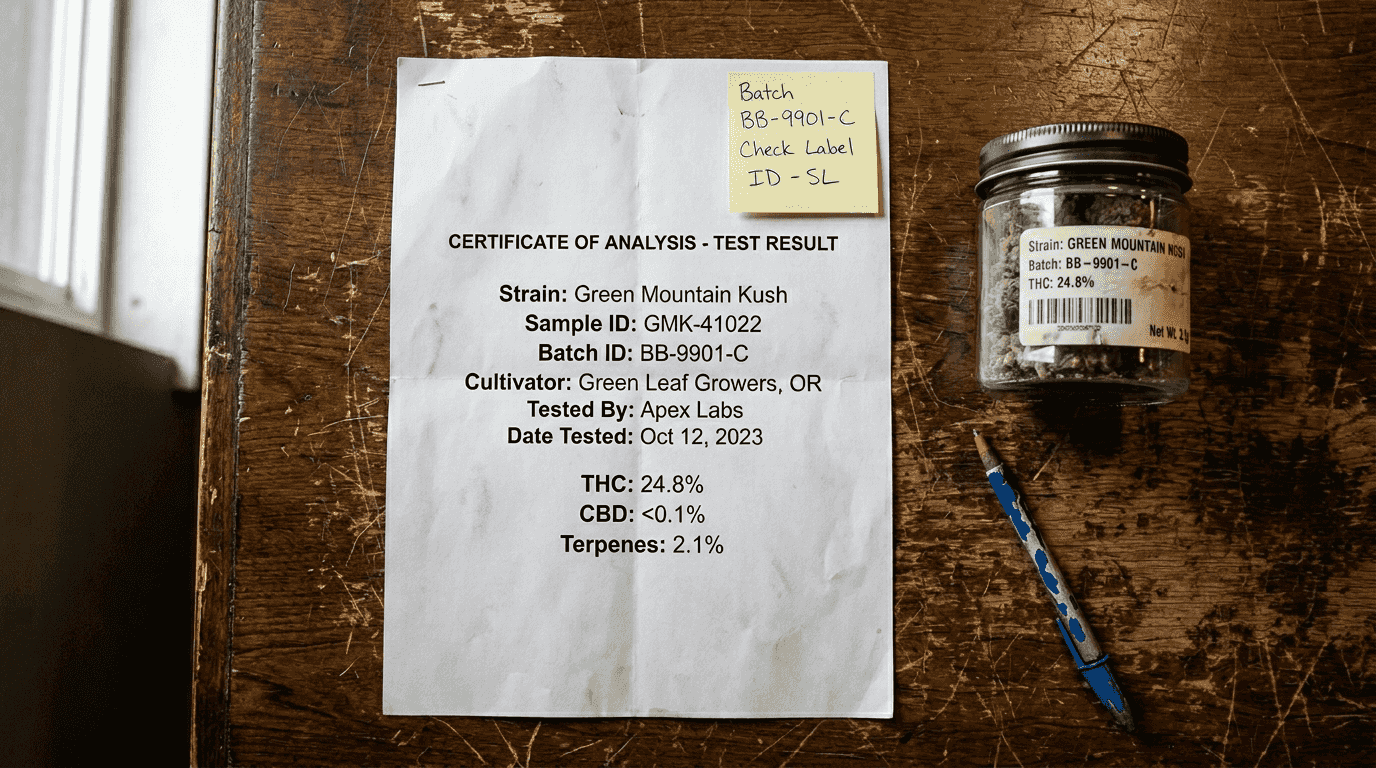
Standardization challenges complicate authentication. No universal testing standards exist globally, leading to inconsistent methods and varying sensitivity between labs. Accreditation programs like ISO/IEC 17025 help ensure lab quality, but not all testing facilities maintain these certifications. You must verify lab credentials to trust COA data.
Pro Tip: Always check if the testing lab holds ISO/IEC 17025 accreditation or state-specific certifications before trusting a COA.
| Test Parameter | Purpose | Typical Safety Limit |
|---|---|---|
| THC/CBD Potency | Verify cannabinoid content | Labeled concentration ±10% |
| Pesticides | Detect harmful residues | <0.1 ppm per compound |
| Heavy Metals | Identify toxic elements | Lead <0.5 ppm, Arsenic <0.2 ppm |
| Microbial Contaminants | Screen for pathogens | Total yeast/mold <10,000 CFU/g |
| Residual Solvents | Ensure extraction safety | Butane <5,000 ppm, Ethanol <5,000 ppm |
Understanding these testing processes helps you evaluate product quality. When you review cannabis flower testing quality, look for comprehensive screening across all parameters. Products meeting rigorous standards demonstrate manufacturer commitment to safety. Use our cannabis certificate checklist to systematically verify COA completeness.
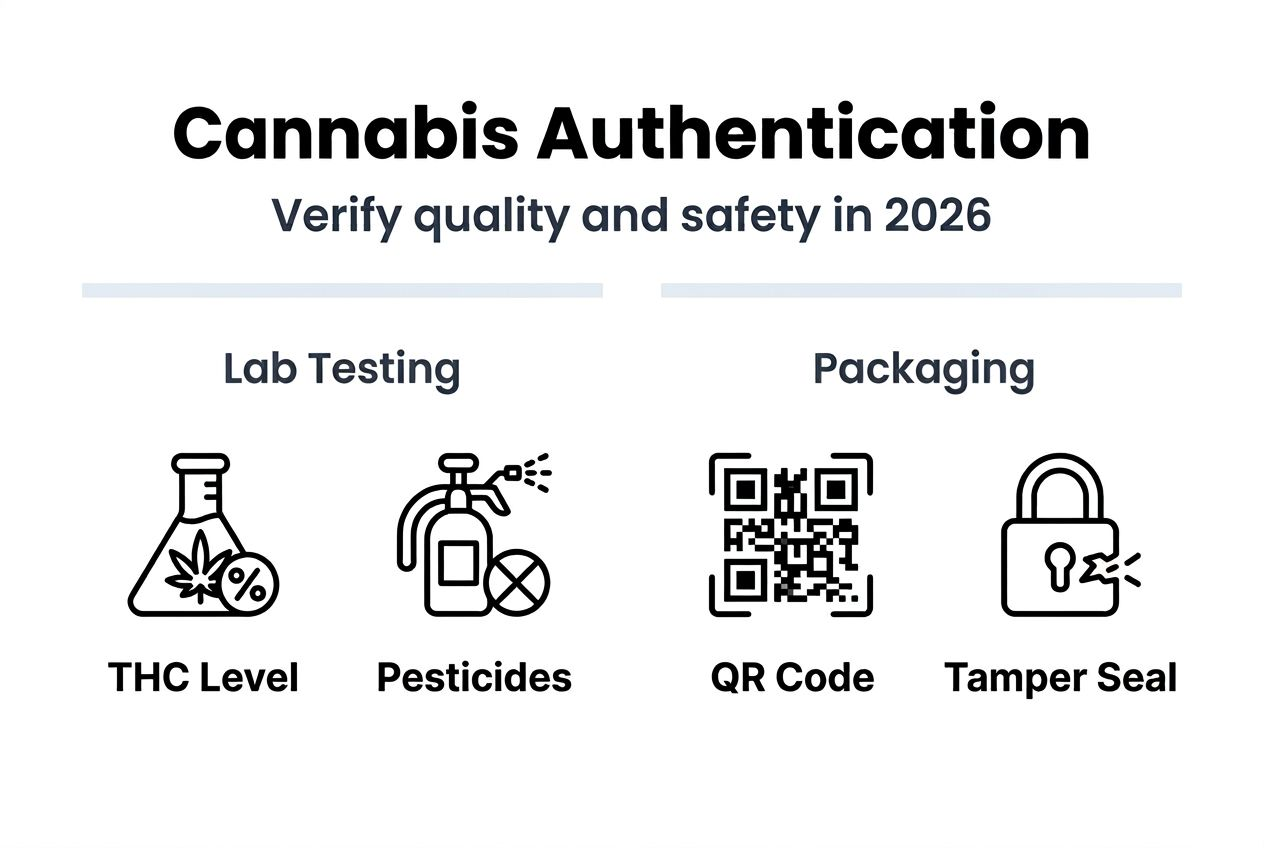
Understanding certificates of analysis (COAs)
COAs translate complex laboratory data into accessible safety information. Learning to interpret these documents empowers you to verify product authenticity and make informed purchasing decisions. Each COA contains critical components that confirm whether products meet safety standards.
Key COA components include:
- Cannabinoid profile showing exact percentages of THC, CBD, CBG, CBN, and other compounds
- Contaminant screening results for pesticides, heavy metals, and microbial organisms
- Testing methodology details explaining analytical techniques used
- Lab accreditation information confirming facility credentials
- Batch or lot number linking the COA to specific product units
- Testing date indicating when analysis was performed
- Pass/fail status for each parameter based on regulatory limits
Reading cannabinoid concentrations requires understanding measurement units. Total THC and CBD appear as percentages representing milligrams per gram of product. A 20% THC flower contains 200mg THC per gram. Delta-9 THC and THCA appear separately since THCA converts to THC when heated. Total THC calculations account for this conversion.
Contaminant levels indicate safety through pass/fail results. Pesticide screening shows individual compound concentrations measured in parts per million (ppm). Values below regulatory limits receive pass status. Heavy metals follow similar logic, with toxic elements must remain below established thresholds. Microbial testing uses colony forming units (CFU) to quantify bacterial and fungal presence.
Verifying lab accreditation protects against fraudulent COAs. Look for ISO/IEC 17025 certification or state-issued laboratory licenses. Contact information for the testing lab should appear clearly. Cross-check this data against official accreditation databases. Testing dates matter because cannabinoid profiles degrade over time.
Pro Tip: Always match the batch number on your product label with the batch number on the COA to confirm you’re viewing the correct test results.
Understanding how to interpret THC levels prevents dosing mistakes and ensures expected effects. Our cannabis certificate checklist guides you through systematic COA review. For deeper chemical insights, explore cannabis strains explained chemistry to connect test data with effects.
Packaging and authentication technology
Packaging technologies including tamper-evident seals and QR codes strengthen cannabis product authentication beyond laboratory testing. Physical security features prevent product tampering while digital tools enable instant verification through smartphones. These innovations create multiple authentication layers that protect consumers.
Physical anti-counterfeit measures include:
- Tamper-evident seals that break or change appearance when packaging opens
- Holographic labels using complex optical effects difficult to replicate
- Unique serial numbers printed with security inks that resist forgery
- Child-resistant packaging meeting safety standards for household protection
- Heat-sealed containers preserving product integrity and freshness
QR codes revolutionize product verification by linking physical products to digital information. Scanning a QR code with your smartphone instantly accesses batch-specific COAs, supply chain data, and authentication records. This transparency lets you verify product legitimacy in seconds before purchase.
Blockchain technology creates immutable transaction records throughout the supply chain. Each product movement from cultivation to retail generates a permanent, tamper-proof data entry. This transparency builds consumer trust by documenting every handling step. Counterfeiters cannot fake blockchain records without detection.
Blockchain implementation in cannabis tracking systems has reduced counterfeiting incidents by over 70% in pilot programs, demonstrating the technology’s effectiveness in protecting product authenticity and consumer safety.
Digital authentication tools complement physical security. Some brands offer mobile apps that verify product authenticity through image recognition or NFC chip scanning. These systems cross-reference packaging features against manufacturer databases. Authentication happens instantly, flagging suspicious products immediately.
Packaging innovation continues evolving. Smart labels with temperature sensors track storage conditions affecting product quality. RFID tags enable automated inventory management and recall procedures. These technologies enhance traceability while simplifying verification for consumers and regulators.
Regulatory frameworks for cannabis safety
Global regulations mandate testing and authentication standards that protect consumers and ensure market integrity. Government agencies establish safety thresholds, testing requirements, and enforcement mechanisms that licensed operators must follow. Understanding these frameworks helps you recognize compliant products and avoid unregulated offerings.
Key regulatory requirements include:
- Mandatory third-party laboratory testing before products enter retail markets
- Pesticide screening using approved analytical methods with defined action levels
- Heavy metal testing focusing on arsenic, cadmium, lead, and mercury
- Microbial analysis for pathogenic bacteria, mold, and fungal contamination
- Mycotoxin testing detecting dangerous fungal metabolites in flower and concentrates
- Potency labeling accuracy requirements typically within 10% of stated values
Product traceability systems track cannabis from seed to sale. Licensed cultivators, processors, and retailers enter transaction data into government databases. This tracking prevents diversion to illegal markets and enables rapid recalls when safety issues arise. You benefit from knowing exactly where your products originated.
COA transparency requirements vary by jurisdiction but increasingly mandate public access. Some regions require retailers to display COAs prominently or provide them upon request. Digital QR code access represents the growing standard. This transparency empowers you to verify safety before purchasing.
Regulatory enforcement builds consumer confidence. Agencies conduct random testing, inspect facilities, and investigate consumer complaints. License suspension or revocation punishes non-compliance. Products failing safety standards get removed from shelves immediately. These mechanisms protect you from substandard offerings.
Common international testing limits include:
- Total pesticide residues below 0.1 ppm per individual compound
- Lead content under 0.5 ppm in flower and 0.2 ppm in concentrates
- Total yeast and mold counts below 10,000 colony forming units per gram
- Absence of E. coli and Salmonella in all product samples
- Residual solvents in concentrates below 5,000 ppm for Class 3 solvents
Understanding cannabis compliance explained helps you recognize legitimate operators. Learn how cannabis regulated market consumer impact protects your interests. Regulatory frameworks create the foundation for trustworthy authentication.
Common misconceptions about authentication
Several myths about cannabis authentication lead consumers to make unsafe purchasing decisions. Debunking these misconceptions refines your understanding and prevents costly mistakes. Recognizing false beliefs helps you apply proper verification methods.
Myth: Visual inspection or smell guarantees product authenticity and safety.
Reality: Appearance and aroma cannot detect pesticide residues, heavy metals, or microbial contamination. Dangerous contaminants remain invisible to human senses. Only laboratory testing reveals these hidden hazards. Counterfeiters easily replicate visual characteristics while selling unsafe products.
Myth: Any ‘lab-tested’ label means guaranteed safety without checking COA validity.
Reality: Labels claiming testing mean nothing without accessible, verifiable COAs from accredited labs. Counterfeiters print fake labels mimicking legitimate brands. You must verify the actual test data, lab credentials, and batch number match your product. Labels alone provide no authentication.
Myth: All cannabis testing laboratories meet identical standards and produce equally reliable results.
Reality: Lab quality varies significantly based on accreditation, methodology, and equipment calibration. Some facilities lack proper certifications or use outdated testing methods. Results may differ between labs analyzing the same sample. Always verify lab accreditation through official databases.
Common authentication mistakes include:
- Trusting brand reputation alone without verifying current batch test results
- Assuming premium pricing automatically indicates superior quality and safety
- Accepting photocopied or low-resolution COA images that could be altered
- Skipping verification steps when purchasing from familiar retailers
- Believing attractive packaging guarantees product authenticity
Relying on unverified claims exposes you to health risks and financial loss. Counterfeit products containing dangerous contaminants cause adverse reactions, hospitalizations, and long-term health damage. Mislabeled potency leads to overconsumption or ineffective dosing. These consequences are entirely preventable through proper authentication.
Education empowers safer choices. Understanding what authentication truly requires helps you spot red flags immediately. When retailers cannot provide accessible COAs or answer basic verification questions, walk away. Your health deserves products meeting verified safety standards.
Practical consumer verification
Applying authentication knowledge requires clear, actionable steps you can perform before every cannabis purchase. These verification procedures take minutes but provide confidence in product safety and authenticity. Follow this systematic approach to protect yourself.
- Obtain the Certificate of Analysis by scanning the product QR code, visiting the brand website, or requesting it from the retailer.
- Verify the testing lab holds ISO/IEC 17025 accreditation or valid state licensing by checking official accreditation databases.
- Confirm the batch or lot number on your product label exactly matches the batch number listed on the COA document.
- Review all test results to ensure every parameter shows pass status with values within regulatory safety limits.
- Check packaging security features including intact tamper-evident seals, holographic labels, and proper child-resistant closures.
- Scan QR codes to access digital verification systems, blockchain records, or manufacturer authentication portals.
- Verify the COA testing date is recent, typically within 60-90 days for flower and 6-12 months for processed products.
- Cross-reference lab contact information on the COA with official lab websites to confirm legitimacy.
- Avoid any products lacking accessible COAs, showing signs of package tampering, or coming from unlicensed sources.
- Purchase only from licensed retailers who display permits and comply with local regulations.
Pro Tip: Download mobile apps from state regulatory agencies or independent cannabis testing organizations that scan product barcodes and instantly verify authentication status.
Consumer education improves the ability to identify counterfeits by 25-30%, making verification skills your best protection. Vigilance against counterfeit signs includes checking for packaging inconsistencies, spelling errors on labels, suspiciously low prices, and retailers unable to provide documentation.
Licensed retailers maintain verification systems as part of regulatory compliance. They should readily provide COAs and answer authentication questions. Hesitation or inability to produce documentation signals potential problems. Trust your instincts when something seems wrong.
Implement our safe cannabis shopping workflow for systematic purchasing decisions. Use our cannabis product checklist 2026 to evaluate quality comprehensively. Learn to optimize cannabis shopping online while maintaining verification standards. Discover how to review dispensary listings to identify reputable sources.
Explore premium, authenticated cannabis products
You deserve complete confidence in every cannabis product you purchase. Avondale Apothecary commits to authentication transparency by providing accessible COAs for all products and implementing rigorous verification systems. Every item meets verified safety standards before reaching our shelves.
Our curated cannabis concentrates collection features extensively tested extracts with detailed cannabinoid and terpene profiles. Explore infused beverages collection offering precise dosing and consistent effects backed by laboratory verification. Discover AA live resin concentrate with full spectrum cannabinoids and comprehensive safety testing.
Secure packaging with QR code verification enables instant COA access for every product. Shop confidently knowing our authentication standards protect your health and deliver the quality you expect. Sign up for product updates and educational resources to continue learning about cannabis safety and authentication innovations.
FAQ
How can I verify if a cannabis product’s COA is authentic?
Check the issuing lab’s accreditation status through official databases and confirm contact information matches the lab’s website. Scan product QR codes or visit lab websites to cross-verify batch numbers digitally. Ensure all COA data including cannabinoid percentages, contaminant results, and testing dates match your product label exactly. Use our certificate checklist for safety to systematically review every element.
What packaging features should I look for to confirm cannabis product authenticity?
Authentic products display tamper-evident seals that break when opened, holographic labels using complex optical effects, and intact child-resistant closures meeting safety standards. Scan QR codes that link directly to product batch lab results, blockchain supply chain data, or manufacturer authentication systems. Missing security features or damaged packaging indicate potential counterfeiting or improper handling.
Are all cannabis testing labs equally reliable for product authentication?
No, laboratory standards and reliability vary significantly across testing facilities. Always verify the lab holds ISO/IEC 17025 accreditation or valid state-specific licensing through official accreditation databases. Accredited labs follow standardized protocols, maintain calibrated equipment, and undergo regular audits ensuring accurate, trustworthy test results. Non-accredited facilities may produce inconsistent or unreliable data. Review cannabis compliance explained to understand quality standards.
What should I do if a product lacks a Certificate of Analysis?
Avoid purchasing any cannabis product without an accessible, verifiable COA from an accredited laboratory. Missing documentation indicates potential safety risks, regulatory non-compliance, or counterfeit products. Buy exclusively from licensed retailers who provide complete transparency and readily share lab reports for every item. Implement our safe cannabis shopping workflow to ensure verification before purchase.